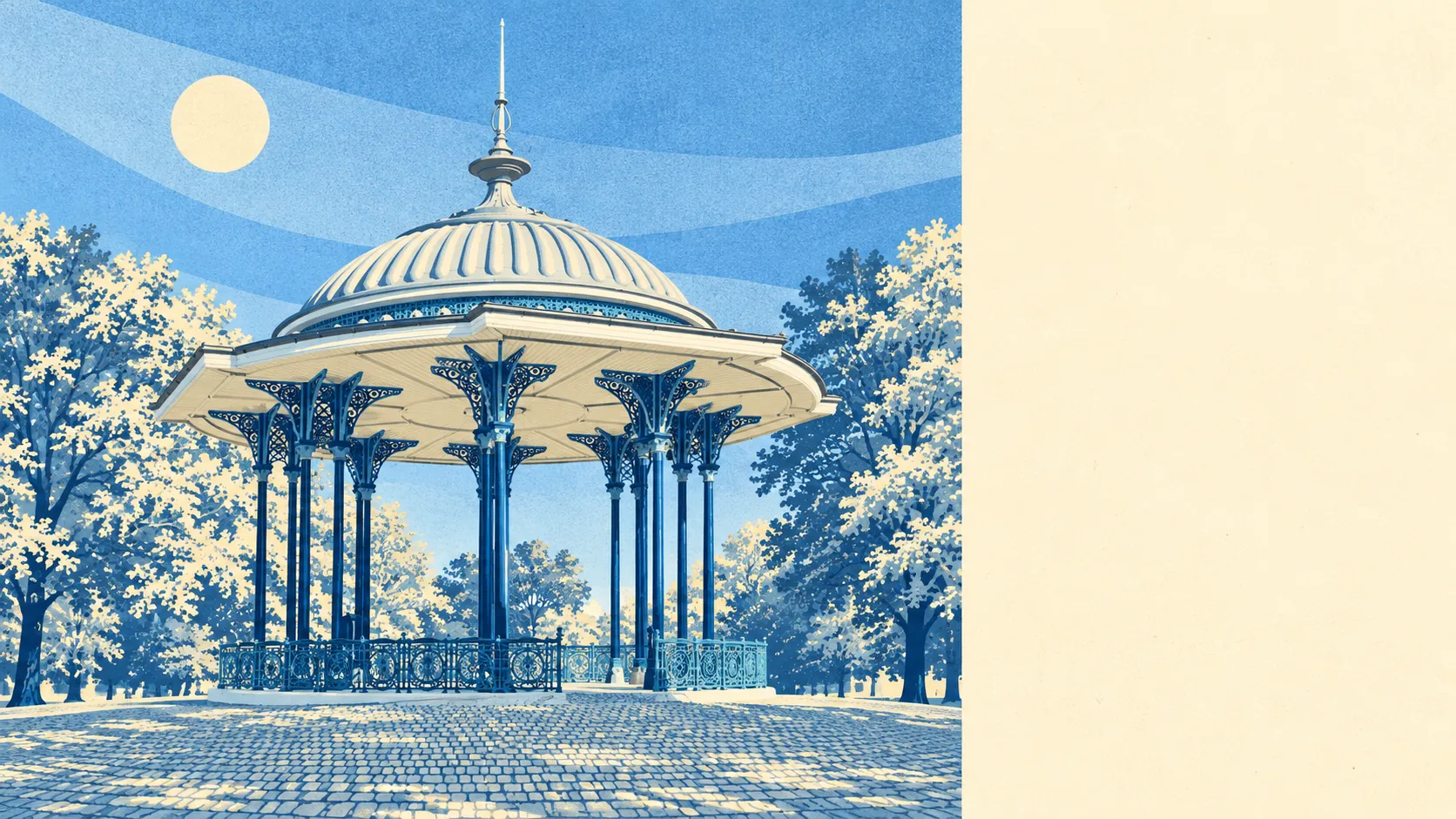
Clapham is better for living in than for building on. With 334 listed buildings and a patchwork of conservation areas, the house you buy is broadly the house you keep. Nearly three homes in four are flats and about six in ten households rent. Most front doors are a short stroll from green space, and the Common does the work a back garden would do anywhere else. People who come for the location get what they paid for, while people who come with an architect get a long correspondence with Lambeth.
In the seventeenth and eighteenth centuries, City of London merchants built large houses around Clapham Common and in the Old Town. The people who own them now need permission to change the glazing. Historic England lists 334 buildings in the area, 15 at Grade II* and 319 at Grade II. The area's bounding box also takes in all or part of 31 conservation areas, among them Clapham Common, Clapham High Street, Abbeville Road, Albert Square and Clapham Park and Northbourne Road. Inside a conservation area the council takes an interest in roofs, front windows, boundary walls and anything else you can see from the pavement. On a listed building, the need for consent reaches indoors. Three of the listed buildings are on Historic England's Heritage at Risk register. Numbers 12 to 21 Clapham Common North Side share a single listing entry, so a whole row of front doors answers to one paragraph of official description.
The Land Registry recorded 334 sales in the year to May 2026, at a median of about £627,000. That happens to be the same number as the listed buildings, so the place listed a building for every home it sold. Flats make up most of that median, with 241 selling for a typical £545,000. The 77 terraced houses fetched a median of £1,350,000, and the 15 semi-detached houses £2,300,000. In Clapham, sharing a wall with only one neighbour is a luxury good. Band D is the most common council tax band, and only about one home in five is in Band A or B.
Across Lambeth, typical private rent was about £2,530 a month as of April 2026, up around 7% on a year earlier. That is the Office for National Statistics' borough-wide average, and Clapham's own streets will vary around it. Roughly 36% of Clapham's households rent privately, so this is close to what a third of the neighbours are paying, give or take a borough.
The council tax valuation list gives the full picture of the stock. About 74% of homes are flats, 22% terraced houses, 3% semis and 1% detached. Just over half were built before 1930. Among homes with an energy certificate, 58% are rated A to C, 34% D and 8% E or worse. Mains gas heats 72% of homes and electric-only heating covers about 10%, which in a period conversion is a running cost worth knowing about before the viewing. With detached houses at around one in a hundred, anyone who wants a driveway and a double garage is shopping a good way further down the Northern line.
The Northern line runs through Clapham with three stations. Clapham High Street and Wandsworth Road stations sit on the Overground's Windrush line, which has reached them since the 2012 extension and links straight across to Shoreditch and Highbury and Islington. There are 172 bus stops, and the ones with timetable data average 566 weekday departures, with about 32 buses an hour at peak. The Department for Transport's 2019 model puts the nearest town centre about 12 minutes away by public transport. About 57% of households have no car. At the 2021 census, 59% of working residents worked from home, and with gigabit broadband available to 90% of addresses, perhaps the most reliable line in Clapham runs into the router.
None of Clapham is in the Environment Agency's river-and-sea flood zones 2 or 3. Surface water is the other story. On the site's postcode indicators, which include surface water, about 14% of postcodes carry at least one high-risk flag, another 14% at least one medium flag and 36% at least one low flag. Here flooding is a question about the drains on your road, and the river maps have nothing to say about it.
Police.uk figures for the year from June 2025 to May 2026 put Clapham's published crime rate at about 136 per 1,000 residents. That is roughly 10% below the Lambeth average of 151. The mix is unusual. Violence and sexual offences, the biggest category almost everywhere, make up about 21% of recorded crime here against 35% nationally. Theft from the person makes up about 9%, against 2% nationally. Clapham's crime leans towards what goes missing on a busy pavement, and away from what happens behind closed doors.
Only about 35% of households own their home. The median resident is 32. The Office for National Statistics models gross household income at about £81,500 for the financial year to March 2023, averaged across the area. Clapham is a neighbourhood of high earners who mostly don't own the walls around them. Two thirds hold a degree, and most of the people who arrive have the same Saturday plans. Clapham Park, to the south, is covered by this page too and shares the same stock of period houses and flats.
Ofsted has graded 41 settings across Lambeth, and 35 of them are good or better, including 11 outstanding. That is a borough-wide count. Closer in, the 10 primary schools in the district average 108 in the end-of-primary maths tests, and the two secondaries average an Attainment 8 score of about 47. Local primaries include Clapham Manor Primary School and Macaulay Church of England Primary School, and Harris Academy Clapham and The Elms Academy are on the secondary side. Couples with children make up about 11% of households, so the school run is something Clapham mostly watches go past.
The average home is about 110 metres from green space, with 44 green spaces inside a kilometre and water about 630 metres away. Clapham Common is the big one. The boundary between Lambeth and Wandsworth runs across it, though Lambeth manages it. For a population that mostly lives in flats, the Common is the garden the floor plan left out.
Clapham is right for the salaried renter or flat buyer who wants the Northern line, the Overground and a common within a few minutes, and who never wanted a car. Families after a house they can extend, re-roof and reshape should look elsewhere, because here the shape of the house was settled a century ago and the council intends to keep it that way. Taken as a whole, Clapham is a better-than-average place to live with one fixed condition: you get the green space and the connections in full, and you agree to leave the building more or less as you found it.