The area around the City of London is far greener and wetter than its glass towers suggest. A garden or square is a short walk from most front doors. The Thames is never far off. Offices make up most of the premises. Once the office workers go home in the evening, the gardens are left to the people who live here.
The average home in the City has about 39 green spaces within a kilometre, and the nearest is about 170 metres away. Most are small, such as churchyards, courtyards and garden squares, and there are larger ones like the Barbican's landscaped grounds and the gardens of Inner Temple and Middle Temple. The City was rebuilt around its churches after fire and bombing, and many of the gardens are what remains of the churches that weren't rebuilt.
Water is about 340 metres away on average, and there are about 87 bodies of water within a kilometre, from the Thames to the Barbican's lakes and fountains. Blackfriars Bridge, the Millennium Bridge, Southwark Bridge and London Bridge all cross the river from the City, and a walk across any of them reaches the South Bank.
The National Cycle Network is about 790 metres away on average, and about 17% of postcodes are close to it. For countryside in the usual sense, you need to leave.
On the business valuation list, the City has 847 shops, 117 pubs and 278 restaurants. Retail mostly moved to the West End years ago, and the City of London Corporation now encourages shops back into places like Cheapside, near St Paul's. The evening economy is concentrated around Bishopsgate, towards Shoreditch.
The City of London's own fine-particle reading for 2024 was about 11 micrograms per cubic metre, a council-wide figure covering the whole Square Mile.
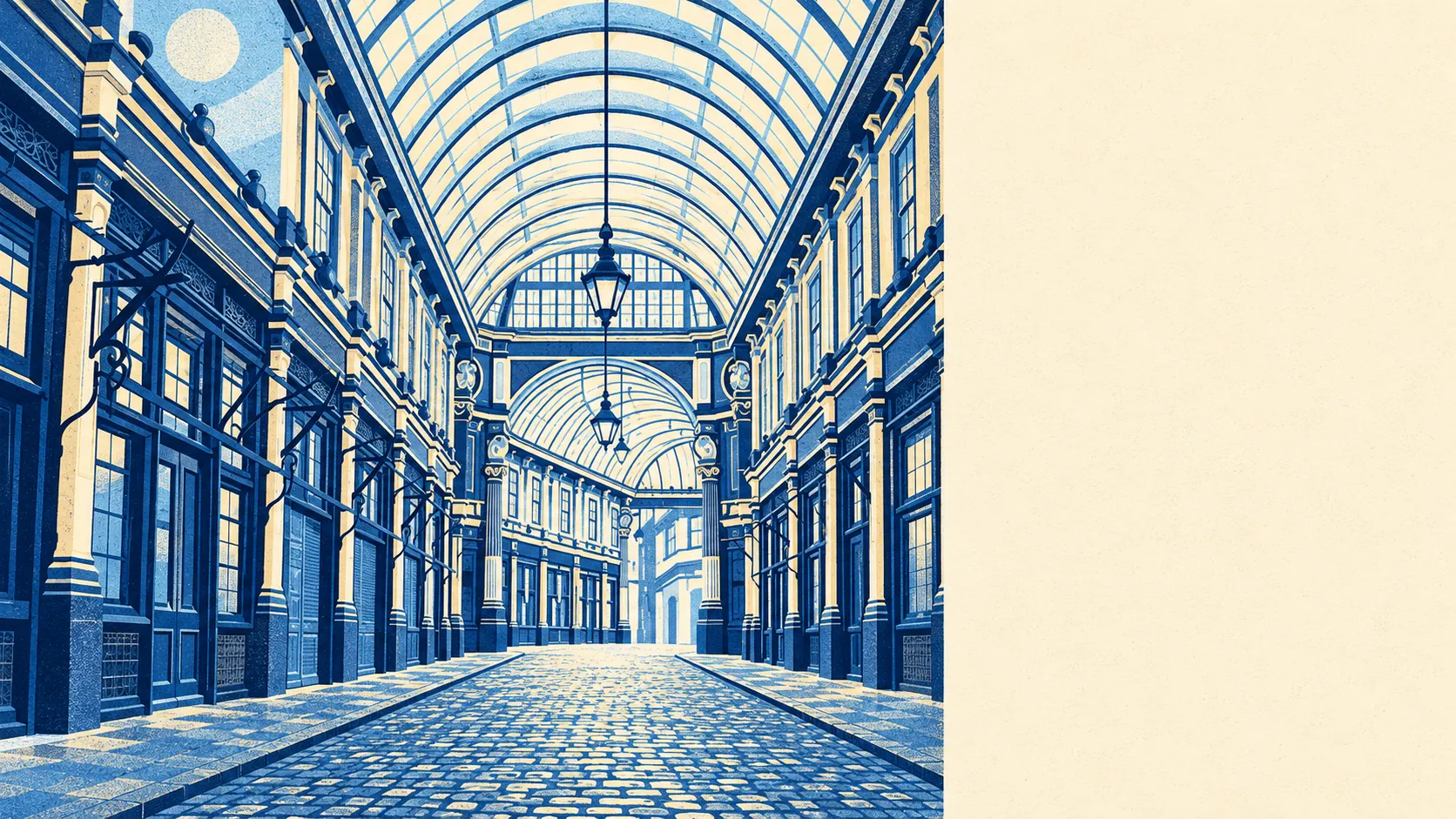
Day to day, the City feels like a working museum. You walk past Leadenhall Market's Victorian arcade, Smithfield Market, the Guildhall and the Royal Exchange on the way to buy milk, and stretches of Roman wall surface between the offices. The tower cluster around Bishopsgate, Leadenhall Street and Fenchurch Street gives the east side its skyline, while the Barbican and Golden Lane estates in the north are where most residents actually live. At the weekend the City empties out, and the streets around St Paul's belong to whoever happens to be passing.
Private outdoor space is scarce. The City has about 2,100 square metres of private garden for every 1,000 residents, which in practice means a balcony, a shared courtyard or a window box. With homes this short of outdoor space, check whether a flat comes with a balcony, a terrace or access to a residents' garden, because the public gardens are excellent but they're shared with every office worker eating lunch.
The valuation list holds 12,631 rateable premises across the City, and 8,956 of them are offices. These are premises on the rating list, not a count of businesses open today, but the balance is plain. Shops, pubs and restaurants are a sideline to a district run by its office buildings.
Of the 1,318 food premises that the Food Standards Agency has rated in the City, about 88% hold the top hygiene score and about 3% sit at the bottom end of the scale. Lunch is cooked for some very demanding customers.
No area of outstanding natural beauty, site of special scientific interest or ancient woodland overlaps the City. Its protected spaces come from history, in the form of churchyards, livery gardens and the Inns of Court, and none of them were designated for their wildlife.
The surroundings are one of the City's real strengths. Gardens, river and history are all on the doorstep, and on a weekend residents have most of them nearly to themselves.