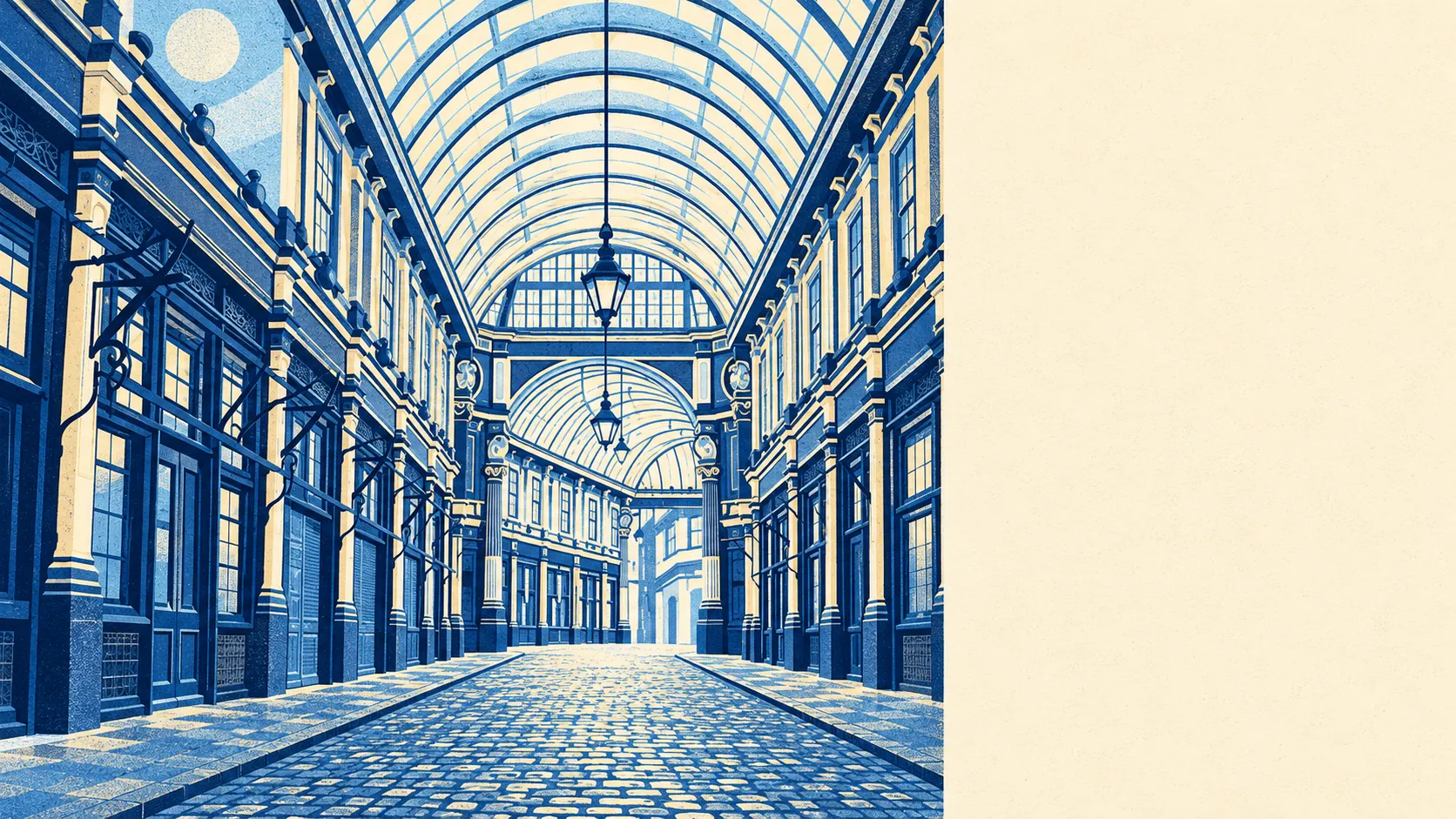
The City of London will give you a fine home, as long as you're happy to take it exactly as it comes, because 1,311 of its buildings are listed. Nearly every home is a flat inside somebody else's protected shell. You live among two thousand years of history, and two thousand years of history gets a say in your windows. If you can't picture the place as it stands today, keep walking.
The heritage numbers are heavy. Historic England's list puts 1,311 listed buildings inside the City, and 119 of them are grade I, the top grade, a status most towns give to a cathedral and a castle. Another 132 are grade II* and 1,060 are grade II. The surrounding area holds 48 conservation areas, from Bank and Bow Lane to Bishopsgate and Artillery Passage, plus 63 scheduled monuments, including stretches of the Roman wall at Noble Street and a section kept inside the London Wall underground car park. Fourteen listed buildings are on the Heritage at Risk register. Bracken House was the first post-war building in the country to get statutory protection, and the whole of the Barbican and the Golden Lane Estate is listed as well. Even the concrete here has a preservation order.
There aren't many sales, and they're expensive. The Land Registry recorded 28 sales in the year to mid-May 2026, with a median of about £620,000, and every one of them was a flat. The official house price index put the City's average at about £627,000 in May 2026, down 28% on a year earlier and 13% over five years. That fall comes from a market so small that one penthouse changing hands can move the number more than the economy does. Council tax band E is the most common band, and only about one home in ten is in band A or B. The City charges about £1,330 a year for band D.
Almost everything is a flat. The council-tax valuation list counts 96% of dwellings as flats and 2% as terraced houses, and about 30% were built before 1930. Among homes with an energy certificate, 68% are rated A to C, which is respectable for a district with this much old masonry. Heating is the surprise. Only 36% of households are on mains gas and 40% rely on electricity alone. In an older flat, electric heating plus windows the conservation officer wants left as they are adds up to a running cost you should know about before you make an offer.
Getting around is as easy as it gets. London Liverpool Street, Moorgate, Cannon Street, Fenchurch Street, London Blackfriars, City Thameslink and Farringdon all serve the area, and there are 332 bus stops. The stops with timetable data average about 43 buses an hour at peak, and 96% of them run at weekends. Gigabit broadband reaches 87% of premises. At the 2021 census, 66% of working residents worked from home and 14% walked to work, so a district built entirely around getting people to the office is home to people who mostly don't go to one.
Flood risk exists, but in pockets. About 5% of postcodes fall in the Environment Agency's highest river-and-sea flood zone, and about 1% in the zone below it. On the wider postcode indicators, which include surface water, about 3% of postcodes carry a high rating on at least one measure. The latest recorded flood dates from 1928, when the main river came over its defences. The Romans built a riverside wall here too, so the argument with the Thames is an old one.
The crime figure looks frightening until you see what it's measuring. Police.uk publishes about 983 recorded crimes a year for every 1,000 residents across the City's neighbourhoods in the year to May 2026, roughly 16% below the City of London's own average. Theft from the person makes up about 16% of recorded crime against about 2% nationally, and other theft another 21%, while violence and sexual offences are 14% against about 35% across England and Wales. Most of it is phones and bags taken from crowds. A rate per resident is an odd measure in a district where the people on the pavement on a weekday aren't the people who live there.
The people who do live here are young, mostly renting and well paid. About 25% of households own their home, and the median age is about 32. The Office for National Statistics models gross household income at about £80,000 for the year to March 2023, averaged across the area. Another 552 people live in communal establishments, which pulls the age profile younger. Close to half of households are one person living alone, and families with children are thin on the ground. On the other side of the party wall, you're more likely to find a law firm than a toddler.
Outside the front door, the City does better than its reputation. The nearest green space is about 170 metres away on average, and water is about 340 metres away, between the Thames, the Barbican's lakes and the gardens at Inner Temple and Middle Temple. Leadenhall Market, St Paul's and the Monument count as the corner shops. This page covers Cornhill, Tower Hill and the wider City and County of the City of London, and all of them share this compact, walkable layout.
The City is right for a single professional or a couple who want to walk to work, can live in one or two bedrooms and like the place emptying out at the weekend. Families who need a garden, buyers who plan to extend, and anyone who wants a high street open on a Sunday should look in Islington, Clerkenwell or across the river instead.
Owning here means you look after a home more than you shape it. Changing a window can involve a planning file, and the home you buy is roughly the home you will sell. In return you get gardens, the river and centuries of architecture within a few minutes' walk, and that trade earns the City a better-than-average verdict. It works best for people who want to live inside a museum and have no plans to rearrange the exhibits.