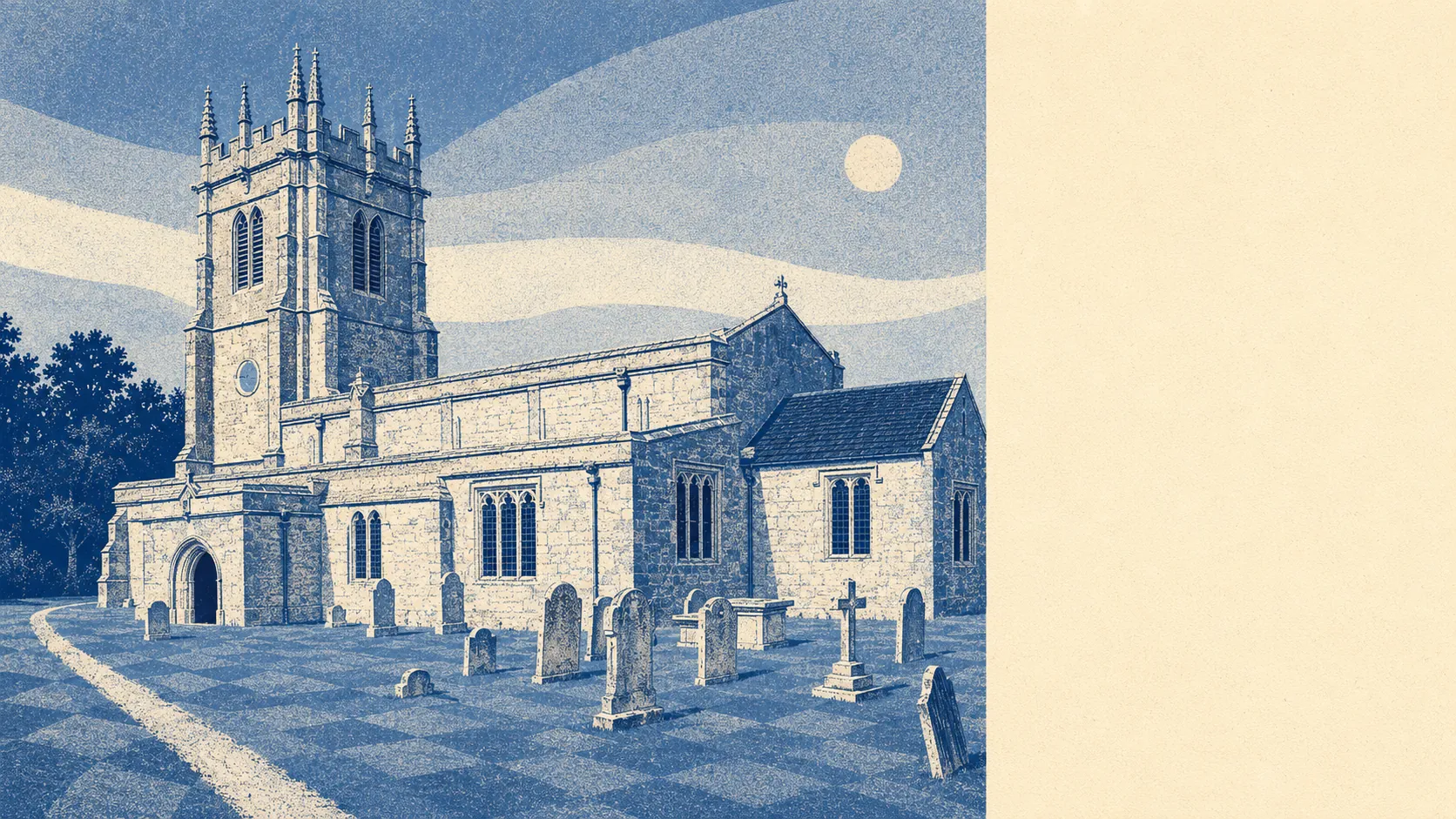
Yes, if your idea of a good day out is a field with a burial mound in it. This is a chalk-stream village strung along the road north out of Dorchester, where about seven in ten households own outright or on a mortgage and the typical resident is in their fifties. The crime rate sits well under half the Dorset average. A third of the surrounding area falls inside a nationally protected landscape. Charminster is not a place that is going anywhere, and that is the entire pitch.
The housing is what a village that grew steadily rather than suddenly looks like. Across every dwelling on the council-tax valuation list, roughly 27% are detached, 23% semi-detached and 22% terraced, with bungalows at around 14% and flats at about 13%. Just over 31% of those dwellings went up before 1930, which by Dorset standards is a modern estate. Around 16% arrived between 2000 and 2008, so there is a genuine seam of newer stock alongside the stone and the thatch. Energy performance splits roughly down the middle: about 55% of certificated homes sit in the top three bands, with 27% at band D and 18% at band E or worse. Just under 61% run on mains gas, and about 9% are heated by electricity alone. That second number is the one to check before you fall in love with a cottage, because an all-electric older property with an E rating costs what it costs whether or not the estate agent brings it up.
On price, the Land Registry's last twelve months put the typical sale at around £332,500 across 62 transactions. The spread by type is wide and worth knowing before you set a budget: detached homes came in at a median of about £473,000, semi-detached and terraced both at roughly £315,000, and flats at around £188,000. Council tax is a mixed picture, with band C the most common and only about 17% of dwellings sitting in bands A or B, so the cheap end of the banding is thin.
Renting is harder to pin to the village itself. The typical private rent across the Dorset area runs at about £1,040 a month, and that is a whole-authority figure covering everything from Weymouth flats to farmhouse conversions. Treat it as a regional anchor, not a Charminster quote.
Safety is where the numbers do something genuinely striking. The published rate for the area is around 23 crimes per thousand residents over the twelve months to May 2026, which is about 58% below the Dorset average of roughly 55. Dorset Police charge or summons in around 14% of cases, a shade above the England and Wales figure of about 12%. The recorded mix is small enough that a handful of incidents move any category by several points, so nobody should build a theory out of it.
Schools are the standout. Ofsted has graded 86 settings across Dorset, of which 68 are good or better and two are outstanding. Locally, key stage two maths across three schools in these postcode districts averages a score of about 105, which is above the national benchmark of 100. At key stage four, the single secondary in the districts records an Attainment 8 score of around 34. The village has a Church of England first school of its own, Saint Mary's Church of England First School, Charminster, with Manor Park and Damers in Dorchester nearby and The Thomas Hardye School taking the secondary years. Department for Transport modelling puts a primary at about nine minutes by car and a secondary at around 18, which tells you the school run here happens on four wheels.
Connectivity is the weak leg of the table. About 57% of working residents drive to work and roughly 32% work from home, while bus and train commuting together account for well under 1%. Dorchester South, Dorchester West and Maiden Newton stations are all within reach, but almost nobody is using them to get to a job. There are 94 bus stops in the area and services average about 135 scheduled departures per stop across a weekday, though only 46% of stops see any weekend service at all. Broadband is decent rather than exceptional: gigabit reaches about 66% of premises, superfast around 91%, and roughly 1% sit below the universal service obligation. Mobile coverage is the quiet win, with all premises reachable by at least one operator on fourth or fifth generation networks and about 97% covered by all of them.
The environment is the reason people move here and stay. Around 35% of the area lies within the Dorset National Landscape, green space averages about 340 metres from a doorstep with roughly five distinct sites within a kilometre, and water is closer still at around 390 metres. Flooding needs care, because two different measures apply. On the Environment Agency's postcode indicators, which include surface water, about 11% of postcodes carry a high rating on at least one measure and 15% a medium one. On the river-and-sea flood zones, roughly 5% of the area sits in zone three and 2% in zone two. Both matter; neither is the other. The area also sits in radon band three, classed as moderate, and every postcode falls in the highest local class for soluble rock, which is a chalk-country fact rather than a red flag.
Heritage is where the freedom runs out. There are 408 listed buildings within the surrounding area, of which 12 are grade one and 22 grade two star, plus eight conservation areas including Charminster itself, Dorchester, Bradford Peverell and Charlton Down. Fifty-six scheduled monuments sit in the same bounding box. If your plan involves a rear extension, replacement windows or anything visible from a lane, budget for a conversation with the planning department before you budget for the builder.
The character of the place follows from all that. About 71% of households own, the median age is 50, and modelled household income for the area runs at roughly £57,100 gross before tax in the financial year to March 2023. That is a settled, comfortable, middle-aged village where people have finished moving.
It suits buyers with a car, a preference for quiet, and school-age children who will benefit from a strong Dorset school picture. It suits anyone who wants a national-landscape view without the coastal price attached to one.
It is a poor fit if you need to commute by train, if you want a home you can reshape at will, or if you want the sort of evening where something is still open. Dorchester is 12 minutes away by car and does most of that work, which is either a convenience or a nightly errand depending on your temperament.
Charminster is a good place to live and an honest one about what it is. Its real strength is the ground it sits on: the protected landscape, the green space at the end of the lane, the water, the quiet. The weak spot is the freedom to alter what you buy, because the listing density and the conservation boundaries mean the house you purchase is broadly the house you keep. Buy the view and the walk, not the plan to knock the back off it.