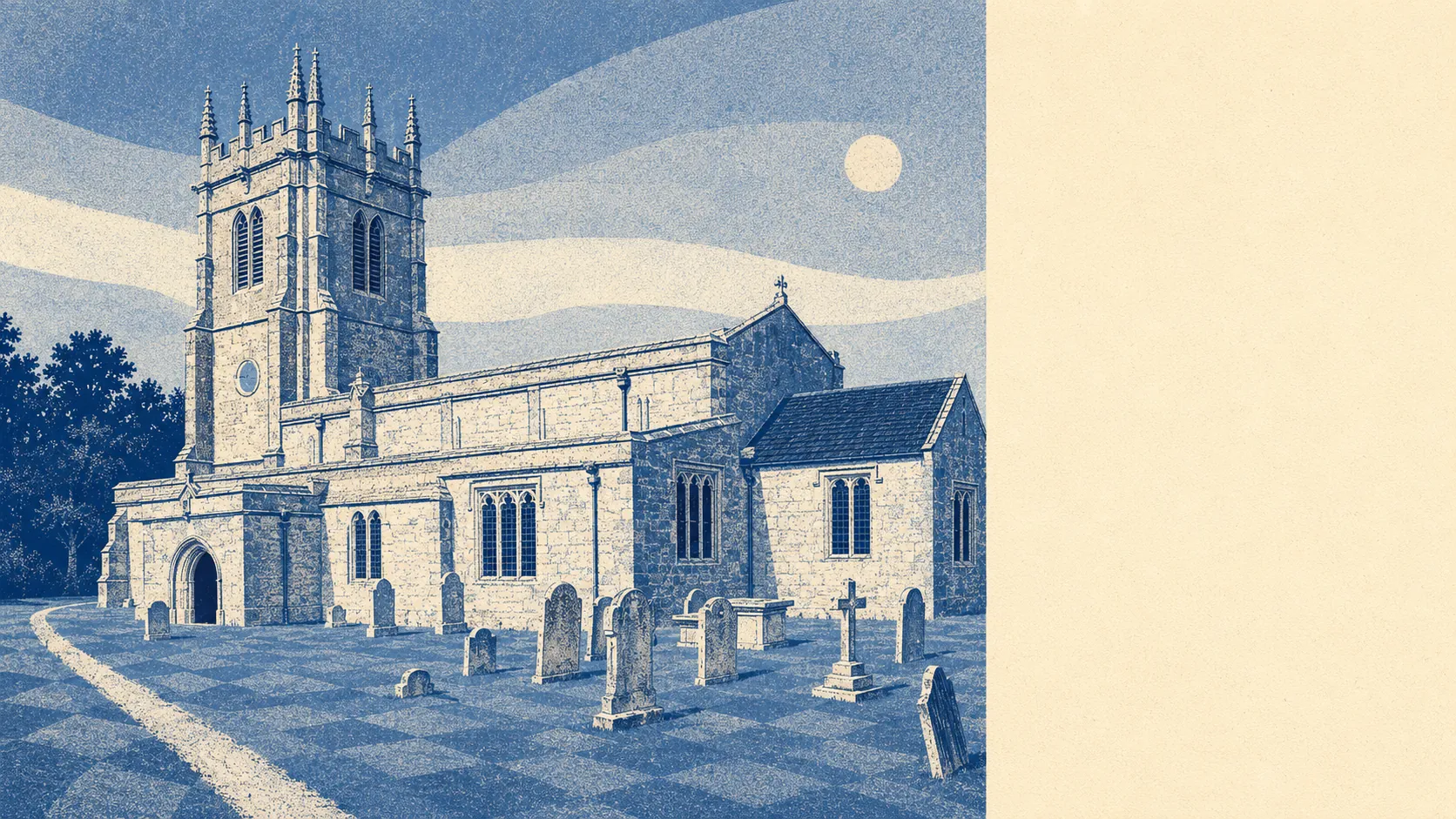
Yes, but bring patience and an architect who has done this before. There are 408 listed buildings across the surrounding area. Eight conservation areas. Fifty-six scheduled monuments in the same footprint. Very little of that stops work outright, and almost all of it adds a form, a consultation and a delay. Extending here is not forbidden so much as supervised.
Historic England's register records 408 listed buildings in the area, of which 12 hold grade one status, 22 are grade two star and 374 are grade two. That distribution matters, because grade two is where ordinary houses live rather than cathedrals. Listing protects the whole building, inside as well as out, and frequently structures attached to it or standing in its grounds. Replacing a window, moving an internal wall or lifting a floor can all need listed building consent, and doing any of it without consent is a criminal offence rather than a planning breach to be regularised later. The number to hold in your head when viewing is not 408 but one: whether the house you are standing in is on the list.
Eight conservation areas sit within the same footprint, covering Charminster itself alongside Dorchester, Bradford Peverell, Charlton Down and others in the surrounding parishes. Designation does not freeze a place, but it does trim permitted development rights, bring consent requirements for demolishing walls and outbuildings, and put trees under a notification regime, so lopping the sycamore becomes correspondence rather than a Saturday job. Anything visible from the street is judged on whether it preserves or enhances the character of the area, which is a subjective test administered by people who have read the appraisal document and will assume you have too.
The 56 scheduled monuments are the strictest tier of protection in the country, and around here they are overwhelmingly the round barrows and long barrows scattered across the downs. Most buyers will never touch one. If your plot adjoins a scheduled monument, the calculation changes entirely, because consent for works affecting it sits with the national heritage authority rather than the council.
None of this means people stop building. The planning record shows 2,111 applications across the area between April 2024 and July 2026, with 819 of those lodged in the last twelve months. That is a steady stream of householders, farmers and businesses putting their plans in front of the council rather than giving up on them. The constraints shape what gets proposed and how long it takes; they do not empty the postbag.
On ground conditions, the British Geological Survey puts the maximum shrink-swell class present here at three, reached across about 1% of the area. That is a small footprint of clay-related ground movement risk in a landscape that is otherwise chalk. For an extension it means what it always means: foundation depth is a question for a structural engineer with a site investigation rather than for a builder with a spade, and on the small share of ground where the classification bites, that conversation happens before the design is finalised rather than after the trench is dug.
Practically, the sequence is the same for everyone. Check whether the specific address is listed, whether it sits inside one of the conservation area boundaries, and whether either applies before you commission drawings. An unlisted house outside those boundaries retains the normal permitted development rights and can proceed much as it would anywhere. A listed house inside a conservation area is a project with a professional team attached, and the cost of the consents is a line in the budget rather than a rounding error.
Freedom to alter a home is the single most constrained thing about buying here, and by a distance. Charminster rewards buying a house you already want rather than one you plan to reshape.