Charlton is mostly parkland and a working riverside, and the parks are the best thing about living here. A green space is a short walk from almost every front door. Dozens more are within a kilometre. The Thames is under a kilometre away. Open ground is the one thing Charlton has plenty of.
The typical Charlton home is about 170 metres from the nearest public green space, with around 37 green spaces within a kilometre. Maryon Park, Maryon Wilson Park and Hornfair Park are spread across the slope where an old wood once grew, and Charlton Park is mostly sports pitches. Most dogs here get walked without anyone starting a car.
The nearest water is about 870 metres away for the typical home, with around 13 stretches of water within a kilometre, the Thames chief among them. Down at the riverside the water is still at work. Angerstein Wharf handles marine aggregates, and the river frontage is industrial more than scenic.
The National Cycle Network is about 1.1 kilometres from the typical home, and only about 9% of Charlton's postcodes are close to it. There is no ancient woodland in the area. Getting out into the wider countryside means getting on a bike or a train, and most of the green space people use is the parks they already walk through.
The rated-premises list counts 97 shops, seven pubs and four restaurants in Charlton. Charlton Village has a short parade, a late 17th-century coaching inn called The Bugle Horn and a preserved red K2 telephone box on Charlton Road. The large-scale shopping is down in New Charlton, at the Greenwich Shopping Park, the Peninsula Retail Park, Stone Lake Retail Park and a Sainsbury's superstore.
Fine-particle air pollution across Greenwich as a council area averaged about 9 micrograms per cubic metre in 2024.
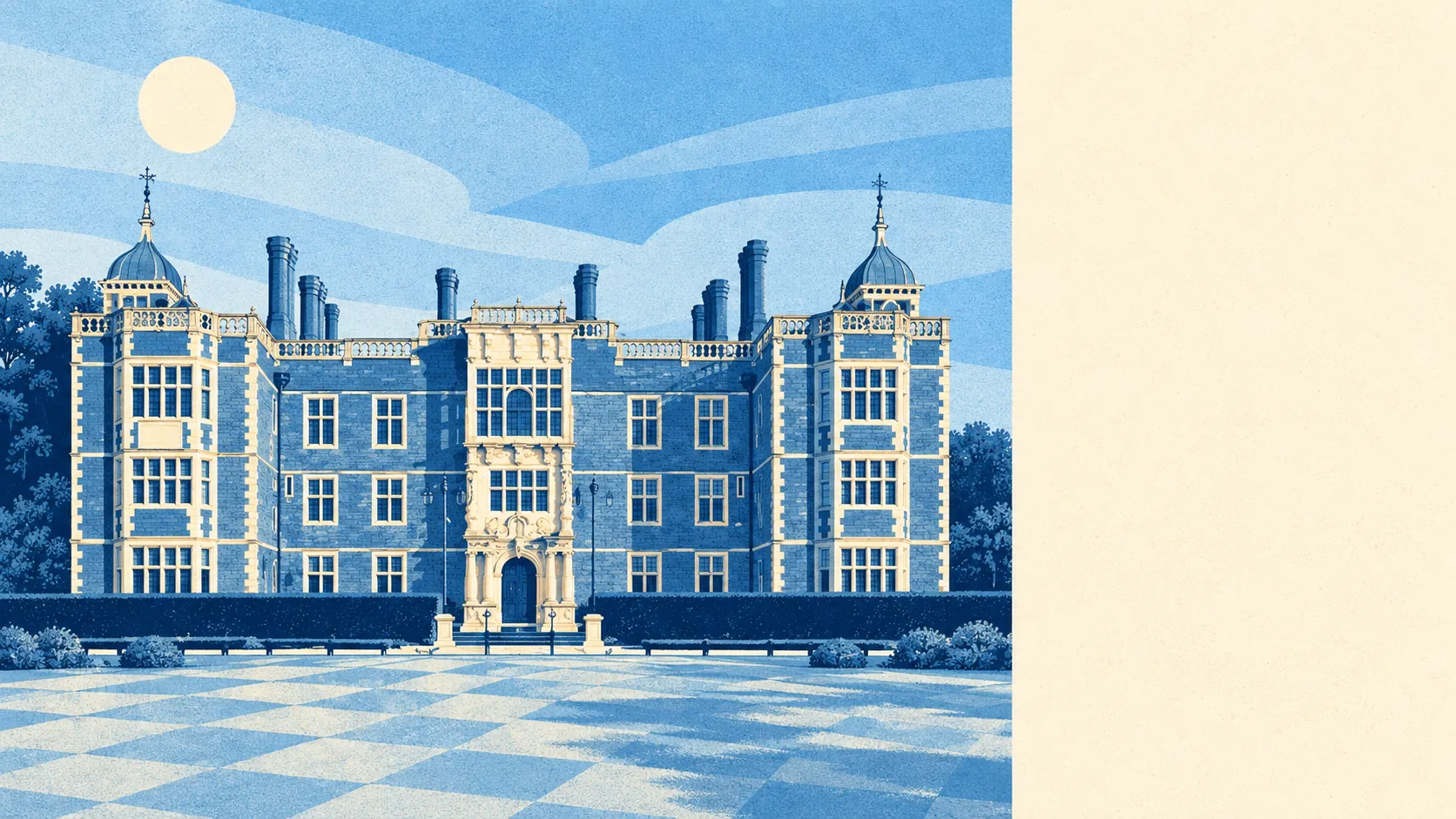
Up the hill, Charlton House is a Jacobean mansion with a mulberry tree on the northern edge of its garden, planted in 1608 on King James's orders to start a silk industry. The tree is still there and the silk industry never arrived. St Luke's Church, the parks and The Valley stadium, home to Charlton Athletic since 1919, fill in the rest, with the railway separating the residential hill from the industrial riverside.
Private gardens add up to about 30,000 square metres per 1,000 residents across Charlton. In a neighbourhood where flats outnumber houses, plenty of people's garden is whichever park is closest.
The business rates list records 523 premises in Charlton, and its biggest groups are 101 workshops and small industrial units, 97 shops and 94 warehouses, with offices further down the list. These are premises on the valuation list, so a listing does not mean a business is trading there today. With more warehouses and workshops than shops, the riverside is still a working part of Charlton.
Of the 142 food premises with a hygiene rating, about 74% hold the top score and about 9% are rated at the low end. Most places to eat here are fine, and the hygiene ratings make it easy to tell which are not.
No area of outstanding natural beauty, site of special scientific interest or ancient woodland overlaps Charlton's postcodes on the official mapping, although Gilbert's Pit, beside Maryon Park, is designated as a site of special scientific interest in its own right. Charlton's green space is made up of urban parks, and none of them comes with protected-landscape rules.
The surroundings are one of Charlton's real strengths. Most homes have a park at the end of the road and the river a short walk downhill.