The area around Camden Town is greener and wetter than its reputation suggests, and that is the best thing about living here. A park or garden square is a couple of minutes from most front doors. The canal runs through the north of it. Regent's Park and Primrose Hill bracket the place on the west. The noise, the markets and the crowds all stop a short walk from the grass.
On average, the nearest public green space is about 100 metres from a Camden Town home, and about 52 green spaces lie within a kilometre. That covers everything from the garden squares of the Bartholomew Estate and Camden Square to Regent's Park itself, with Chalk Farm and the slopes of Primrose Hill to the north-west. Few places this close to Charing Cross have a royal park as the local green.
Water is on average about 440 metres away, with about 38 bits of blue space within a kilometre, most of them stretches and basins of the Regent's Canal, which was cut through the area in 1816 to move freight. When the area went in for entertainment at the end of the last century, a Holiday Inn was built right up against the canal, which is one way to get waterside living without owning a narrowboat.
The National Cycle Network is about 3.8 kilometres away on average, and none of the area's postcodes sit close to it. There is no ancient woodland here at all. The towpath and the parks do the work the cycle routes and the old woods do elsewhere.
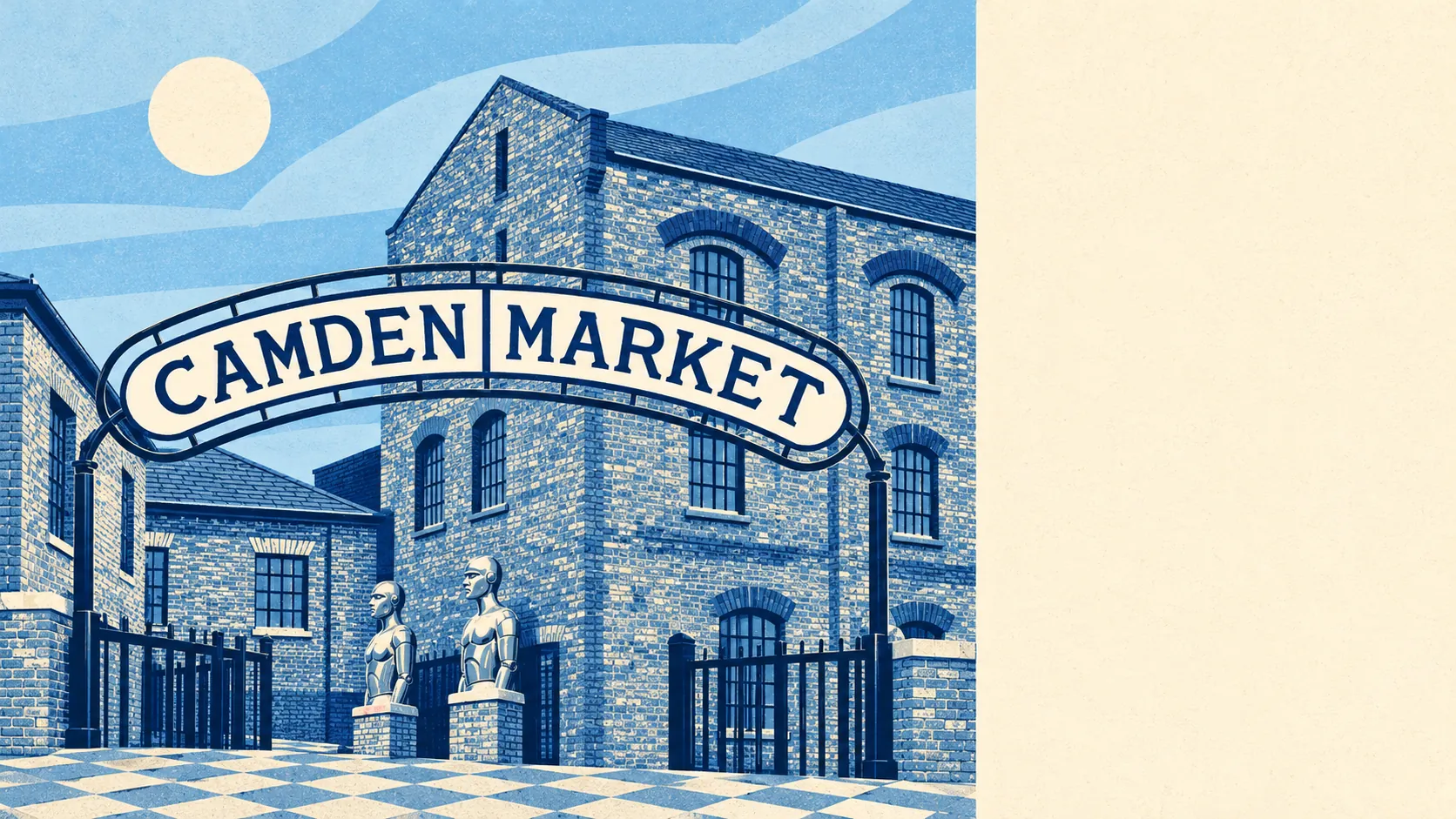
The local rating list counts 954 shops, 85 pubs and 198 restaurants. Camden Lock Market started in 1973 in a former timber yard and has since been joined by the Stables, Buck Street and an indoor market in the Electric Ballroom. They run all week now, though they still concentrate on weekends.
Camden Council covers the whole borough with its air-quality measures, and the borough's average fine-particle level in 2024 was about 9.5 micrograms per cubic metre.
The character comes from the mix. The markets and Camden High Street pull the crowds, Parkway and Chalk Farm Road carry the restaurants, and the Georgian and Victorian streets behind them carry on regardless. The Roundhouse sits up at the Chalk Farm end, the old railway lands run along the north, and the borough's conservation areas wrap most of the residential streets. The Camden Town Group of artists took the area's name in the early twentieth century, when it was still considered unfashionable. The area kept the name and lost the unfashionable part.
Private outdoor space is scarcer. The area has about 8,540 square metres of private garden for every 1,000 residents, which in a place where nine homes in ten are flats mostly means a few large back gardens behind the terraces and a lot of window boxes. It is worth asking whether a flat's garden is private, shared, or simply the view from the kitchen, because listings use the word for all three.
The business rating list holds 4,311 premises, and offices are the largest group at 1,871, ahead of 893 shop premises and 189 restaurants. These are rateable premises, which is a different thing from businesses trading today. The place everyone visits for the stalls is, on paper, mostly desks.
Of the 983 food premises with a hygiene rating, about 53% hold the top score and about 8% sit in the lowest bands. With that many kitchens in a small area, the spread between the best and worst is wide.
No area of outstanding natural beauty, site of special scientific interest or ancient woodland overlaps Camden Town. Nature here comes in parks, squares and a canal, and that is plenty.
The surroundings are Camden Town's real strength: the parks are at the end of the street, the canal is a short walk off, and the markets and restaurants are close enough to be easy and far enough to escape.