Calne is a good place to live and an awkward place to leave. About two-thirds of households own their home. Half of workers drive to the job, and almost nobody takes the train. A patch of green space is rarely more than a couple of minutes' walk away. The town works well, provided you own car keys.
The housing is harder to pigeonhole than a Wiltshire market town ought to be. Across every home on the council-tax list, terraces make up about 29%, detached houses 26%, semis 25%, flats 11% and bungalows 7%. That is a town without a dominant house type, which is unusual, and it tells you Calne was built in instalments rather than planned. Only about 13% of homes predate 1930, and around 17% went up between 2000 and 2008, the years Lansdowne Park added a whole northwestern suburb. On energy certificates, about 64% of rated homes sit in bands A to C, 29% in D and 7% in E or worse. Around 76% heat with mains gas and about 9% run on electric heating only. If the listing you like is one of the latter, ask for the bills before the viewing rather than finding out in January.
The Land Registry's figures for the twelve months to mid-May 2026 put the typical sale at about £270,000, across 296 sales. The split by type does what you would guess: flats around £147,000, terraces about £235,000, semis about £280,000 and detached houses about £387,000. Council tax clusters low, with band B the most common and about 38% of homes in bands A or B. None of those prices will impress anyone arriving from Bath or Bristol, and that gap is the whole reason Lansdowne Park filled up.
Renting is harder to pin down locally. The typical private rent across the Wiltshire area was about £1,060 a month as of April 2026. That is a county figure, not a Calne one, so treat it as the neighbourhood the landlord's spreadsheet lives in rather than the street.
Calne recorded a crime rate of about 55 per 1,000 residents in the year to May 2026, around 12% below the Wiltshire average. That is the sort of number that makes a market town quietly smug and gives the local Facebook group nothing to do, though the group will manage regardless.
Connectivity depends on which kind you mean. Broadband is strong: superfast coverage reaches every premises and gigabit-capable connections reach about 81%. Transport is the weak joint. Calne lost its railway in 1965 and never got it back, which is why fewer than one worker in a hundred commutes by train and about 52% drive. There are 117 bus stops, averaging 26 weekday departures each, and almost all of them run at weekends too. Department for Transport modelling from 2019 puts the town centre about nine minutes away by car for a typical resident, and the nearest hospital around 46 minutes by car or about 90 by public transport. Another 31% of workers skip the question entirely by working from home.
The Environment Agency's river-and-sea mapping is kind to Calne: only about 2% of postcodes sit in flood zone 2 and under 1% in flood zone 3. The broader postcode measure is less comforting. About 22% of postcodes show high risk on at least one flood indicator, surface water included, and that measure is what drags the town's flood picture down. The last recorded flood event dates from December 1989, when the main river overtopped its channel. Every postcode also carries a moderate shrink-swell clay classification from the British Geological Survey, so a surveyor who mentions subsidence is doing their job, not upselling. Green space is the town's best card: the nearest patch averages about 140 metres from home, with around 20 within a kilometre, and water is typically about 280 metres away. Add the Beversbrook Sports Facility and the Bowood estate on the doorstep, and nobody here has an excuse for not getting outside.
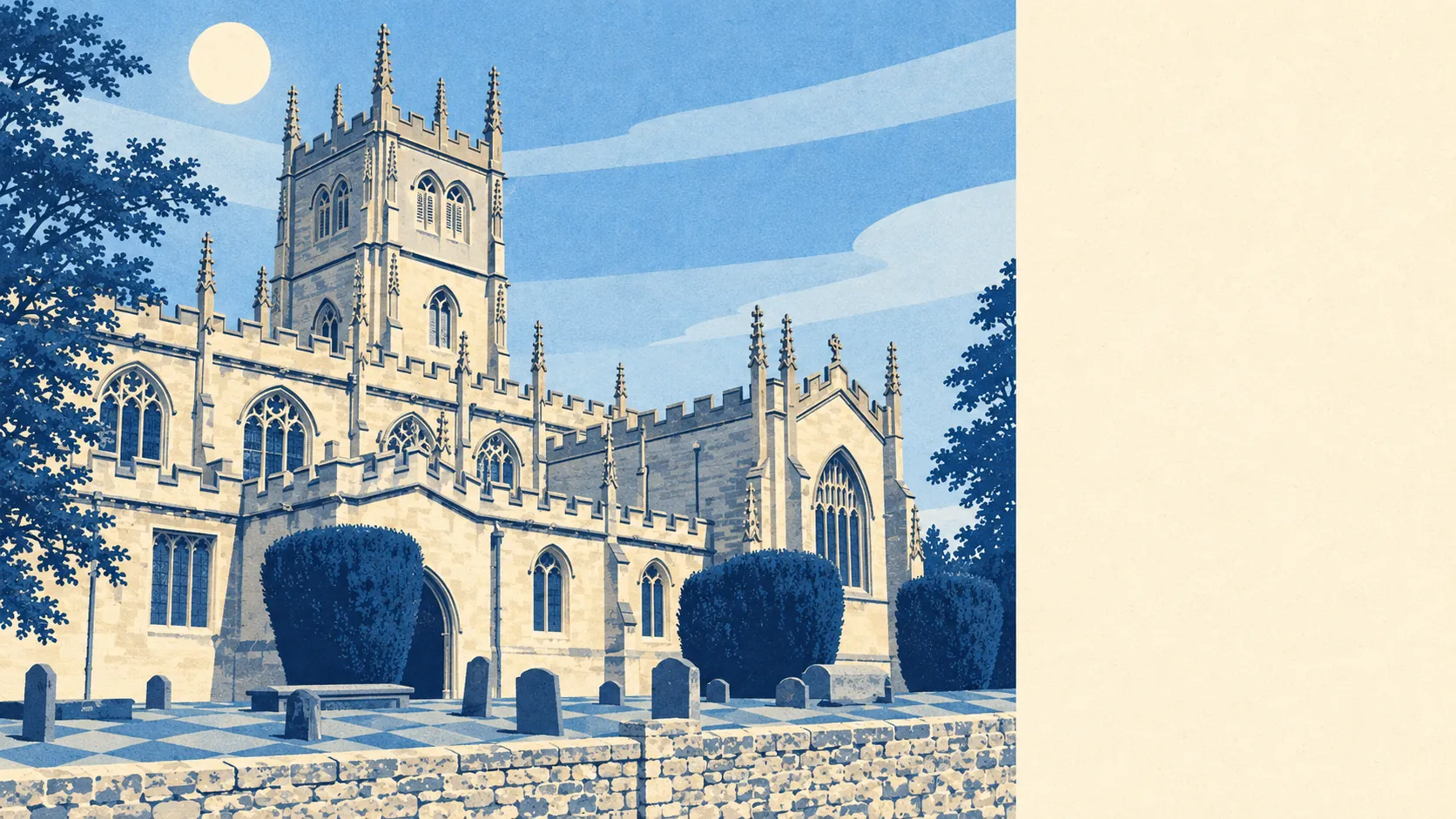
Heritage constraint is real but concentrated. The area holds 194 listed buildings: St Mary's Church at grade I, 15 at grade II* and 178 at grade II, many clustered around The Green, where the Tounson Almshouses and the old clothiers' houses sit. There is one conservation area, covering the historic core. Buy there and uPVC windows become a conversation with the council. Buy in the newer estates and the only person with opinions on your extension is next door.
Around two-thirds own, the typical resident is about 43, and median gross household income, modelled across the area for the financial year to March 2023, comes out around £61,000. That is comfortable without being showy. Calne is where people who earn decent money go when they would rather spend it on a bigger house than on a better postcode, and the numbers suggest they are not wrong.
This page also covers the villages that orbit the town: Derry Hill and Studley, towards the Bowood gates; Heddington, under the downs to the south; and Hilmarton, out on the road towards Wootton Bassett. They trade the town's shops and schools for quieter lanes and longer drives to both.
Calne suits a household that works from home at least part of the week, drives for the rest, and wants three bedrooms and a garden for money that would buy a flat in Bath. Families after space and a straightforward secondary route to Kingsbury Green Academy do well here, as do people whose working life runs off the Porte Marsh Industrial Estate or the road to Chippenham.
It suits less well anyone who needs a train to function, anyone for whom a hospital 45 minutes away is a genuine worry, and anyone who wants a town centre that stays lively after the shops shut. Those buyers are better served somewhere with a station, and that is a question of fit, not of Calne falling short.
Calne has form with bold residents. Edmund Rich was born here, became Archbishop of Canterbury and was made a saint, and the town's roll of notable names also includes John Pym, Joseph Priestley, Jan Ingenhousz and Samuel Taylor Coleridge. Priestley got a listed house and a primary school named after him. In 2006 the town also turned down a cement plant on Porte Marsh, which suggests the residents know exactly what kind of place they want and are willing to say no to get it.
Calne is a good place to live, comfortably above average, if you accept what it is. Its real strength is the surroundings: green space at the end of most streets, Bowood next door and the downs on the horizon. The weak spot is flood risk, and it comes mainly from surface water rather than the river, so check the exact postcode before you fall for the kitchen. Get those two things right and the only real complaint left is the one every resident already has: the train isn't coming back.