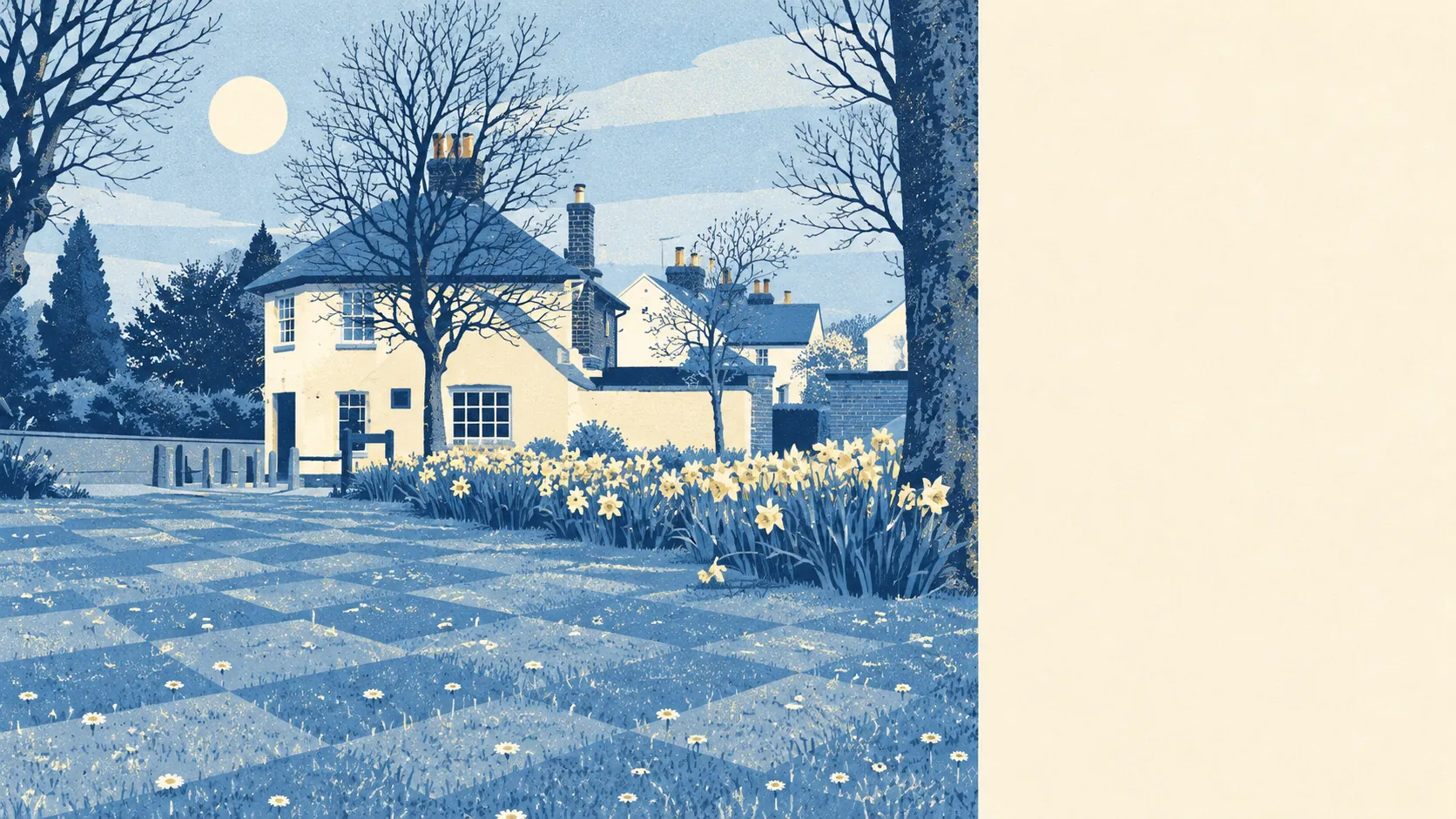
Caddington is green on its doorstep and busier further out. A green space is a couple of minutes' walk from most front doors. Water is a short stroll away. The gardens are big. Shops, restaurants and pubs are mostly on the Luton side of the postcode, and the countryside around carries no special protection.
The nearest green space is on average about 130 metres from a front door, and there are about eight within a kilometre. The village green has outlasted most of what was built around it, and parents here can get a child onto grass without loading the car.
Water is close too. The nearest pond, lake or stream averages about 550 metres away, and there are about five within a kilometre. None of it is grand, but it's within walking distance.
The National Cycle Network is further off, on average about 2.7 kilometres from home, and none of Caddington's postcodes count as close to it. The village has no ancient woodland. Getting out on a bike means riding on the roads to reach the network.
The rated-premises figures cover the whole LU1 postcode district, which takes in a slice of Luton as well as the village. On that wider count there are 779 shops, 32 pubs and 46 restaurants. Very few of them are in Caddington itself.
Fine-particle air pollution across Central Bedfordshire averaged about 7 micrograms per cubic metre in 2024, a figure for the whole council area.
The village itself is a medieval parish church, a village green and a lot of post-war housing, with small places dotted around it, among them Slip End, Kensworth, Aley Green, Pepperstock and Woodside. Wardown Park is in Luton, and Markyate Cell Park lies on the other side. Until 1897 the parish was split between Hertfordshire and Bedfordshire, and it also took in Markyate Priory, founded in 1145, until the same year's boundary changes handed that land to Markyate. Caddington kept the priory site for centuries after the monks left in 1537, and then lost it to a boundary change.
Private gardens are a large part of what you get. Across the village there are about 152,000 square metres of garden for every 1,000 residents, the measure of private outdoor space that matters here. With semis, detached houses and bungalows making up most of the stock, most households have a garden of their own as well as the green down the road.
The business rates list for the village holds 42 rateable premises, 15 of them shops and five offices, with the rest spread thinly across other categories. These are premises on the valuation list, which is a different thing from businesses trading today. A short parade and a handful of offices is about the size of the local economy.
Nine food premises in Caddington carry a hygiene rating, and about 44% hold the top score of five. None is rated at the low end of the scale.
No protected landscape overlaps the village. There is no area of outstanding natural beauty, no site of special scientific interest and no ancient woodland. The countryside is ordinary, open and unprotected.
What surrounds Caddington is one of its strengths: grass and water within a short walk, big private gardens, and Luton close enough to do the rest.