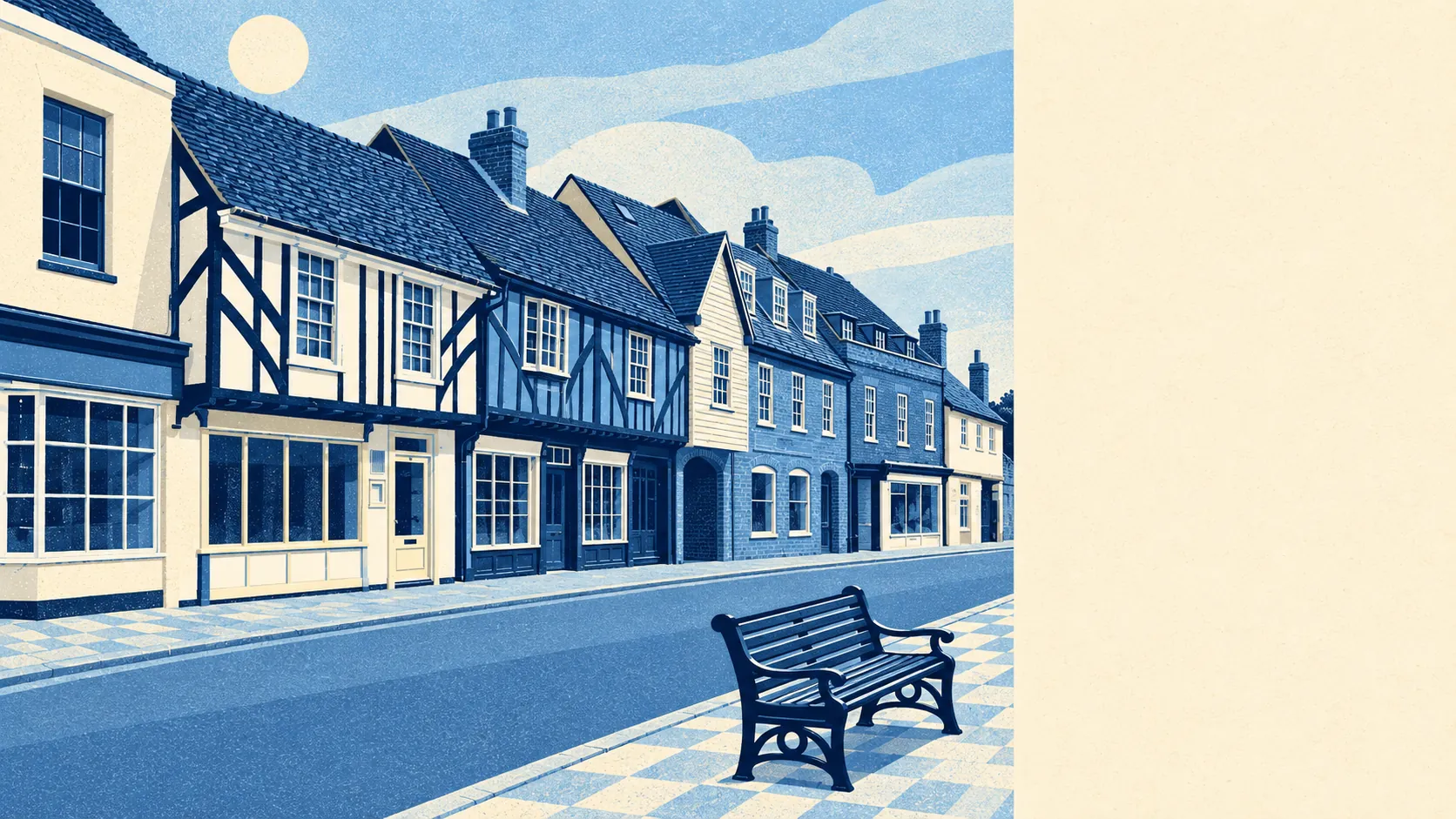
Yes, you can extend most homes in Buntingford, but the paperwork gets heavier the closer you get to the old High Street. More than a hundred buildings in the area are listed. Two conservation areas cover the old core of the town and the village of Aspenden. The neighbours put in planning applications all the time, so extending here is routine. The ground is mostly fine to build on.
Historic England lists 114 buildings in the area: 2 at Grade I, 5 at Grade II* and 107 at Grade II. Listing protects the whole building, inside and out, so changes to its character need listed building consent as well as any planning permission, and that covers windows, doors, internal walls and the roof. Buntingford grew up as a coaching stop on the London to Cambridge road and kept a lot of its Georgian and medieval buildings. If your plan for a Georgian front on the High Street involves plastic windows, East Hertfordshire's conservation officers will already have a view.
The area has two conservation areas: one covering Buntingford's historic centre and one around Aspenden, just to the south. In a conservation area, the council looks harder at changes that can be seen from the street. Some building work that needs no permission elsewhere, such as certain side extensions, cladding and roof alterations, needs an application here, and you need permission before taking down most of a building or cutting back most trees. Aspenden is a small village, but that doesn't exempt it. East Hertfordshire District Council's online planning search will tell you whether a particular house is inside a conservation area and what previous owners have applied for, and it is a ten-minute check worth doing while you are still house-hunting.
The planning register shows people altering their homes all the time. It records 668 applications between April 2024 and June 2026, and 276 of them came in the most recent twelve months. That means extensions, loft conversions and new windows are routine here, and your plan will be one of many the council deals with.
The British Geological Survey rates the risk of the ground shrinking and swelling as up to class 3, a moderate rating, across about 3% of the area. Clay at that level swells when wet and shrinks when dry, and an extension built on it may need deeper foundations than the original house. A structural engineer can tell you before the builder starts digging. Across most of the town it won't come up.
For most homes in Buntingford, which are unlisted and outside the old core, permitted development rights cover a modest rear extension or loft conversion without a full planning application, within the national size limits. Inside either conservation area those rights are narrower and some work needs an application. A listed building needs consent for almost any change to its character. The rules come down to the individual building: the same extension can be straightforward on one house and need a long application next door.
Your freedom to extend in Buntingford is middling. For most homes it's straightforward, but the old High Street and Aspenden come with conservation officers, and they will have opinions.