Bruton is a good place to live, as long as you can drive, and almost everyone here has quietly reached that conclusion. Two in three own their homes. Half the households run more than one car. There is a railway station in the town and almost nobody uses it to get to work. Bruton is not a commuter town doing a rural impression. It is a rural town that would rather you stopped asking about the trains.
The housing is older and heavier than the flat-and-terrace mix people expect from a market town. On the council tax valuation list, about 35% of dwellings are detached, 21% semi-detached, 18% terraced and 14% bungalows, with flats down at 6%. Roughly 39% of the stock went up before 1930, which is the part of the town most buyers are actually shopping for. Energy certificates put about 47% of certificated homes in bands A to C, 34% in band D and 19% in band E or worse, so the thick-walled charm comes with a certificate that says what thick walls do. Mains gas reaches only around 45% of households. The rest are heating some other way, and about 10% are doing it on electricity alone, which is a fact that turns up on the January bill rather than at the viewing.
Sale prices in the Bruton area ran to a median of £375,000 across 34 sales in the year to April 2026 on the Land Registry's figures. That single number hides two entirely different transactions. Detached houses came in at a median of £530,000 across 13 sales, semi-detached at £380,000, terraces at £225,000 and the handful of flats at £120,000. Meanwhile the most common council tax band across the area is band B, with about 29% of dwellings sitting in bands A or B. A town selling detached houses at half a million while a third of its homes are banded near the bottom is a town that has changed faster than the paperwork.
Renting is harder to pin to the town itself. Typical private rent across the Somerset area was about £990 a month as of April 2026, up around 4% over the year, with a two-bed at roughly £890 and a three-bed at roughly £1,100. Those are authority-wide numbers covering every corner of Somerset, not Bruton's own, and an average stretched over a county that size tells you about the county.
On safety, the recorded crime rate for the area was about 51 crimes per 1,000 people in the twelve months to May 2026, against roughly 93 per 1,000 across the Somerset authority, which puts the area around 45% below the local average. It is the strongest single thing in the data. The mix is worth a look before anyone gets comfortable: burglary accounts for about 9% of recorded crime here against roughly 4% across England and Wales. Quiet, spread out, and full of things worth taking.
Connectivity is where the shine comes off. Bruton has its own station, and Castle Cary a short drive away puts you on a faster line, but 47% of working residents drive and about 37% work from home, which is what a place looks like when the alternative is a bus. There are 27 bus stops in the area, and across those with published timetables the average is about seven weekday departures per stop and roughly half a bus per stop in the peak hour, though about 78% of stops see something at weekends. The Department for Transport's modelling puts a town centre at about 18 minutes by car and a hospital at about 39. Broadband makes up some ground: gigabit service reaches around 78% of premises, superfast around 90%, and only about 1% sit below the minimum speed standard, with 97% of the area covered by all mobile operators. You can work here comfortably. Leaving is the expensive part.
The surroundings are the reason people put up with all of that. Green space sits about 450 metres from the average postcode with around seven separate spaces within a kilometre, and water is closer still at roughly 230 metres. Flooding needs reading carefully, because two different measures are in play. On the postcode indicators, which include surface water, about 8% of postcodes in the area carry a high rating on at least one measure, 10% medium and 33% low. On the Environment Agency's river-and-sea zones, about 3% of the area falls in zone 3 and 1% in zone 2, rising to around 7% once the climate change allowance is applied. Around 5% of the area sits inside a recorded historic flood extent, with 18 events on the record, the most recent in 1982 when the channel simply could not carry what the Brue was sending down it. Ground conditions add their own paperwork: about 79% of the area sits in the higher radon bands, topping out at the highest, and shrink-swell clay reaches the moderate class across roughly 13%.
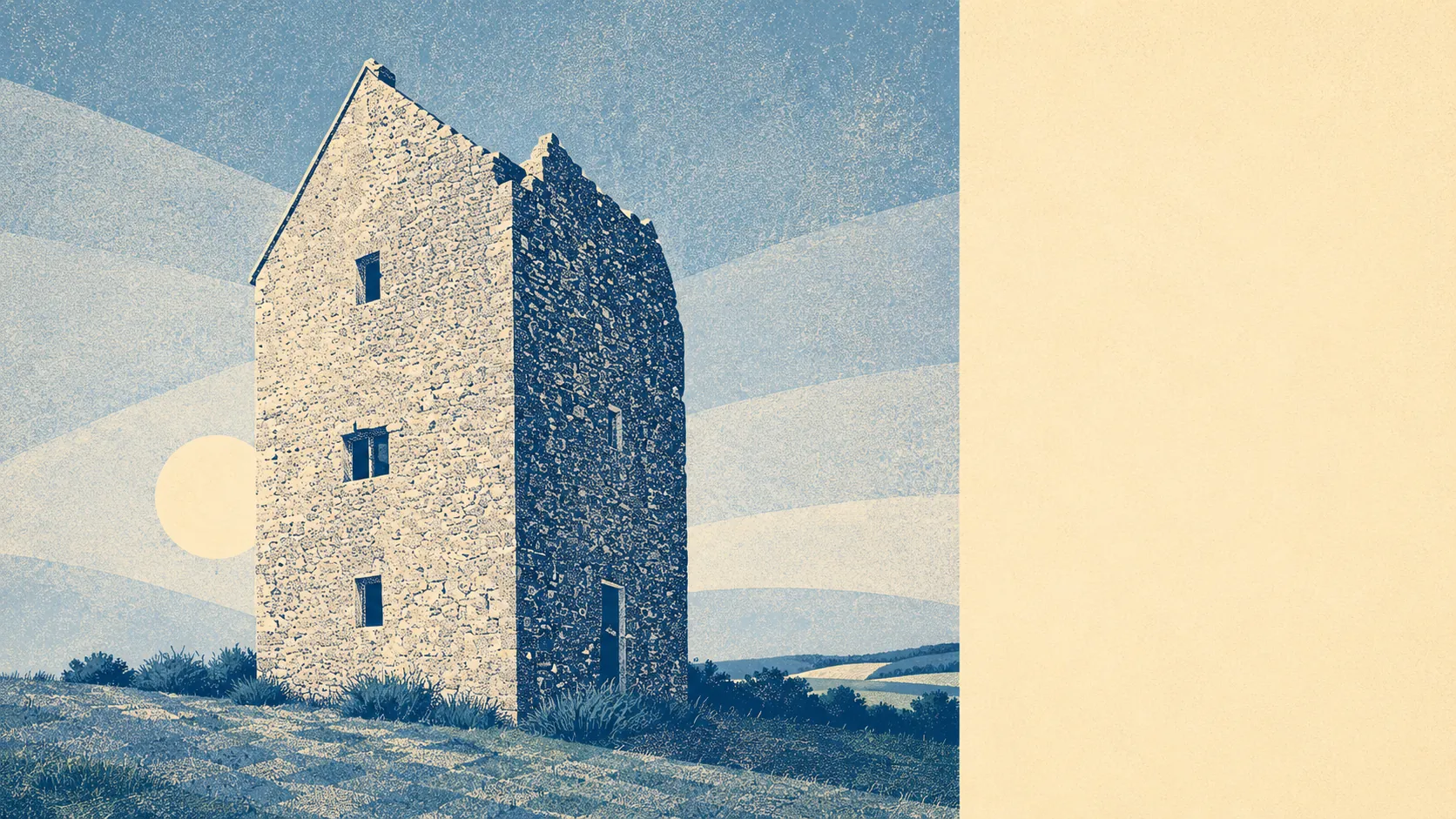
Heritage is the other constraint, and it is a substantial one. The area carries 257 listed buildings, five of them Grade I, 14 Grade II*, and 238 Grade II, along with four conservation areas covering Bruton, Batcombe, Hadspen and Pitcombe, ten scheduled monuments, and one entry on Historic England's Heritage at Risk register. Sexey's Hospital, Bow Bridge, the Market House and the 16th-century Dovecote above the town are the postcard, and they are also the reason replacing a window becomes a conversation with a planning officer rather than a builder.
The people fit the housing. About 68% own their homes, the median age is 46, and gross household income across the Bruton area averaged roughly £56,000 in the financial year to March 2023, with around 39% holding a degree-level qualification and 30% of households containing one person. The page covers the surrounding villages too, so Brewham, Pitcombe and Redlynch sit inside these figures rather than beside them.
It suits people who want space, quiet, and a short walk to a field, and who have already made peace with two cars and a supermarket run. It suits home workers particularly well.
It does not suit anyone who needs a timetable, a hospital within twenty minutes, or the freedom to knock a wall through without a heritage officer forming a view. First-time buyers looking at that terraced median should look at what the terrace needs doing to it first.
The town has form for attracting people with money and taste, from Sir Maurice Berkeley turning a dissolved abbey into a mansion in the 16th century to the theatre producer Cameron Mackintosh and the broadcaster Mariella Frostrup more recently. John Steinbeck's time here has its own corner of the museum. A town that found a copy of Magna Carta in the 1950s and spent the proceeds on school buildings has priorities, and they have not changed much.
Bruton comes out above average, and it earns that in the fields rather than on the roads. Its real strength is the surrounding country and how close green and water sit to every doorstep, backed by a crime rate well under the county's. The weak spot is getting anywhere, where a thin bus offer and a station most residents ignore leave the car doing everything. Buy here for what is outside the window, not for what is at the end of the platform.