Brenchley is a good place to live if you've already done the earning. Eight in ten households own their home. The typical resident is fifty. More than half of the people in work do it from the spare room. This is a village for people who have finished climbing the ladder, not people looking for the bottom rung.
Houses do the talking here, and they talk in detached. The council-tax valuation list puts about 39% of homes as detached, 30% semi-detached, 13% bungalows, 8% terraced and only 6% flats, so anyone hoping for a starter flat is in the wrong parish. Half of the homes were built before 1930, and more than half have four or more bedrooms. The heating is the part the listing photos won't show you. Only about 7% of homes run on mains gas and about 9% are electric only, which leaves most of the village heated by something that doesn't come down a pipe from the street. Ask what it is before the viewing. The energy performance certificates are not flattering either: of the 167 homes certificated, about 45% are rated E or worse and only 23% reach C or better. Old houses keep their character and lose their heat. Both of those come with the deeds.
On prices, the Land Registry recorded 6 sales in the year to late February 2026, with a typical price of about £550,000. The 3 detached houses in that run went for a median of about £750,000. Six sales is a thin market, so one big farmhouse can swing the figure, but nobody should arrive expecting a bargain. Council tax confirms it. The most common band in Brenchley is G, and only about 6% of homes sit in bands A or B. The council's bands carry charges from about £2,446 a year at band D up to about £4,892 at band H, and most of the village lives nearer the top end of that list than the bottom.
Renting is a small corner of the market, with about 15% of households renting privately. Typical private rent across the Tunbridge Wells area was about £1,510 a month as of April 2026, up about 5% on a year earlier. That is a borough-wide figure, not Brenchley's own, and a four-bedroom period house in the village will not be the typical rental.
Safety is the easy part. Police figures put Brenchley's crime rate at about 33 per 1,000 people in the year to May 2026, roughly 52% below the Tunbridge Wells average of about 70. The worst thing likely to happen on most evenings is a disagreement about parking outside the church.
Getting anywhere takes planning. The nearest stations named in the area are Paddock Wood and Beltring, and only about 3% of commuters go by train, against about 36% who drive. The Department for Transport's 2019 modelling puts the nearest town centre about 21 minutes away by car and 49 minutes by public transport, and those bus figures age badly as routes get cut. There are 6 bus stops, averaging about 16 weekday departures each, and all of them get a weekend service, which is more than some market towns can say. Broadband is better than the lanes suggest: about 73% of premises can get gigabit speeds, about 94% can get superfast, and none fall below the legal minimum. At least one mobile operator covers everywhere with 4G or 5G. That matters, because the working-from-home crowd here is not a minority. It is the majority.
The surroundings are the reason people pay. About 97% of the area sits inside the High Weald Area of Outstanding Natural Beauty, the nearest green space is typically about 300 metres away, and water is about as close. On flooding, the Environment Agency's river-and-sea flood zones 2 and 3 cover none of Brenchley's postcodes. A broader measure tells a slightly different story: about 15% of postcodes carry a high rating on at least one flood indicator, surface water included. Those two figures measure different things. Check the specific address rather than the village headline. Radon sits in the lowest band and the ground is stable.
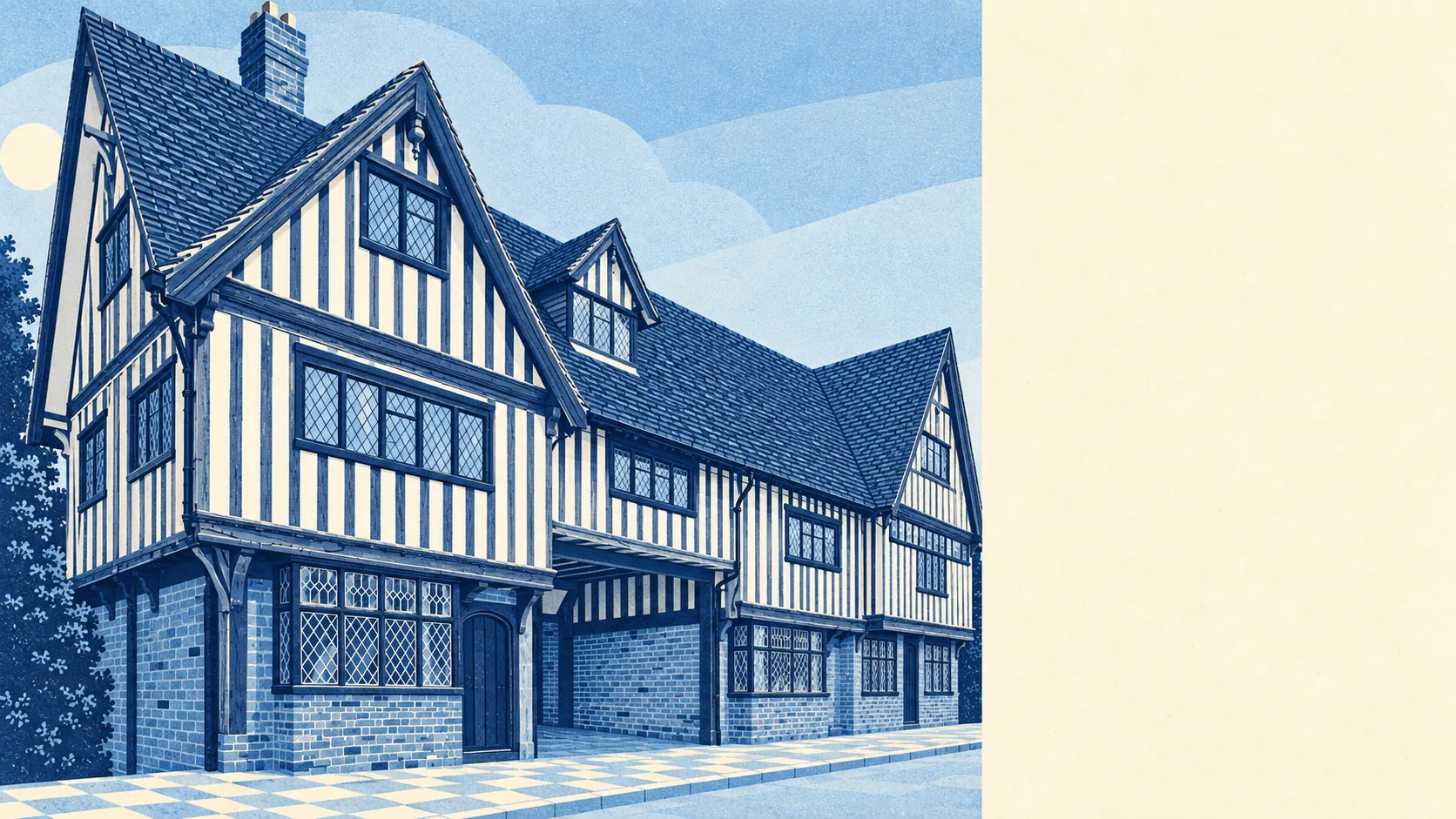
Heritage is dense. Historic England lists 80 buildings here, including 1 at Grade I, 7 at Grade II* and 72 at Grade II. The Parish Church of All Saints, Brenchley Manor, The Old Palace and Matfield House are among them. No conservation areas fall within the area, so the controls attach to individual listed buildings rather than whole streets. If yours is one of the 80, the windows, the roof and the extension are all a conversation with the planners first. If it isn't, you have more freedom than the timber framing next door might suggest.
The people match the housing. About 82% of households own their home, the median age is 50, and modelled gross household income averaged about £68,000 in the financial year to March 2023. About 49% of adults hold a degree. The page also covers Matfield, which shares the parish and the same general mood of settled, comfortable quiet.
This suits a family that has already sold something in London or Tunbridge Wells and wants four bedrooms, a view over the Weald and a village where the loudest thing is the church bell. It suits anyone who works from home and drives when they have to.
It does not suit a first-time buyer, anyone without a car, or anyone who expects cheap heating in an old house. If a bus timetable decides your week, Paddock Wood is the more honest fit.
The history has its moments. Hamo de Crevecoeur held Brenchley and established its market in the 13th century. John Browne, the second King's Gunfounder, died here in 1651, back when the Weald made iron and the village was part of it. The furnace site now sits across the boundary in Horsmonden. George and John Lewis left for the Massachusetts Bay Colony in 1634, which remains the most drastic response to Brenchley house prices on record. Edward Martin, the cricketer, was born here in 1814, and so was the musician Gordon Giltrap in 1948.
Brenchley is a good place to live, and its real strength is what surrounds it: the High Weald on every side, green space a short walk away and crime at about half the borough rate. The weak spot is the price of getting in, along with what it costs to heat an old house once you're there. The village isn't trying to be affordable and doesn't apologise for it.