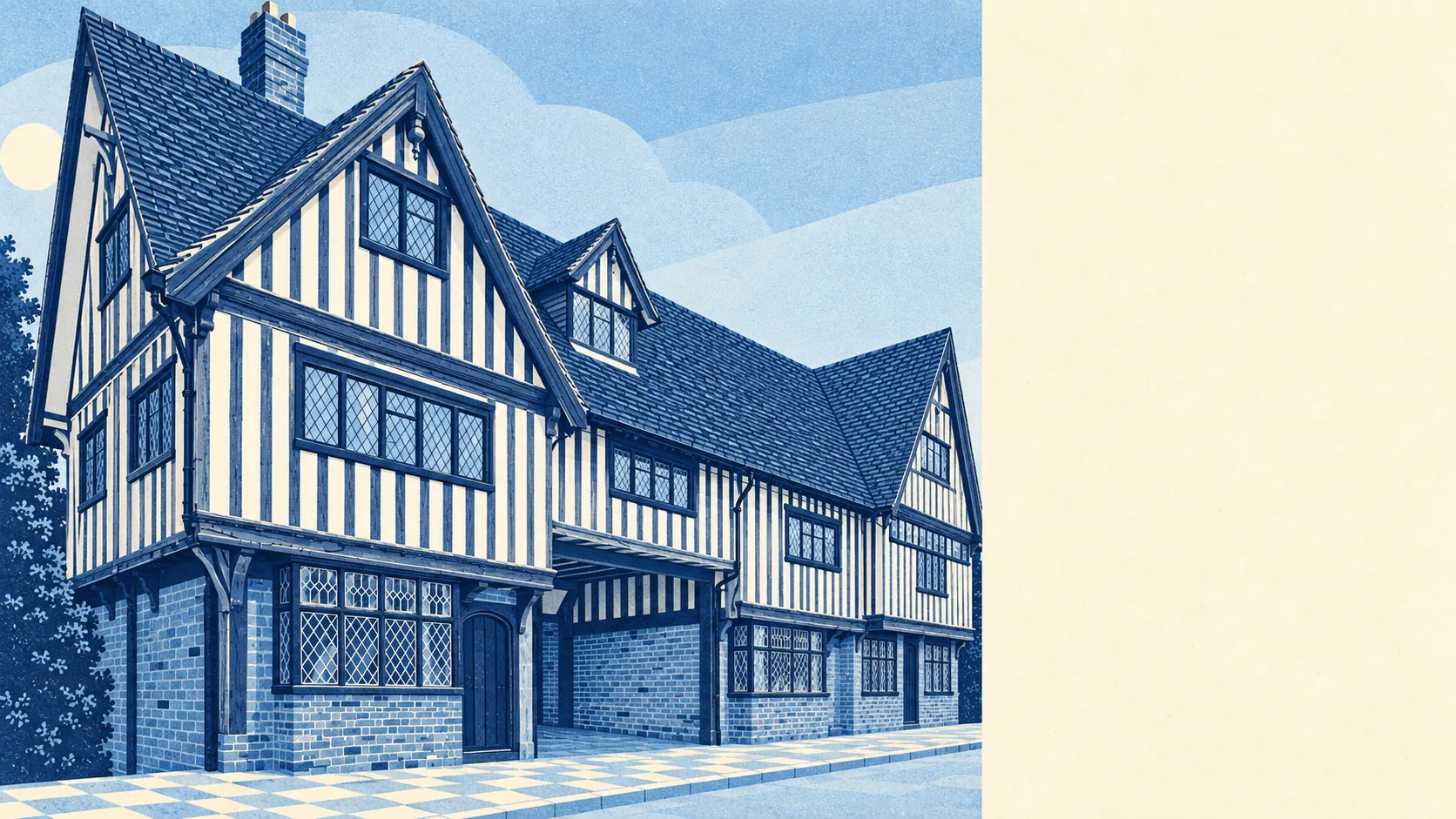
Yes, unless you've bought one of the houses the village is proudest of. Eighty buildings are listed. No conservation area covers the streets. Nearly all of it sits inside a protected landscape. Ordinary houses get room to grow. The old beauties get a caseworker.
Historic England lists 80 buildings in Brenchley: 1 at Grade I, 7 at Grade II* and 72 at Grade II. Listing covers the whole building, inside and out, plus anything fixed to it, so replacing windows, removing an internal wall or adding a rear kitchen all need listed building consent on top of any planning permission. Grade II is the common grade and still means consent for most changes that affect its character. Grade II* and Grade I are where the conversation gets slower and the paperwork thicker. Works done without consent aren't a paperwork slip. They're a criminal offence, and they follow the house to the next buyer's solicitor.
The planning register shows how busy people are anyway. From April 2024 to June 2026, 1,385 applications were lodged in the area, 550 of them in the last twelve months. Whatever the listing map says, people here are still building garden rooms, re-roofing barns and putting glass boxes on the back of Victorian houses. The queue at the planning office is proof the house can change. How much it can change depends on the house.
In practice, Brenchley splits into three kinds of house. A house that isn't listed carries the normal permitted development rights, the automatic allowance for modest extensions and alterations without a full application. There's no conservation area to trim those rights back. The catch is the High Weald Area of Outstanding Natural Beauty, which covers about 97% of the area. A protected landscape narrows some of those automatic rights, so check with the council before assuming a side extension or a change of cladding goes through without a form. A listed house needs consent for almost anything visible and plenty that isn't. The house next to a listed building is free in law, but its neighbour's setting counts for something when the planners read your plans.
Before buying, find out which of the three the house is. Ask whether it's listed, check the council's planning history for the address, and read what previous owners applied for and what they got. A conservatory refused five years ago tells you more than any estate agent's "scope to extend".
Freedom to extend in Brenchley is middling. Most houses can grow within the normal rules, adjusted for the protected landscape. The listed ones need patience and a planning consultant before anyone orders a skip.