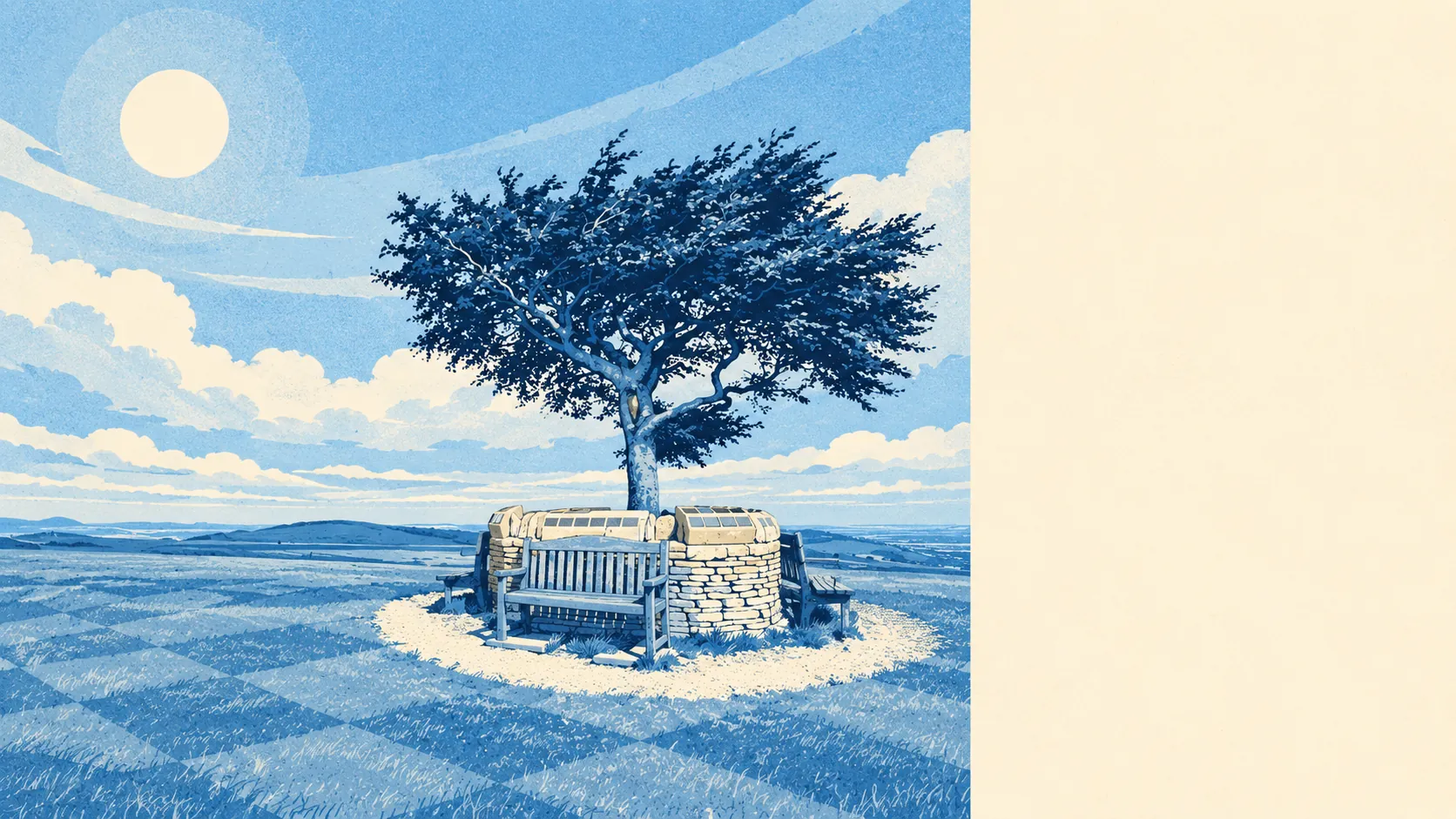
Bishop's Cleeve is surrounded by green space and has a big hill on its doorstep, and that's the best thing about living here. A park or playing field is a couple of minutes' walk from most front doors. There's water nearby too. The high street is mostly practical shops. The highest point in the Cotswolds starts where the houses stop.
From the average home, the nearest public green space is roughly 150 metres away, and there are about 19 within a kilometre. Bishop's Cleeve has plenty of parks and playing fields, more than most villages of its size.
Ponds, streams and other open water are about 310 metres from the average home, with about 16 within a kilometre. It's not riverside living, but most children here grow up knowing where the nearest duck pond is.
The National Cycle Network is about 4.4 kilometres from the average home, and no postcode is close to a route. There's no ancient woodland in the village either. Leisure cycling here starts with a few kilometres on ordinary roads.
The rated-premises count for the wider area takes in about 865 shops, 52 pubs and 89 restaurants. That count reaches beyond the village, so it describes the surrounding area as well as the high street. There are plenty of places to buy things, and a reasonable choice of places to drink.
Average fine-particle pollution across the Tewkesbury council area was about 6 micrograms per cubic metre in 2024.
Less than 1% of the village falls inside the Cotswolds Area of Outstanding Natural Beauty, and no part of it overlaps a site of special scientific interest or ancient woodland. In other words, the protected landscape starts right at the edge of the village and doesn't cover the houses themselves.
The hills give the village its character. Cleeve Hill, the highest point in the Cotswolds, rises behind the village. Ancient earthworks on the hill include Cleeve Hill camp and The Ring, and Nottingham Hill camp is further along. Postlip Hall and its tithe barn are on the slopes, Southam has a tithe barn of its own, and Woodmancote and Gotherington sit either side of the village. Prehistoric people built hillforts on these slopes long before anyone built houses below them.
The Office for National Statistics measures about 125,000 square metres of private garden for every 1,000 residents across the village's neighbourhoods. That's a lot of private outdoor space. The houses mostly have proper gardens, as you'd expect from estates built when developers still gave houses room at the back.
The business rates list for the village itself has 199 rateable premises. The largest groups are 54 shops, 27 offices, 22 workshop-type industrial units, 11 warehouses and eight factories. These are premises on the valuation list, which includes units standing empty, so it's a count of buildings, not of businesses trading. It describes a working village, with industrial estates alongside the high street.
The food safety inspectors rated 47 premises here. About 87% have the top hygiene score, and about 2% are at the bottom of the scale. You're more likely to get a good meal here than a bad one.
The surroundings are one of the real strengths of Bishop's Cleeve. There's green space at the end of most streets, a large hill behind the village, and gardens big enough to use.