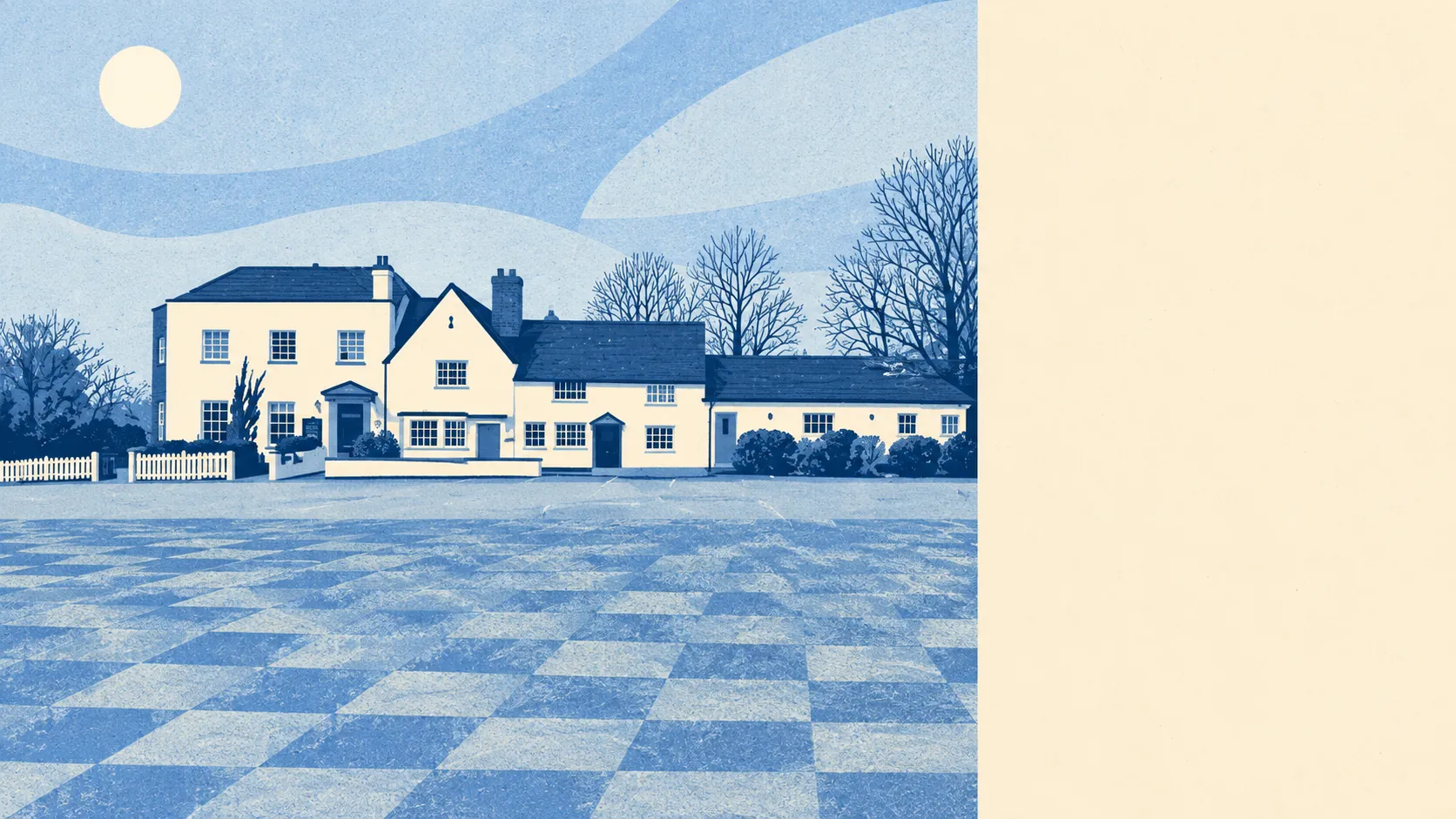
Yes, if comfortable is what you came for. Nearly eight in ten households own their home. Half the workers commute to the spare room. A typical sale clears half a million. Nobody moves to Binfield for excitement, and nobody asks for a refund.
Binfield is a detached-house village with a few concessions to everyone else. Across every home on the council-tax list, about 40% are detached, 19% semi-detached, 17% terraced and 14% flats, with bungalows making up another 7%. Only about 13% were built before 1930. The old village is the garnish, and the plate is late twentieth-century brick. Homes with four or more bedrooms account for about 42% of households, which is a lot of spare rooms for a place that insists it's a village. The energy certificates follow from the age of the stock: about two-thirds of certificated homes rate A to C, and only about 8% sit at E or worse. Around 79% of homes heat with mains gas, and electric-only heating runs at about 6%. So the draughty-cottage running costs that ambush buyers in older villages are mostly somebody else's problem here.
The Land Registry's twelve months to April 2026 recorded 51 sales at a median of about £540,000. The 22 detached houses went for around £737,500, the 12 semis about £535,000, the six terraces about £431,000 and the 11 flats about £325,000. The council-tax list tells the same story: band E is the most common band, and only about 7% of homes sit in bands A or B. Estate agents will call that a range of options. It's a range the way a ladder is a range, and most of Binfield is standing near the top.
Renting is a minority sport here. As of April 2026, the typical private rent across the Bracknell Forest area was about £1,500 a month. That's a council-wide mean, not a Binfield figure, and it averages Bracknell's flats in with Binfield's big detached houses. For the stock that dominates here, homes with four or more bedrooms averaged around £2,440 a month across the district. Anyone renting a family house in Binfield is paying for the postcode before they've unpacked.
Binfield's published crime rate for June 2025 to May 2026 was about 45 crimes per 1,000 residents, roughly 34% below the Bracknell Forest average of about 68. Thames Valley Police covers the area. For a village this pleased with itself, the crime record is one piece of self-regard that holds up.
There are 43 bus stops, but at peak time fewer than two buses an hour pass each one. That's a timetable written for people who own two cars, and about 61% of households do. At the 2021 census about half of workers were working from home and about 41% drove. Train commuting barely registers at about 1%, even though Bracknell, Martins Heron, Wokingham and Twyford stations are all within reach. The Department for Transport's 2019 modelling put the town centre about 12 minutes away by car and about 21 by public transport. Gigabit broadband reaches about 96% of premises, superfast reaches all of them, and every operator's 4G or 5G covers the whole area. In Binfield the fibre is the commute.
Flood risk is the one area where the village has to drop the smugness. About 17% of postcodes carry a high rating on at least one flood indicator, and that count includes surface water. None fall inside the Environment Agency's river-and-sea flood zones 2 or 3, and its rivers-and-sea register lists two properties, both at low risk. So the realistic risk is rainwater with nowhere to go rather than a river over its banks, and it varies street by street. Check the exact address before the survey, not after. Green space is the easy win. The average home is about 130 metres from one, with around 20 green spaces within a kilometre and open water about 235 metres away.
The name comes from Old English for open land where bent-grass grows. Most of the forest was cleared after the Windsor Forest Act of 1813, and for the next century and a half the village made its living servicing big houses that had no estates to pay for them, until Bracknell New Town came along. The big houses are still here. The area holds 61 listed buildings, three of them Grade II* and 58 Grade II, including Binfield Park, Binfield Place, Binfield Lodge and the Church of All Saints. There are no conservation areas within the area. For the ordinary late-century house that means normal planning rules on extensions. Buy one of the 61, though, and the council has a say in your window frames.
About 78% of households own their home. The median resident is 43, old enough to own a hedge trimmer and young enough to use it. The Office for National Statistics modelled average gross household income at about £80,800 in the financial year to March 2023. Put those together and you get a settled, well-paid, owner-occupied place where the neighbours are staying put, and they'll notice if your hedge isn't. This page also covers Waltham St Lawrence, which fits the same owner-occupied mould.
Binfield suits buyers who want a detached house, a quiet street and a home office. They'll use the car for everything and take being near Bracknell as a convenience rather than an identity. It also suits families who plan to stay for the long run. Of the 17 settings with a published Ofsted grade in the area count, every one is rated good or better and two are outstanding, and that list includes Binfield Church of England Primary School and King's Academy Binfield.
It suits people who want a railway on the doorstep much less, and anyone who'd rather rent than own will be swimming against the tide. The same goes for buyers who want nightlife within walking distance. If that's you, Bracknell and Wokingham give you more going on for less house, and that's a fair trade in either direction.
Binfield is a good place to live, and it has the price tag to prove it. Its real strength is the community: owner-occupied, prosperous, low-crime and not going anywhere. The weak spot is flood risk, which comes from surface water rather than rivers but is real enough to check house by house. Get the flood check done, bring your own car, and comfortable is exactly what you'll get.