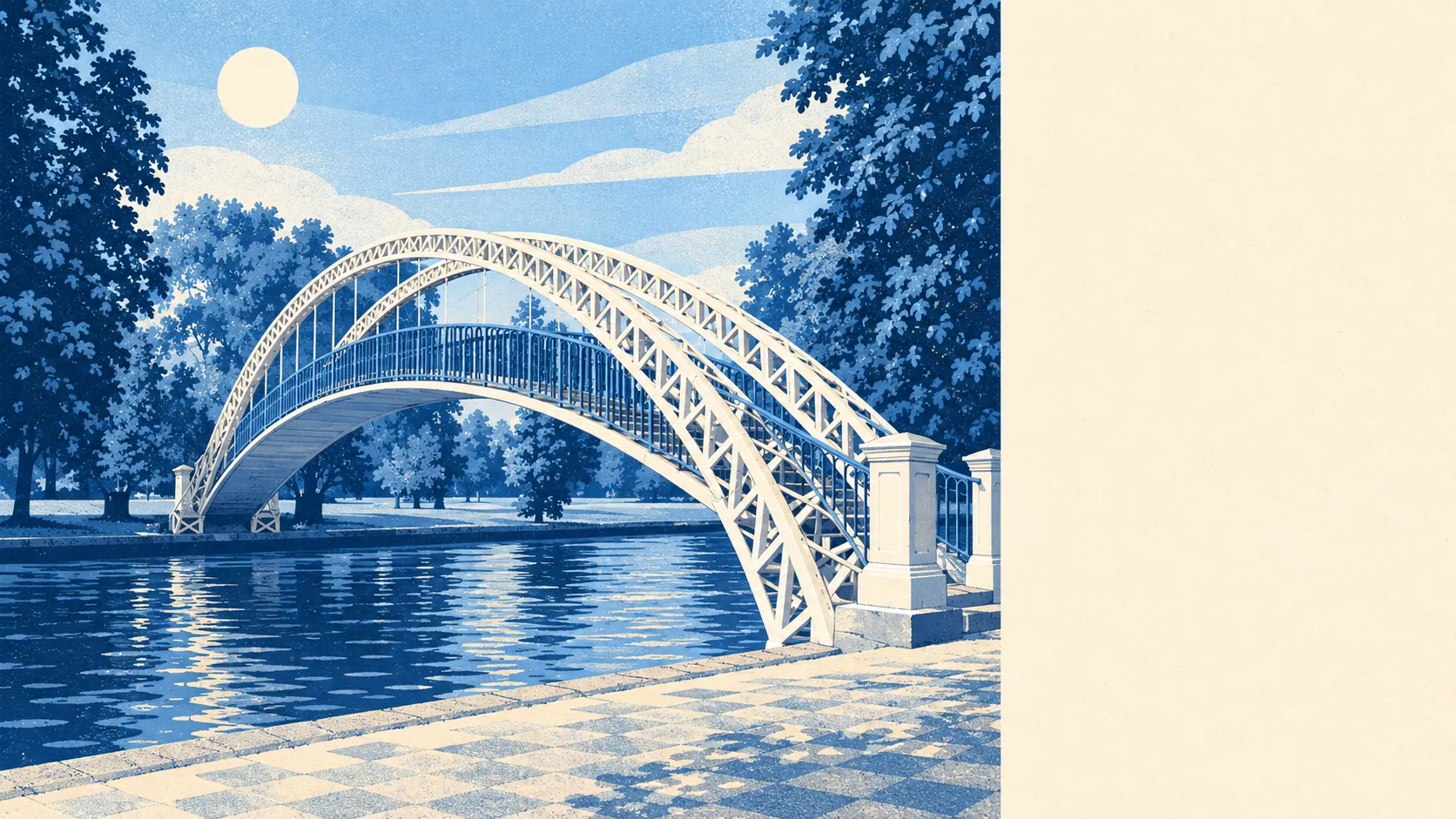
Bedford is much greener and wetter than you'd expect of a county town. The average home is a couple of minutes' walk from a park. The Great Ouse runs right through the middle. Dozens of green spaces and stretches of water are within a kilometre of most homes. None of it carries a national designation, and nobody out walking the dog seems to mind.
The nearest public green space is about 140 metres from the average home, and about 31 green spaces lie within a kilometre. Bedford Park, just north of the centre, is the largest of them. Priory Country Park runs along the river to the east. Both hold Green Flag status, which in the parks world means somebody reliably empties the bins.
Water is about 430 metres away on average, and around 32 bodies of water lie within a kilometre of the typical home. Most of that is the Great Ouse and the lakes along its banks. The Embankment gardens line the river through the town centre, and if you walk far enough upstream you reach Bromham Bridge, which is a scheduled monument.
The nearest stretch of the National Cycle Network is about 1,080 metres from the average front door, and about 31% of postcodes are close to it. That is short enough that a family bike ride on a Sunday can start from the front door without loading the car.
The area has about 1,200 shops, 153 pubs and 122 restaurants, so it has more pubs than places to eat. For a town that once ran on brewing, that seems about right.
On the government's latest air-quality figures, fine-particle pollution across Bedford Borough averaged about 7 micrograms per cubic metre in 2024.
The town's character comes from its river and the villages around it. To the west are Bromham and Oakley, to the east Renhold and Willington, where the dovecot and stables are both scheduled monuments, and to the south is Elstow, which has a conservation area of its own and the remains of its manor house. To the south-east, the airship sheds at Cardington are visible from miles away. Stevington Windmill is one of a long list of listed buildings scattered across the countryside. The town has a skyline, and the villages each have their own one landmark.
Homes here come with real outdoor space, with about 80,000 square metres of private garden per 1,000 people. Bedford's housing is mostly post-war semis and detached houses, and most of them came with a garden as standard.
The business rating list has 3,126 premises. Offices are the largest category at 811, followed by 772 premises in the main shop category and 208 warehouses. These are rated premises on the valuation list, so the count includes empty units as well as businesses that are trading.
Of 652 food outlets with a hygiene rating, 75% have the top score of five and about 2% are at the bottom of the scale. Most places to eat here have passed their inspection comfortably.
There's no area of outstanding natural beauty, no site of special scientific interest and no ancient woodland overlapping the area. The green space around Bedford is the everyday kind, made up of parks, riverbanks and playing fields, with no national landscape status that would draw visitors or add a premium to house prices.
The surroundings are one of the best things about living in Bedford. A park, the river and a cycle route are all close to most homes, and the parks are free to use.