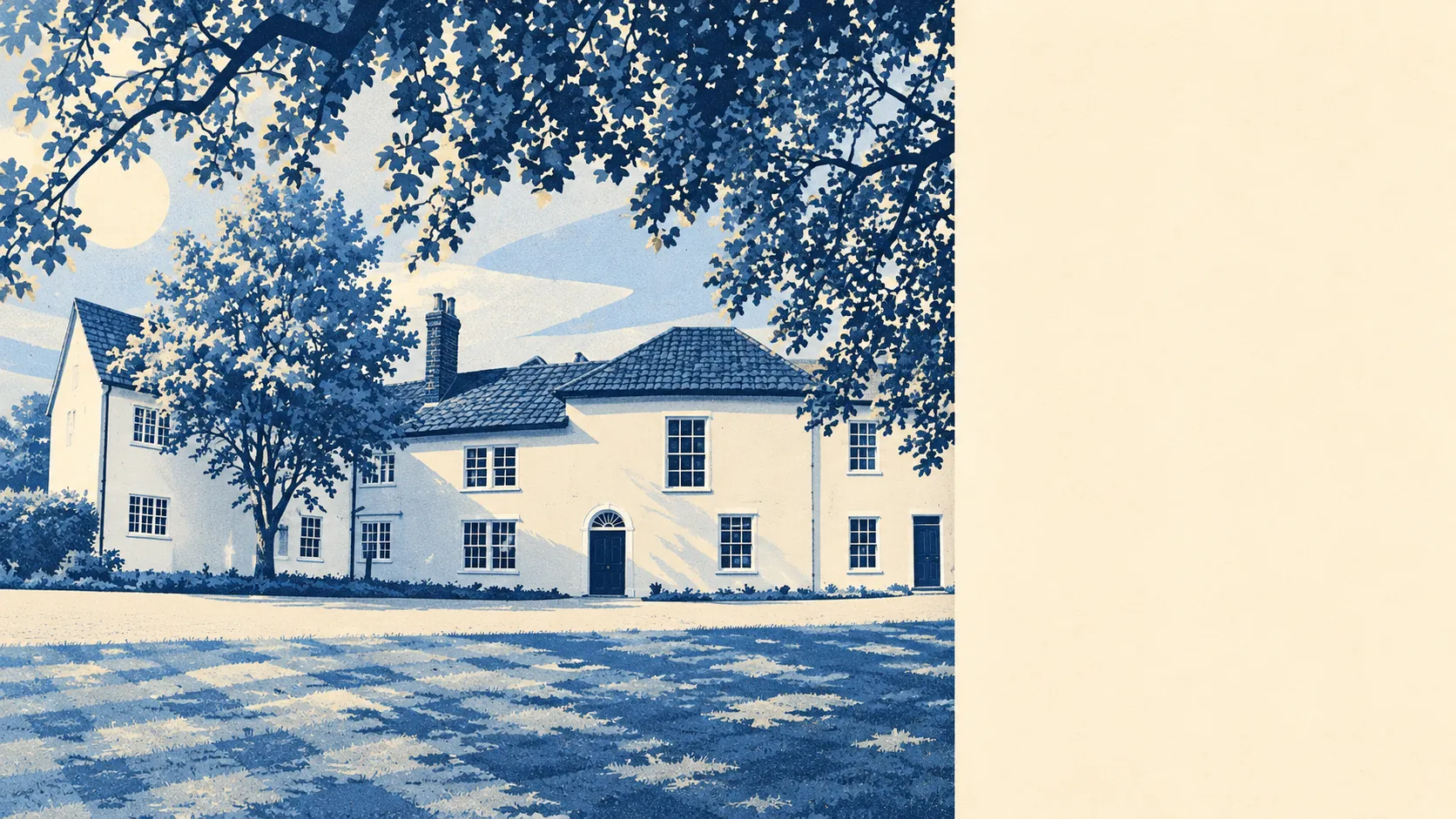
Becontree has a lot of green space and very little in the way of evenings out. Parks are close to almost every home. Water is a short walk away. The shops cover everyday needs, there are few restaurants, and there are only six pubs. The estate was planned for living in, and the planners made room for the green space.
On average, a home here is about 140 metres from the nearest public green space and has 23 green spaces within a kilometre. Parsloes Park was opened in July 1935 to mark the completion of the estate, and Becontree Heath, the open space that gave the area its name, is also covered by this page. Most front doors are a couple of minutes from a park.
Water is close as well. The nearest blue space, meaning a lake, pond, river or similar, is about 590 metres from the average home, and there are about 19 within a kilometre. That is plenty for a dog walk with ducks along the way.
The National Cycle Network is about 1.6 kilometres from the average home, and only about 13% of postcodes are close to it. There is no ancient woodland anywhere in the area. Cyclists ride on the estate's roads to reach the network.
Of the premises recorded here, 282 are shops, 6 are pubs and 3 are restaurants. Of 209 rated food businesses, 3 are restaurants, so takeaways, cafés and counters account for most of the rest.
Air quality figures cover the whole of Barking and Dagenham, where fine particles averaged about 9.1 micrograms per cubic metre in 2024.
The character comes from the estate's history. Becontree was built between 1921 and 1935 on land that was mostly market gardens, and it was laid out to cottage estate principles: low houses, terraced streets and parks built into the plan. Dagenham Village is the older core and the area's only conservation area. Chadwell Heath and Goodmayes are just to the north, and Valence House is among the area's listed buildings.
Private gardens add plenty more outdoor space. There is about 42,000 square metres of garden for every 1,000 residents, and gardens cover about a third of the area's ground. The cottage-estate plan gave even the smaller terraces a back garden, and the figures reflect that. Check the length of the garden on the specific house before you buy, since the plan did not give every house the same plot.
The council's valuation list records 684 rateable business premises in the area. The largest group is shops, followed by offices, of which there are 67, and there are no holiday lets at all. These counts are premises on the rating list, so some may be empty or used for something else. The list describes an estate built around people who live there, with little to bring visitors in.
Food hygiene is mostly good. Of the 209 rated food premises, about 65% have the top score of five, and about 4% are at the bottom end of the scale.
No protected landscape overlaps Becontree: no area of outstanding natural beauty, no site of special scientific interest and no ancient woodland. The green space here is parks laid out on former market gardens, and nobody has designated any of it.
The surroundings are one of Becontree's real strengths, because almost every home has a park or water within a short walk.