Battersea gives you a park, a river and a long run of shops, all within walking distance, which is more than most inner London postcodes manage. Green space is a short stroll from most front doors. The Thames is a short walk further. There are hundreds of shops and more than a hundred restaurants. The air is still London air.
Green space is close and plentiful. On average a front door here is about 134 metres from the nearest green space, and about 41 green spaces lie within a kilometre. Battersea Park, landscaped for public use in 1858, is the biggest of them. Before the park and the terraces, this was market-garden land, growing asparagus that went to market as "Battersea Bundles". The asparagus has gone, and the joggers have taken its place.
Water is never far away either. The nearest river, pond or lake averages about 500 metres from home, and about 48 are within a kilometre. The Thames runs the full length of the northern edge, and the boating lake in Battersea Park takes care of the rest.
The National Cycle Network averages about 1,100 metres from a front door, and only about 11% of postcodes are close to it. Cyclists here mostly make do with ordinary London roads.
The rating list gives the area's commercial shape. Wandsworth's valuation list records 2,362 rateable premises in and around Battersea, including 814 shops, 477 offices, 134 restaurants and 47 pubs. These are premises on a tax list, so some may be empty or between tenants on any given day. Food hygiene is good. Of 596 rated food premises, about 80% have the top score of five and about 3% are rated at the bottom of the scale. That leaves a small minority you only learn about from the sticker in the window.
Wandsworth as a whole recorded fine-particle pollution of about 9 micrograms per cubic metre in 2024.
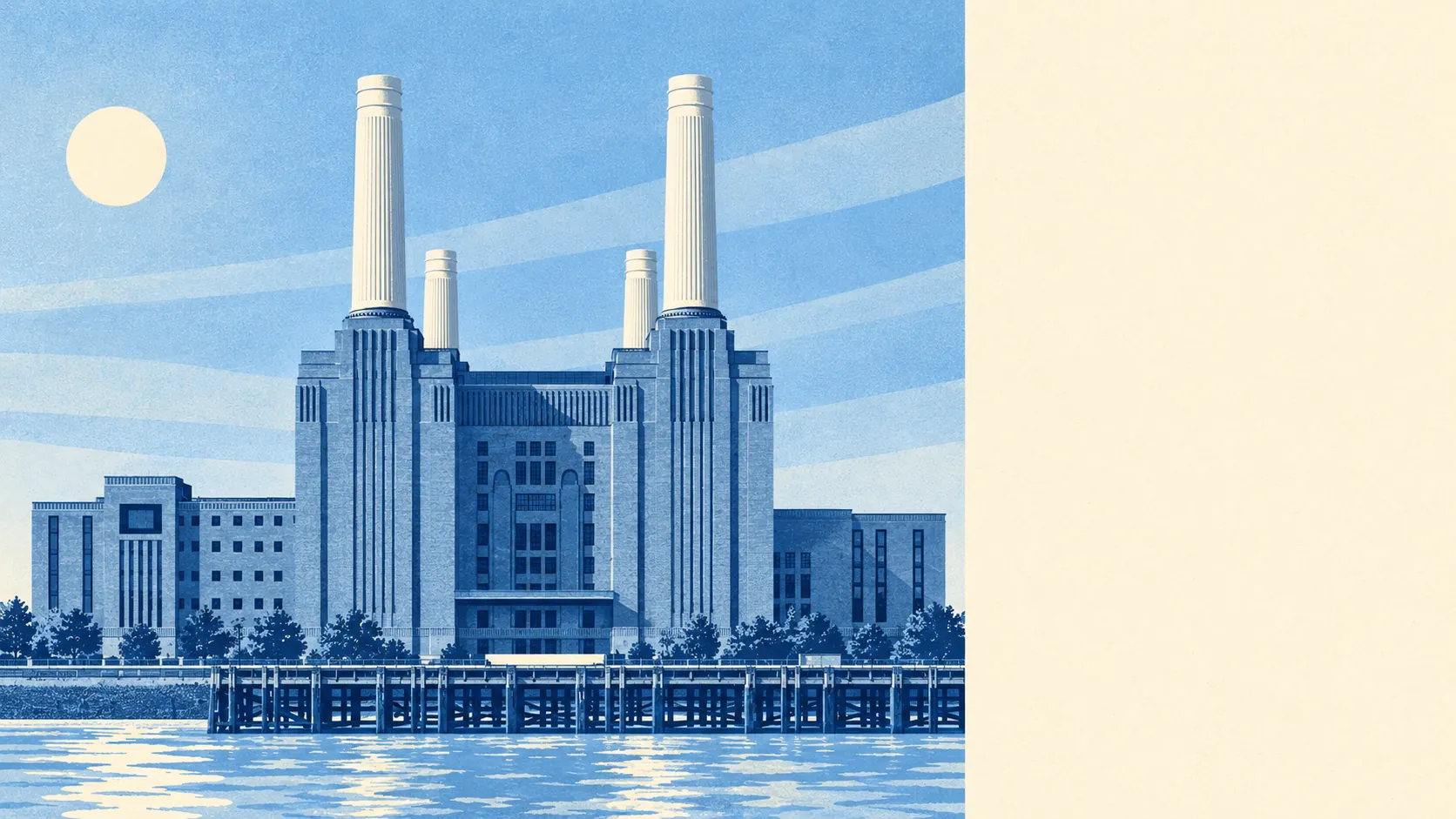
The character mixes industry, church and civic building. The listed Battersea Power Station is the obvious landmark, and the listed Battersea Arts Centre, formerly Battersea Town Hall, is the other. St Mary's Church, completed in 1777, hosted William Blake's wedding in 1782 and has Benedict Arnold buried in its crypt. A riverside parish church holding one poet and one turncoat is about right for a district this mixed. Nine Elms, also covered by this page, runs east along the river towards Vauxhall, and Clapham and Wandsworth sit on the other borders.
Private gardens are scarce. The area has about 13,100 square metres of garden for every 1,000 residents, which in a district made mostly of flats means a garden is something people share, borrow or do without. If outdoor space matters, ask whether the garden in the particulars is private or communal, and who decides what happens on it.
No protected landscape overlaps Battersea. There is no area of outstanding natural beauty, no site of special scientific interest and no ancient woodland. The green space here was laid out by Victorian planners and is kept up by park managers, which suits a place that grew from marsh, market gardens and power stations.
Battersea's surroundings are one of its real strengths. Most residents have the park, the river and the high street close by, and the shortage of private gardens is what they give up in return.