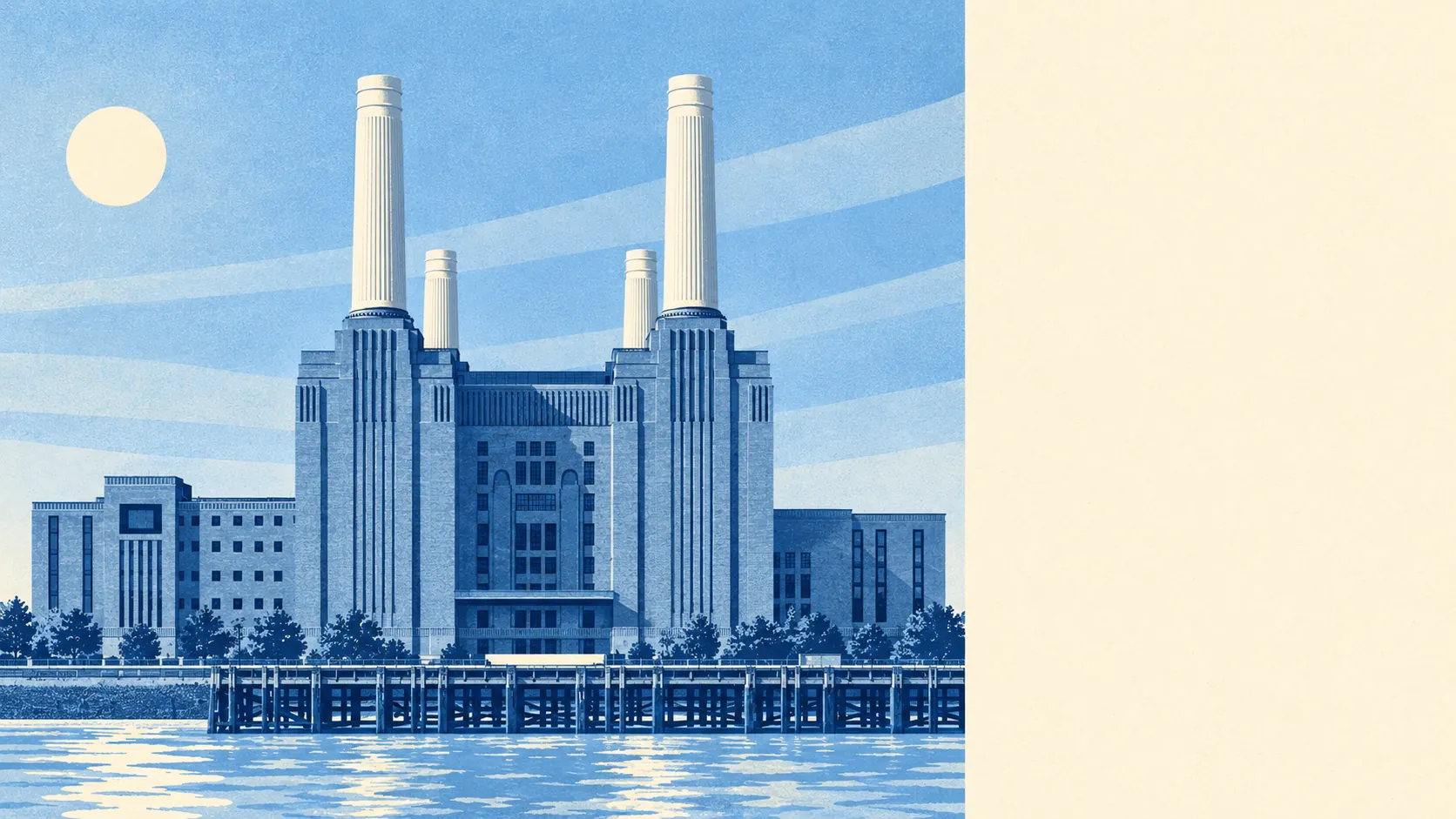
Battersea puts three railway stations at your door and then asks permission before you change the windows, and once both are counted it comes out a middling bet. Clapham Junction is one of the three. Hundreds of listed buildings and more than thirty conservation areas lie in and around it. Leaving the house is easy here. Altering it is the hard part.
The rail map makes the case. Clapham Junction, Battersea Park and Queenstown Road (Battersea) are all inside the district, and the buses fill in behind them. There are 307 stops, averaging about 527 weekday departures each and about 28 buses an hour at the peak, and 259 of the 260 stops with timetable data run a weekend service. The Department for Transport's modelled journey times, from 2019, put the nearest town centre about 10 minutes away by public transport and the nearest large employment centre about 15. About 89% of premises can get gigabit broadband, and every operator covers the whole area with 4G or 5G. At the 2021 census, 58% of working residents were working from home and 5% went by train. Thousands of people live beside Europe's busiest railway junction, and on census day most of them stayed in.
Altering a home is where Battersea pushes back. There are 435 listed buildings in and around the district, two of them Grade I and 39 Grade II*, and 33 conservation areas, Battersea Park, Battersea Square and Clapham Junction among them. Five of those listed buildings are on Historic England's Heritage at Risk register. Inside a conservation area, replacement windows, a roof extension or a new front wall can all need consent. Pigs were once bred on Pig Hill, which later became the Shaftesbury Park Estate and is now a conservation area of its own. Ground that used to keep pigs now has views on sash windows.
Battersea grew up on the bank of the Thames Tideway, on low land drained from marsh, and the Environment Agency's map shows it. About 63% of the area is in flood zone 3, the highest of its river-and-sea flood zones. The Agency's separate property-by-property assessment of river and sea risk is calmer. Of roughly 19,900 properties assessed, 72 are rated high risk and about 16,800 very low. Counting every flood indicator together, surface water included, about 18% of postcodes show high risk on at least one. The Agency's latest recorded flood here dates from 1928, when the Thames overtopped its defences. Nobody in a riverside showroom leads with that year, but the zone map still does.
The Land Registry recorded 802 sales in the year to May 2026, at a typical price of about £747,000, and that one figure covers two separate markets. The 596 flats sold for about £625,000. The 190 terraced houses sold for about £1,309,000, and the 14 semis for about £1,340,000. In Battersea a flat is the normal purchase and a house is the luxury. Council tax pulls the other way. Band E is the most common band, only about 12% of homes are in bands A or B, and yet Wandsworth's Band D bill is about £1,030 a year. Even Band H costs about £2,060, and people moving in from other boroughs tend to check that figure twice.
Renting is no cheaper. Wandsworth as a whole puts typical private rent at about £2,600 a month, up about 4% in the year to April 2026, and about 38% of Battersea's households rent privately, with another 23% in social housing. Here, renting is how most people live.
The council-tax valuation list describes a district of flats. About 79% of dwellings are flats, about 17% are terraced houses, about 2% are semis and fewer than 1% are detached. About 39% were built before 1930. Energy certificates are better than that age profile would suggest, with about 68% of certificated homes in bands A to C. About 62% of households heat with mains gas, and about 18% rely on electricity alone.
Crime runs above the borough. The police's published figures for the year to May 2026 put Battersea at about 118 recorded crimes for every 1,000 residents, roughly 13% above the Wandsworth average of about 104. Anti-social behaviour accounts for about 24% of it, against 16% nationally. Vehicle crime accounts for 8% against 5%, and burglary 6% against 4%. Violence and sexual offences, the largest category almost everywhere, make up 22% here against 35% across England and Wales. Most of the trouble here involves parked cars and noisy neighbours.
The people are young, well paid and mostly renting. About 37% of households own their home, and the typical resident is 33. The Office for National Statistics models gross household income at about £87,000 a year for the year to March 2023. Plenty of residents earn mortgage money and pay a landlord anyway. This page also covers Nine Elms, the riverside stretch on Battersea's eastern edge.
Outside, the district is generous. On average, green space is about 134 metres from a front door and open water is within about 500 metres. Battersea Park, landscaped for public use in 1858, is the big one, and the Thames runs along the whole northern edge.
Battersea is right for the flat buyer or renter who works from home half the week, uses Clapham Junction for the other half, and treats a conservation area as part of the view. A buyer who wants a terrace so they can add a loft, a rear extension and new windows all at once should look somewhere with less history to answer to.
Battersea is a fair, middling choice. Getting anywhere in London from here is the easy part, and making changes to a home here is the slow part. It's the right call for anyone who cares more about the train than the extension.