Banbury will sell you a typical home for under £300,000 and hand you a crime rate a third above the rest of its own district along with the keys. For most buyers the house wins that argument. Terraces go for about a quarter of a million, and semis aren't far behind. Half the homes are in the two cheapest council tax bands. The police log is the price of admission, and it's a price plenty of people pay without complaint.
The Land Registry recorded 538 sales in Banbury in the year to May 2026, at a median of about £288,000. The type of house makes the real difference. Flats went for around £160,000, terraces for about £252,000, semi-detached houses for £310,000 and detached houses for about £428,000. Council tax keeps to the same working-town line. Band B is the most common band, and about 54% of homes sit in Bands A or B. It's a valuation list drawn up for people who also have to pay the bills, and it still reads that way.
About four in ten households rent, and Cherwell District Council's area as a whole has a typical private rent of about £1,290 a month. That figure covers every village in the district as well as the town, so it tells a renter what the district charges and leaves the street to them. A one-bed averages about £960 across the same area, and a three-bed about £1,450.
The housing is post-war brick, and lots of it. On the council-tax valuation list, which covers every dwelling, semis make up about 29% and terraces about 28%, with flats at 21%, detached houses at 15% and bungalows at about 7%. Only about 12% of homes were built before 1930. Energy ratings are respectable: about 64% of certificated homes rate A to C, and about 7% rate E or worse. About 76% of homes heat on mains gas, and about 12% run on electricity alone. Banbury Castle was demolished after the Civil War, and the town seems to have taken the hint about old buildings.
Safety is the weak spot. Thames Valley Police recorded crime at about 102 per 1,000 residents in the year to May 2026, roughly 34% above the Cherwell average of 76. Violence and sexual offences make up about 43% of the total, against about 35% across England and Wales. That police category is broad and includes common assault without injury. Public order offences run at about 10% of the mix, against 7% nationally. The force charges about 9% of the crimes it deals with, against about 12% nationally, which puts it 37th of 42 forces. That last figure covers the whole of Thames Valley Police's patch, from Banbury down to the Thames, and the town shares it with everyone else.
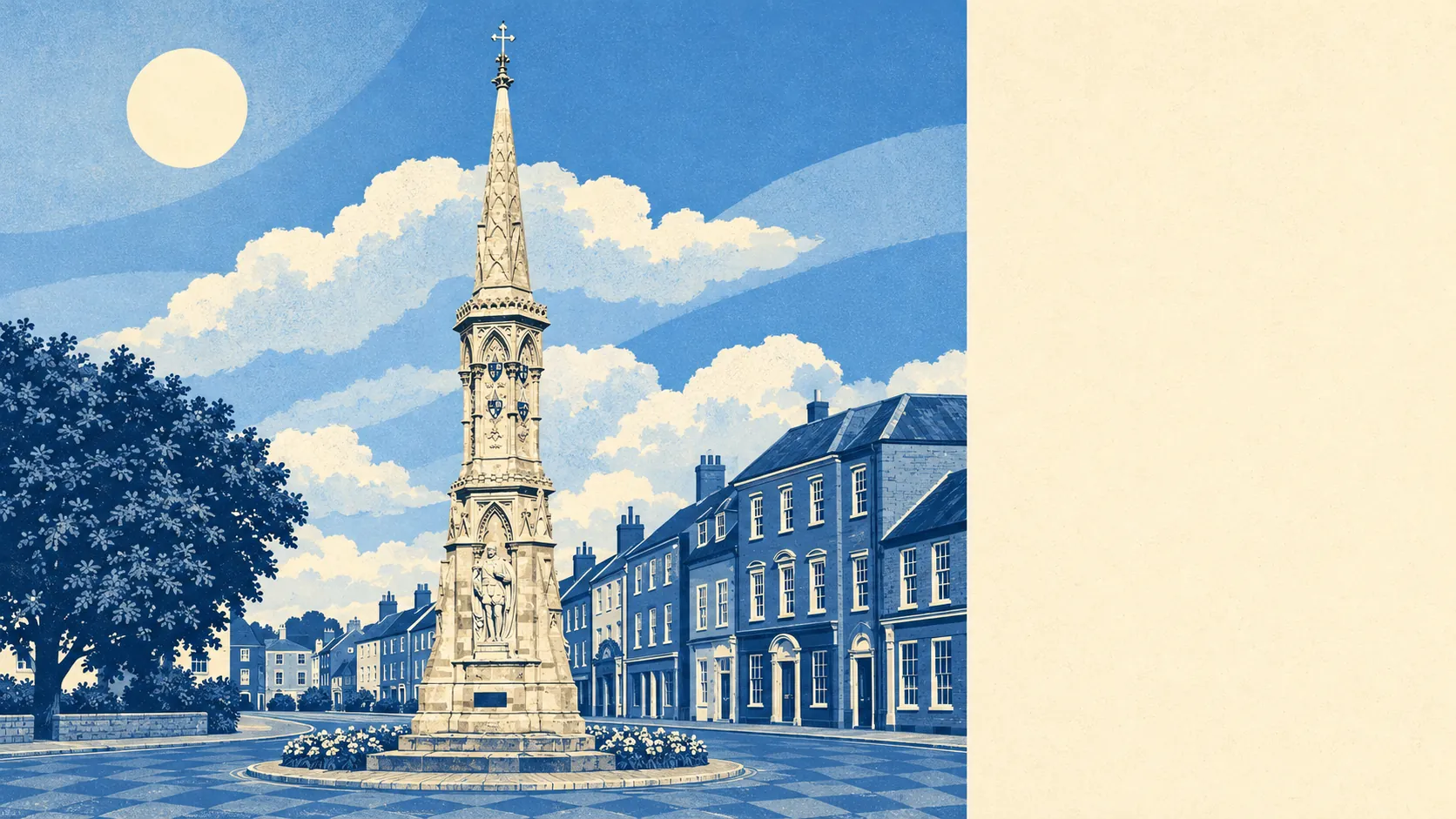
There are 264 listed buildings in and around the town: 2 at Grade I, 13 at Grade II* and 249 at Grade II, including Banbury Cross itself and the Reindeer Inn, where Oliver Cromwell reputedly based himself before Edge Hill. Six conservation areas fall within the wider area, among them Banbury, Grimsbury, Bodicote, Drayton, Hanwell and the Oxford Canal. In those, the council gets a say over windows, doors and extensions. Tooley's Boatyard is a scheduled monument, so a canal repair yard has stronger protection than any house you could buy beside it.
Banbury Rail Station has trains to London, Birmingham and the north, and Kings Sutton Rail Station covers the villages to the south-east. At the 2021 census, about 1% of working residents took the train to work, about 48% drove, about 23% worked from home and about 15% walked. A mainline station in a town that mostly drives past it. The area has 284 bus stops, and stops with timetable data average about 78 weekday departures each. Gigabit broadband reaches about 85% of premises and superfast about 99%.
The River Cherwell runs just east of the town centre, and Banbury flooded heavily in 1998 and 2007. The Environment Agency's most recent recorded event is from July 2007, when the main river went over its banks. Measured by postcode, about 17% of Banbury's postcodes carry a high rating on at least one flood indicator, surface water included. Measured by the Environment Agency's river-and-sea flood zones, about 2% of the area falls in Zone 3 and about 3% in Zone 2. The two measures disagree because only the first one counts rain with nowhere to go.
About 56% of households own their home, the typical resident is 38, and modelled gross household income averaged about £56,000 in the financial year to March 2023. The Ruscote estate was expanded in the 1950s to take London overspill, and Banbury has been taking in people who wanted more house for their money ever since.
Green space is about 140 metres from the average front door, and water is about 460 metres away, whether that's the Cherwell or the Oxford Canal. People's Park opened in 1910 and still has its bowling green. The page also covers the villages Banbury serves. Bodicote and Hanwell sit at the edge of town, Wroxton and Drayton to the west, Cropredy and Great Bourton to the north, and Adderbury, Deddington and King's Sutton to the south, with Hook Norton and the Sibfords further out.
Anthony Burgess taught at Banbury Grammar School for several years in the 1950s. The school is now Wykham Park Academy, which is how most of the town's history goes: still standing, under a newer sign.
Banbury is right for buyers who want three bedrooms, a garden and a station for semi money, and who will check a crime map without letting it make the decision for them. Anyone whose shortlist begins and ends with the police figures should be looking at the villages around it. The houses make the case for the town and the police log makes the case against, and the houses win more often than they lose.