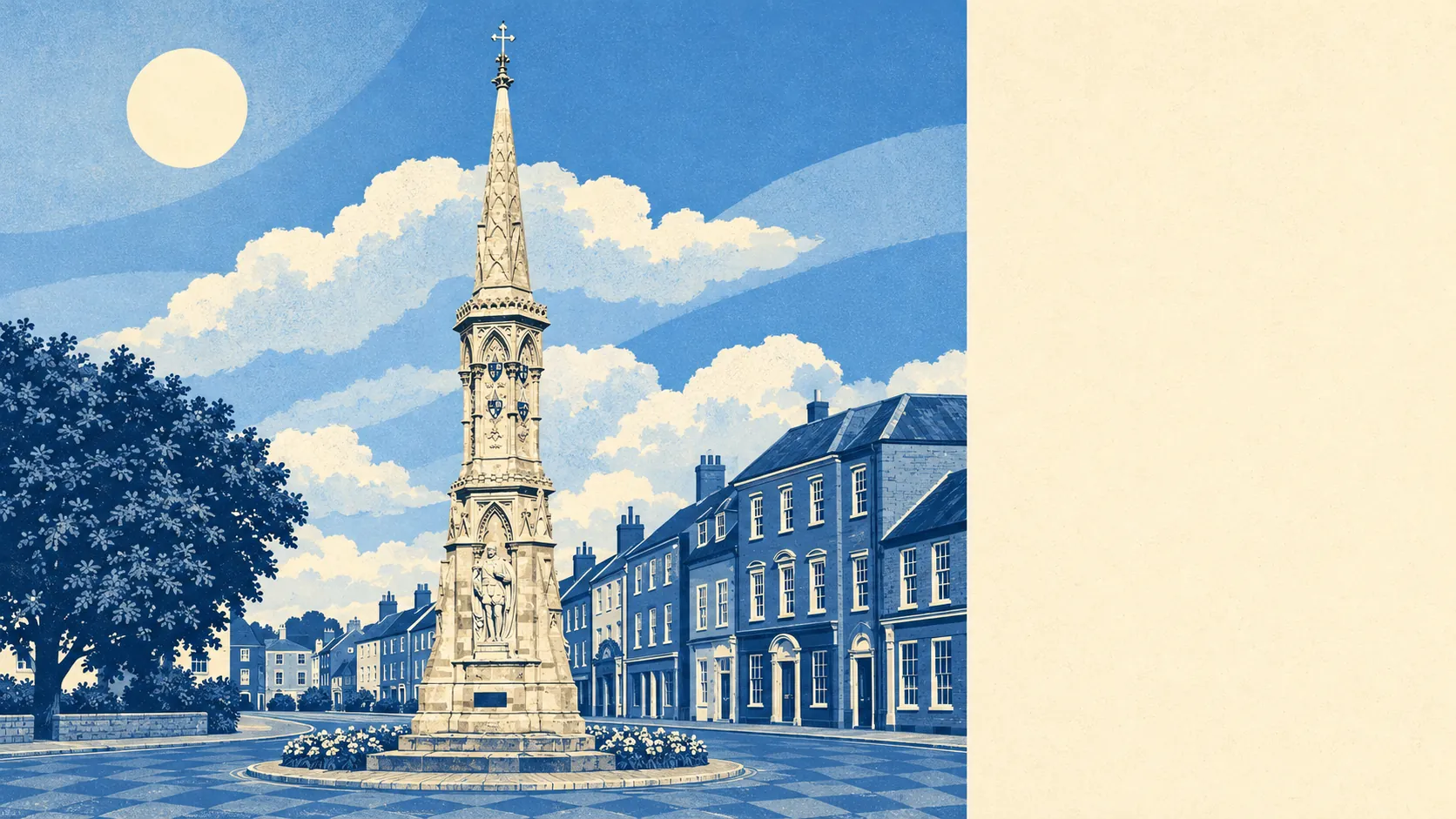
You can extend most homes in Banbury, and the old town is where it gets difficult. The heritage is packed into a small centre. Six conservation areas fall within the wider area. Hundreds of listed buildings stand in and around the town. A post-war semi on the hill and a Georgian frontage near the market are two very different conversations with the council.
There are 264 listed buildings in and around Banbury. Two are Grade I, 13 are Grade II* and 249 are Grade II. Listing covers the whole building, inside and out, so a new window, a knocked-through wall or a rear extension on any of them needs listed building consent from Cherwell District Council. Doing the work first and asking afterwards is a criminal offence. Banbury's medieval money came from wool, and the buildings it paid for still get a say over every change made to them.
Six conservation areas fall within the wider area: Banbury itself, Bodicote, Drayton, Grimsbury, Hanwell and the Oxford Canal. Inside them, the council looks harder at anything visible from the street, from extensions and dormers to cladding and demolition, and work that would need no application elsewhere can need one here. Grimsbury was part of Northamptonshire until it joined the town, and it now has a conservation area of its own. The canal was dug in 1778 to carry coal, and it's now protected mainly for how it looks.
One scheduled monument falls within the area. That's the strictest tier of protection, and it only matters to the few homes whose land runs up against it.
Plenty of people still apply. Cherwell District Council's register holds 3,669 planning applications for the area between April 2024 and July 2026, 1,476 of them in the last twelve months. That's live evidence that people alter houses here all the time. The paperwork just runs longer in some streets than in others.
Two listed buildings in the area are on Historic England's Heritage at Risk register. That means they're in poor enough condition for their repair to qualify for grant help and to draw close attention from the council and Historic England. It has no bearing on a buyer of an ordinary house down the road.
For most of Banbury, the picture is more relaxed than the counts suggest. On the council-tax valuation list, only about 12% of homes predate 1930, and the estates on Bretch Hill, Hardwick, Ruscote and Hanwell Fields were built well after that. A house on one of those estates, away from the conservation areas, can often take a modest rear extension or loft conversion under permitted development, which is the national allowance for small works without a full application. In a conservation area or on a listed building, that allowance shrinks or disappears. The one check worth making is to ask Cherwell District Council in writing whether the house is listed or inside any of the six conservation areas, and whether permitted development rights have been removed. A side extension that goes through quietly on a hilltop estate can turn into months of letters about brick and window frames near the Cross.
Freedom to alter a home in Banbury is limited where it matters most. The older and more central the street, the more consents you'll need, and only buyers on the newer estates get to treat a planning application as routine.