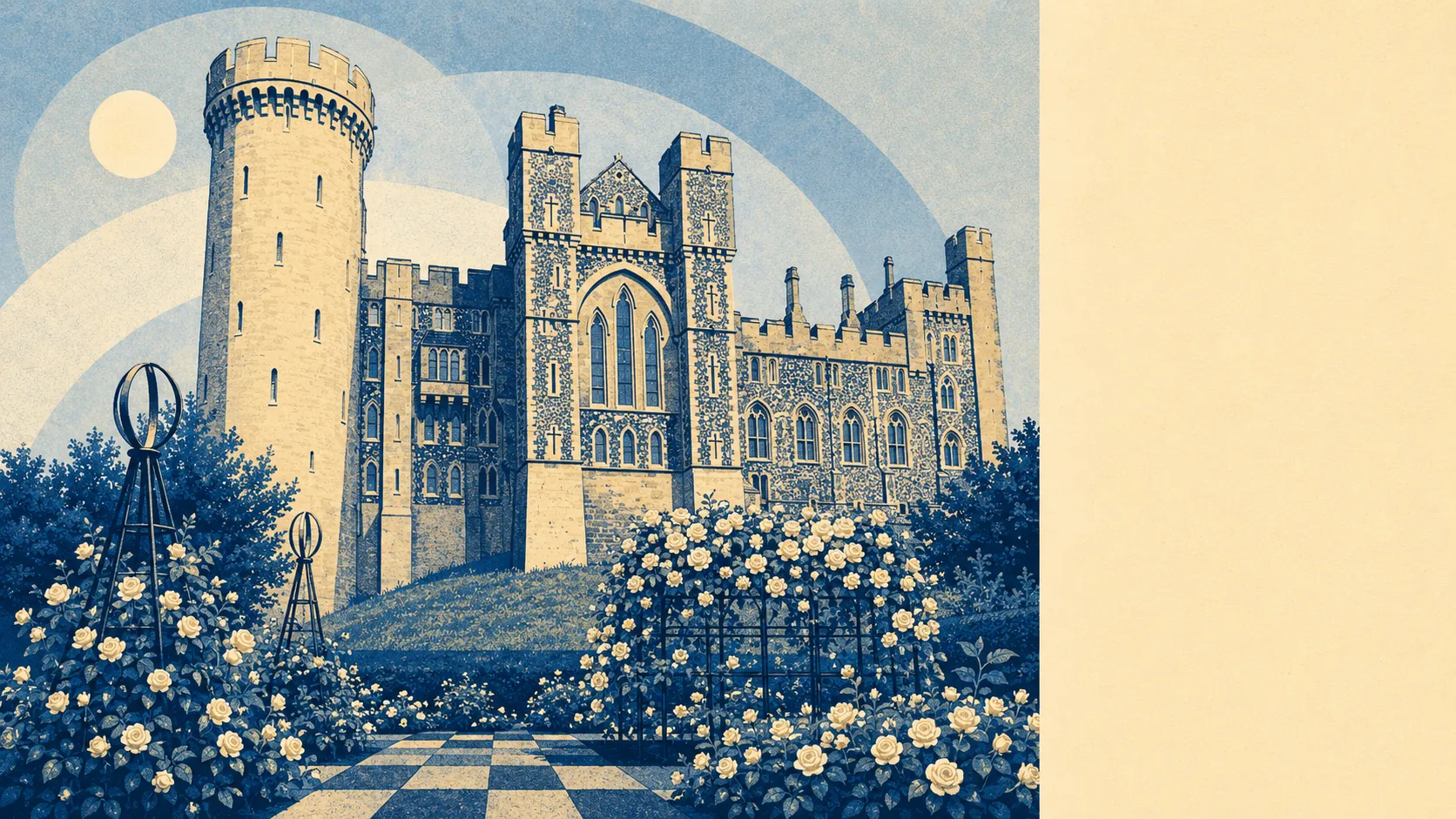
Extending a house in Arundel is possible, but not the way it is in most towns. Two hundred and two listed buildings sit inside the town. A single conservation area covers the historic centre. Two scheduled monuments sit in the wider bounding box. Whatever you want to do to the outside of your house, and quite a lot of what you want to do inside a listed one, will involve a consent application. The question is not whether you can extend; it is what you can extend and how long it will take.
Listed buildings are the first constraint, and there are a lot of them. The town carries two hundred and two listed entries. Four are Grade I, five are Grade II starred, and the remaining hundred and ninety-three are Grade II. That covers Arundel Castle, Arundel Cathedral of Our Lady and Saint Philip Howard, the Fitzalan Chapel, Hiorne Tower, the Norfolk Hotel, Saint Nicholas Church, the vicarage at Number 26 and its stables, Saint John's Priory, a good chunk of the High Street including specific frontages at Number 51 and Number 61, and the parish churches of Saint Mary, Saint Mary Magdalene, Saint Andrew, Saint Leonard and Saint Nicholas across the surrounding parishes. If your house is one of these, the outside is not really yours to change; it is yours to look after. Listed building consent is separate from planning permission, it is required for anything that materially affects character, and it applies to windows, doors, chimneys, roof coverings, internal walls, staircases and fixtures. The rule of thumb is that if a conservation officer would notice it from the street or from inside the house, you need consent for it.
The conservation area is the second constraint, and it covers the historic town. One conservation area sits inside the town's bounding box, called simply Arundel. That designation catches houses that are not individually listed but sit inside the protected townscape, and it triggers additional consent requirements for demolition, some tree work, and changes visible from the public street. In practice, this means front elevations, front boundary walls, front doors, front windows and roof lines are all things the planning authority has an opinion about, even on unlisted homes. Article 4 directions can withdraw permitted development rights in conservation areas, which means alterations that would normally not need permission do need it here. Anyone buying inside the conservation area needs to check with Arun District Council whether a specific Article 4 applies to the specific address.
What this means in practice depends heavily on where the house is. Outside the conservation area and outside a listed entry, a house here works under the same permitted development rules as anywhere else in England, which allows a good amount of single-storey rear extension and loft conversion without a full application, subject to size, siting and neighbour considerations. Inside the conservation area, permitted development is narrower and every visible change is a planning matter rather than a private one. Inside a listed building, permitted development effectively does not apply to anything that affects character, and consent is required for a much wider set of interventions. The two schemes overlap, so a listed house inside the conservation area needs both consents for the same works, and both officers have to be satisfied before the work is lawful. Practically, that means budget for professional help, allow months rather than weeks for decisions, and expect to be told no about at least one thing you wanted.
The verdict on your freedom to extend or alter a home is 2 out of 5. Arundel protects itself, and buyers here pay for that protection twice: once in the price of the house, and once in the price of not being able to change it. If you want to rebuild a home the way you want it, buy in a village outside the conservation area and away from a listed entry. If you want a Grade II front door, you get a Grade II front door, and it stays that way.