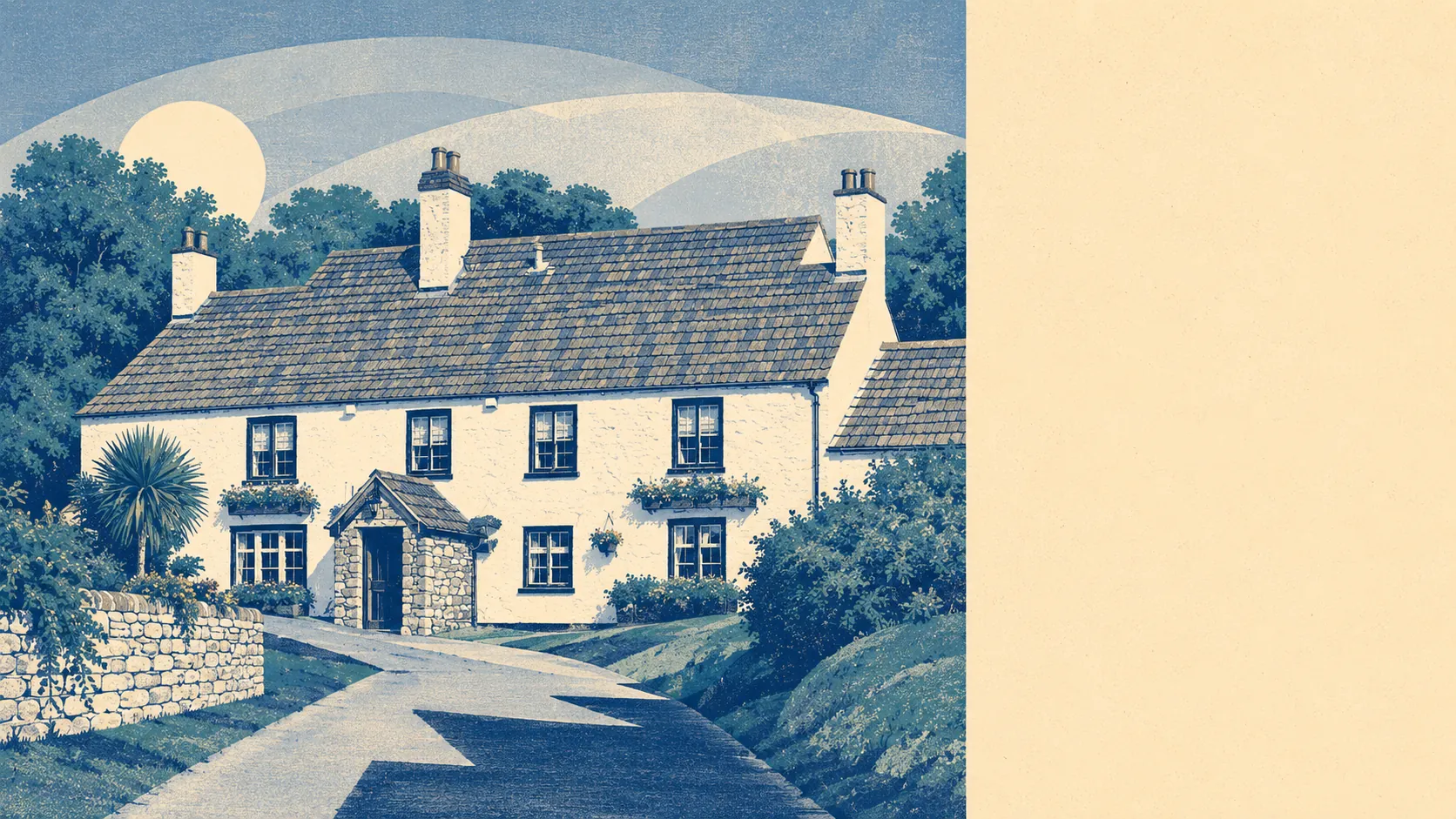
About £610,000 for a typical one, which is the sort of number that ends conversations. Twenty-seven houses changed hands in the last year. Detached is the default here, and detached is where the money goes. Four-bedroom homes make up more of the stock than every other size put together. Almondsbury does not do starter homes, and it has not been pretending otherwise.
The Land Registry's figures for the year to May 2026 put the median sale at £610,000 across 27 transactions. That is a thin market by any standard, so individual sales move the picture more than they would somewhere busier. The split by type is the part worth reading twice. Detached homes came in at a median of £760,000 across 18 sales. Semis managed £429,000 across four. Terraces landed at £387,500, also across four. The gap between a detached house and a semi here is not a step, it is a different budget entirely, and with only four sales apiece behind the semi and terrace figures, they are indicative rather than settled.
The published house price index for the wider area, as of May 2026, shows an average price of £340,400 and a change of plus 2% over twelve months. That is a small movement, and it should be read as a small movement rather than momentum. Over five years the same index records a rise of 21%. Flats went the other way over the twelve months, down 1%, though flats are close to irrelevant in a place built almost entirely of houses.
Council tax reflects the stock rather than any generosity from the council. The most common band is F. Only about 18% of dwellings sit in bands A or B combined, which are the cheap ones. A band D bill runs to roughly £2,550 a year, and since band D is below the modal band here, most households are paying more than that rather than less.
Renting is possible but the market is not built for it. Typical private rent across the South Gloucestershire area runs to about £1,450 a month as of April 2026, up around 4% over the year. That is a mean from the Office for National Statistics index covering the whole local authority, not a figure for Almondsbury itself, and not a median of what is currently advertised. By size, one-bedroom homes average around £990 a month, two-bedroom around £1,260, three-bedroom around £1,530, and four or more around £2,200. Given what the housing stock here actually looks like, the three and four-bedroom figures are the ones that will match what you find.
On affordability the arithmetic is unkind. Modelled gross household income for the area, before tax, was about £63,400 in the financial year to March 2023. Set that against a typical sale price of £610,000 and the conclusion writes itself: buying here on local earnings alone is not a realistic proposition for most households. The people moving in are bringing equity from somewhere else, and the market prices accordingly.
Of the sales that can be matched to an energy certificate's floor area, which is around 82% of them, the median works out at roughly £4,465 per square metre, on a typical floor area of about 122 square metres. That is a decent amount of house by national standards, and you are paying decently for every metre of it.
The bedroom mix from the 2021 Census confirms what the price data implies. Around 55% of households have four bedrooms or more. Roughly 31% have three. Two-bedroom homes account for about 12%, and one-bedroom homes about 3%. If you are searching for something small here, you are searching in a place that mostly did not build it.
On cost, Almondsbury is poor value and makes no apology for it. You are buying a large detached house in a village with green space at the door, and the price is set by everyone else who wants exactly that.