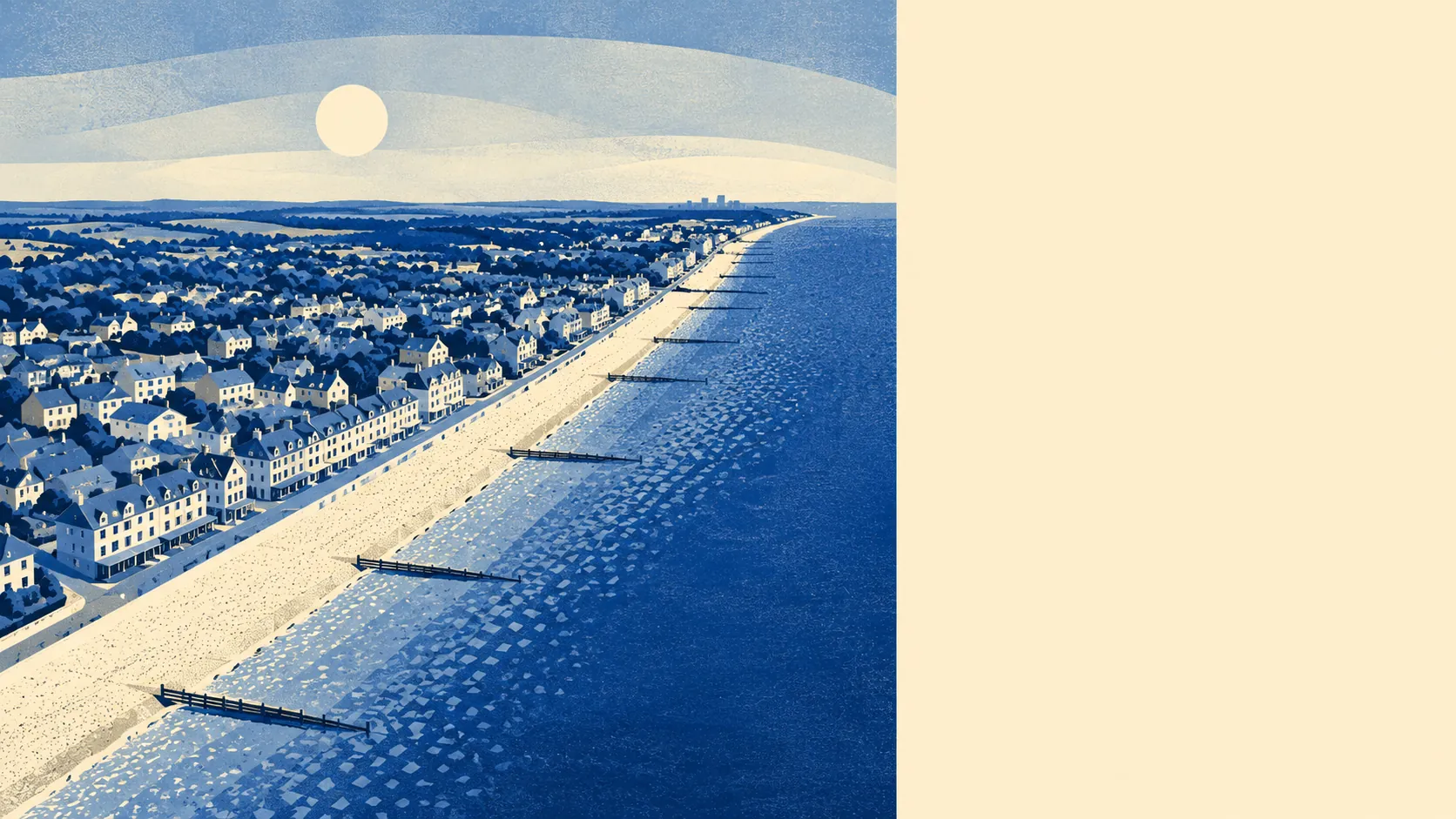
Mostly homeowners who are done with work. Half the village is over sixty-two. Owner-occupation runs at about eighty-seven in a hundred homes. A fifth of those homes are single pensioners. The neighbourhood sits in the top tenth of England on the official well-off scale. Aldwick is where retirement looks like a south-coast bungalow with the lights on.
On tenure, the village is a homeowner's village to an unusual degree. About eighty-seven in a hundred homes are owned outright or on a mortgage. About twelve in a hundred are privately rented. About one in a hundred is social rented. Rentals here are not the residual category; they are barely a category at all. The few rentals that exist tend to be properties that have come back onto the market because the previous owner moved or passed on, rather than purpose-built rental stock. If you arrive expecting to rent, you will be competing for a thin pool of homes against people who already know the postcode.
On age, the village skews older across the board. Half the residents are above sixty-two, and the other half are spread across all the ages below it. The working-age population between twenty-five and forty-four makes up about one in seven residents, which is the small slice of the village that has a daily commute somewhere. The rest of the age structure is dominated by the over-fifties, and the over-seventies in particular. Aldwick is not a place that is short of grandparents.
On income, the median household earns about £49,000 a year, which is a comfortable but not extraordinary headline figure. The number understates the picture in two ways. Most of the residents are past the working stage of life, and their income flows from pensions and accumulated assets rather than a salary. And the household-income figure measures money flowing in across a year. It does not capture the equity that lives in the property itself, which in a village where the typical home goes for about £390,000 and most owners have been on the ladder for decades is the much bigger number underneath.
On household make-up, the structural picture is consistent with the age profile. Single-person households account for about three in ten of the village total. Single pensioners alone are about one in five. Couples with children make up about one in ten, and lone-parent households about one in twenty. Overcrowding runs at about one in eighty homes. Unemployment runs at about one in seventy of the population. Full-time students are about one in a hundred. The household pattern is what an older, well-resourced, low-churn village looks like: lots of one-or-two-person households living in homes that were once filled and are now not.
Aldwick scores five out of five on community, which is what happens when a village is full of homeowners who have largely paid the house off, are largely in good health, and are not going anywhere. Nothing is in flux. The whole place is built around residents whose biggest concern this year is the colour of the next bungalow's window frames.