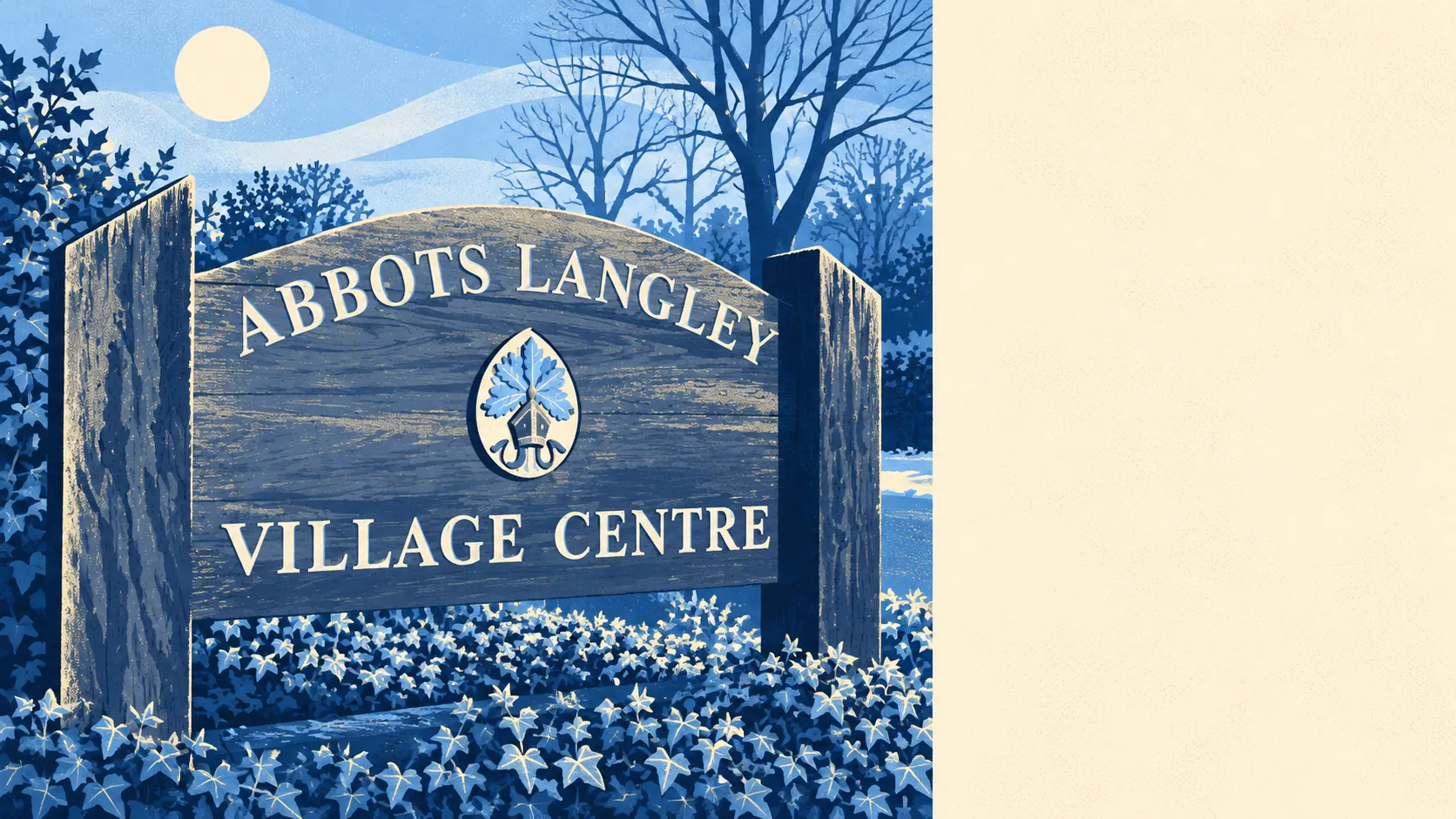
You can extend a house in Abbots Langley, though plenty of homes will need the council's permission first. About 150 listed buildings stand in and around the parish. Eleven conservation areas cover parts of the same map. The neighbours keep applying anyway. The kitchen extension usually gets built, but the council decides when.
Historic England lists 150 buildings in and around the Abbots Langley area. Three are grade I, eight are grade II* and 139 are grade II. Listing covers the whole building, inside and out, so a new window, a moved wall or a replaced staircase in a listed home needs listed building consent on top of any planning permission. Grade II is the commonest grade and still the one that gets owners stopped halfway through a renovation. For a parish that only gets a few lines in the Domesday Book, the listed-building file runs long.
Eleven conservation areas fall in and around the parish, among them Abbots Langley itself, High Street and King Street, Hunton Bridge, Grove Mill and Macdonnell Gardens. A conservation area gives the council more say over demolition, front elevations and trees, and works that would go ahead without permission elsewhere can need it inside one. Use the council's conservation-area maps and Historic England's list to check whether a house is listed or inside one of these areas, since two homes on the same road can face quite different rules. The British Land Company laid out Adrian, Breakspear, Garden and Popes roads as building plots in the 1860s, and the council now has a say over what goes on the back of them.
Plenty of people still try. From April 2024 to June 2026, 303 planning applications were lodged across the area, 122 of them in the most recent twelve months. Those are submissions, and they say nothing about what was approved. They do show that a lot of the neighbours are drawing up plans for the back of the house.
The British Geological Survey puts the area's worst shrink-swell rating at class 3, and only about 2% of the area reaches that class. Shrink-swell means clay ground that swells when wet and shrinks when dry, which can move foundations. In the few spots where it applies, an extension may need deeper foundations and a structural engineer's view at the start. The parish was built on gravel over clay, so the ground has been doing this for a long time, and mostly without trouble.
One listed building in the area is on Historic England's Heritage at Risk register. That means a building in poor condition, whose repair may qualify for grant funding and will be watched closely by the authorities. It is a problem for whoever owns that building, and of no concern to the buyer of an ordinary semi down the road.
In practice, an unlisted house outside the conservation areas can often add a modest rear extension or loft conversion under permitted development, using the national rules that need no full planning application. A listed house, or one inside a conservation area, starts from a much shorter list of what's allowed and a longer conversation with the council. Ask the council for a lawful development certificate or pre-application advice, so you have its answer in writing before the builders arrive.
Freedom to extend is limited here: the parish isn't frozen, but enough of it is protected that a lot of owners have to deal with heritage officers as well as planners.