Seven in ten Yarnton households own the house they live in, so the people next door have their own money riding on the street staying pleasant. Incomes are comfortable. The typical resident is in their early forties. Getting anywhere without a car is the weak spot, and the driveways show how most people solved it.
At the 2021 census, home ownership in Yarnton stood at about 69% and the median age at 43. That is old enough to have stopped renting and young enough to still be paying the mortgage. The Office for National Statistics models gross household income at about £59,000 for the financial year to March 2023, an average across the wider local area and before tax. These are people who have finished moving house and moved on to the hedges. A street like that keeps its bins in and its grudges long.
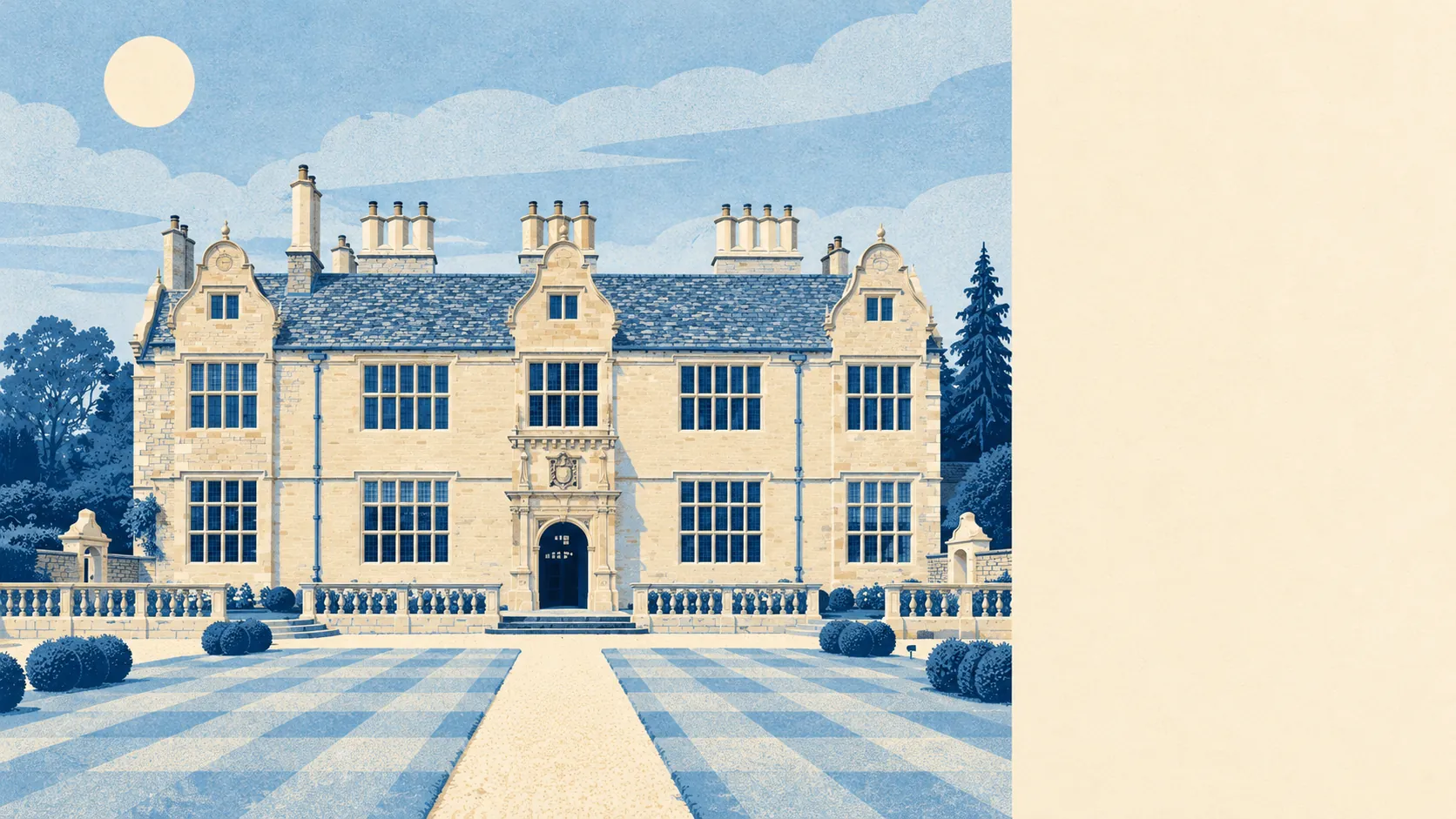
Twenty-eight buildings in the village are listed: one at Grade I, two at Grade II*, and 25 at Grade II. Most of the history is at one end of the village, around Yarnton Manor with its attached wall and gateway (the grounds are a registered park and garden) and the Church of St Bartholomew, whose churchyard cross is listed separately. No conservation area covers Yarnton itself. Outside the listed buildings, then, changing a window or extending a semi goes through ordinary planning rules. The manor gets the scrutiny and the cul-de-sacs pick their own front doors.
Transport is where Yarnton is hardest work. At the census, about 45% of working residents drove to work, 36% worked from home, about 6% took the bus, and only about half of one percent went by train. Oxford Parkway, Oxford, Hanborough and Islip are the stations within reach, and Yarnton has one of its own on none of them. Every postcode in the village falls inside the national mapping's road and rail noise bands of 65 decibels or more, so the railway's main contribution to village life is the soundtrack. Buses do better. Of the 18 stops, 11 have timetable data, and those average about 118 departures each weekday, six or seven an hour at peak, and all of them run at weekends. The Department for Transport's 2019 modelling puts the nearest town centre about 20 minutes away by public transport and 11 by car, and the nearest hospital about 44 minutes by public transport against 23 by car. Those public transport times are older than they look and will only have got less generous as services are cut. Superfast broadband reaches every premises, gigabit about 74%, and 98% of the village gets 4G or 5G from every operator.
Thames Valley Police recorded crime in Yarnton at about 74 per 1,000 residents in the year to May 2026. The Cherwell figure is about 76, putting the village roughly 2% below its district. That is level with the district, give or take a rounding error. Anyone who thought the village sign would work as a burglar alarm has bought the Cherwell average with a nicer postcode attached.
On the Environment Agency's river-and-sea flood zones, none of Yarnton falls in zones 2 or 3, and about 5% falls in the zone drawn to allow for climate change. The postcode indicators, which include surface water, look less tidy: about 14% of postcodes carry a high rating on at least one flood indicator and about 24% a medium one. Being clear of the river zones is the line that gets quoted. Surface water was never told about the river zones.
The Land Registry recorded 29 sales in the twelve months to April 2026 at a median of about £380,000. Semis led the count, with 17 sales at a median of £381,000. Six detached houses went for a median of £447,500, and five terraces for £318,500. With only five terraces changing hands in a year, the cheap way in is a door that rarely opens. Band D is the most common council tax band, at about £2,580 a year, and only about 9% of homes are in bands A or B. For tenants, Cherwell's typical private rent was about £1,290 a month in April 2026, and that is a district-wide figure covering everything from Banbury to the Oxford fringe.
On the council tax valuation list, semis make up about 37% of Yarnton's homes, detached houses and bungalows about 20% each, flats 12% and terraces 11%. Only about 6% of homes were built before 1930. About 73% are heated by mains gas and about 10% by electricity alone, which is worth checking on the particulars of any older bungalow before it becomes a winter bill. Of the homes with an energy performance certificate, about 61% are rated A to C and about 7% E or worse. One home in five is a bungalow, and their owners have made a firm decision about stairs.
William Fletcher Primary School is the village primary, about a ten-minute walk from the average home on 2019 modelling. Across the three primary schools in the postcode district, the average end-of-primary maths score is about 106. Across Oxfordshire, Ofsted has graded 108 of 121 schools good or better, 11 of them outstanding, though that is the whole county's figure. Gosford Hill School in Kidlington is the nearby secondary, a 36-minute walk, 26 minutes by public transport or 11 by car on the same modelling. Primary school is on foot. Secondary school is where the parents start running a taxi service.
The nearest green space is roughly 150 metres from the average front door, with about 13 within a kilometre, and water is about 180 metres away. The National Cycle Network passes within about 240 metres of most homes. For a village where nearly half of households run more than one car, the bikes get surprisingly little use, given the cycle route is practically at the end of the garden.
Yarnton is right for a household that drives, wants a semi or a bungalow with a garden, and plans to stay long enough to know which neighbour has the trailer. Anyone without a car who needs a station on the doorstep should look elsewhere, because here the trains go past without stopping.
The neighbours are the reason to buy here. Most of them own their homes and have been there long enough to care what happens to the street, and that keeps a post-war village in good order without anyone being put in charge. The transport is the price you pay for it: a car for nearly every journey, a train line you hear more than you use, and a hospital trip that needs planning on the bus. On those terms Yarnton is a solid choice, comfortably better than ordinary, for anyone with a car and a plan to stay.