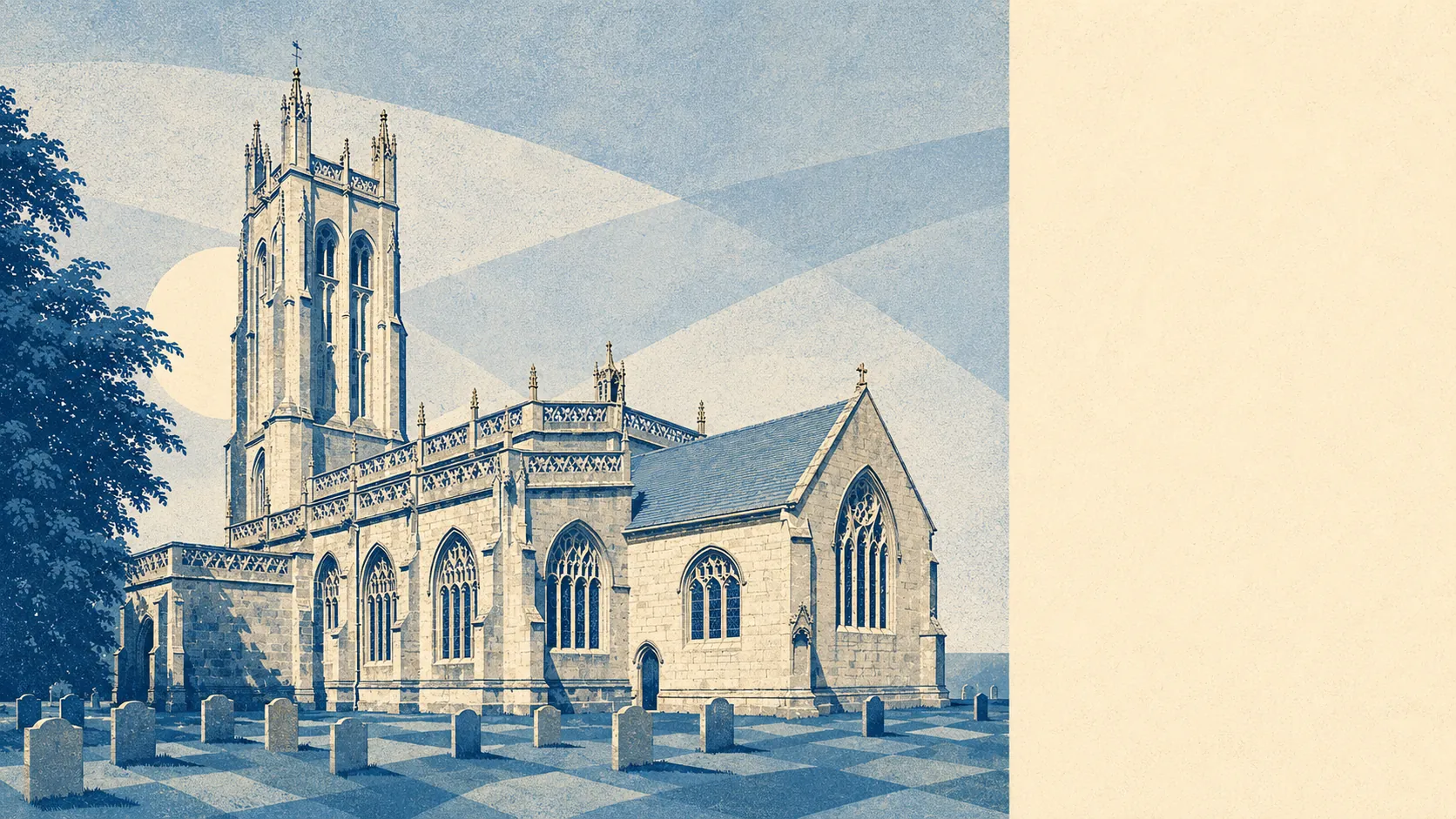
Wrington is a good place to live if you can drive and you have stopped being in a hurry about anything. Nearly eight in ten households own their home. The median resident is around fifty. Almost nobody takes a train, because there is no station to take one from. This is a comfortable, settled Mendip village that runs entirely on the assumption you own a car, and it is right to assume it.
The housing is houses. About two-thirds of the stock is exactly that, with roughly a quarter given over to bungalows and only a small fraction of anything you could reasonably call a flat. Most of it went up in the decades after the war, wrapped around an older core of stone from before the 1930s, which is the part the photographs always lead with. On energy efficiency the picture is honest rather than flattering. Around a third of homes sit in the middle band, another third manage the top bands, and close to three in ten land at the second-worst band or below. Old stone holds heat about as well as you would expect old stone to, which is to say it doesn't.
None of it is cheap. A typical sale over the past year landed around £425,000, and the shape underneath that number is the usual village hierarchy. A detached house runs to roughly £537,000, a semi-detached to about £350,000, and a terrace, which is the entry ticket, to around £261,000. The most common council tax band is band D, and fewer than one in five homes fall into the two cheapest bands, which tells you what kind of place this is before you have knocked on a single front door.
Renting is barely a category here, and when it happens it is not gentle. Typical private rent across the North Somerset area sits at about £1,200 a month, and Wrington occupies the pricier, leafier end of that authority rather than the bargain end. This is a place built to be bought and kept, not rented and left.
On crime it is unremarkable in the reassuring sense. The published rate works out at about ninety recorded crimes per thousand people, which sits almost exactly level with the North Somerset average. The village is neither a haven nor a hotspot. It is ordinary, and in a place this comfortable, ordinary is the whole idea.
Connectivity is the catch, and it is a real one. There is no railway station in the village, so the trains people actually use are at Yatton or at Nailsea and Backwell, both of which you reach by getting in the car first. Bus stops exist in decent number, but nobody sensible builds a life around them, and the drive to a town centre is a manageable twenty minutes against roughly an hour on public transport. Broadband, at least, has caught up with the modern world faster than the roads did. About three-quarters of properties can get gigabit-speed connections and the great majority can get superfast, so the work-from-home half of the village, close to four in ten of the working population, is properly served even while the commuting half is left improvising.
The setting is the strongest thing Wrington has going for it. This is the northern slope of the Mendip Hills, with a corner of protected landscape on the doorstep and green space within about four hundred metres of the average home. Flooding is present but modest for a valley village strung along the Congresbury Yeo. Close to one in ten postcodes carry some high surface-water flood risk and around a quarter carry a low one, so the sensible move is to check the specific address rather than trust the postcode, but nothing here reads as a wholesale problem.
Heritage is a genuine consideration the moment you plan to change anything. The wider area holds around a hundred and forty listed buildings, five conservation areas including Wrington itself, and fifteen scheduled monuments. That density is a pleasure to walk through and a headache to renovate. A listed home means consent for the sort of alterations you would elsewhere simply get on with, and a conservation area means the planners hold a firm opinion on your windows, your render, and quite possibly your front wall.
The character follows from all of it. Nearly eight in ten homes are owned outright or on a mortgage, the median age is around fifty, and household income runs to roughly £65,000. This is settled, propertied, middle-aged Mendip, and it makes no effort to pretend it is anything livelier.
It suits a particular buyer very well. If you own a car, work from home or have finished commuting for good, and want stone, space, and quiet within reach of Bristol, Wrington hands you exactly that with no fuss.
It suits others badly. If you are young, carless, or renting to a budget, this village will strand you politely and expensively. You will spend a good share of your life driving to Yatton for the station Wrington never kept, and to Nailsea for the shops it never bothered to have.
For a small village it casts a long shadow. John Locke, the philosopher whose thinking still underwrites a fair chunk of how the modern world argues with itself, was born here in 1632. Hannah More, the writer and reformer, survives in the name of the local infant school. The village once ran a cottage hospital that opened in 1864 and was well enough regarded that Florence Nightingale cited it, and it kept a railway on the Wrington Vale Light Railway from 1901 until 1963, before settling back into the car-shaped quiet it now wears so comfortably.
Overall Wrington rates as average, and the average hides a split. Its strongest suit by a distance is the settled, prosperous local community, which scores full marks. Its weakest is house prices and value, where the money asked runs some way ahead of what the money buys. Pricier than Yatton, plainer than Chew Magna, and, to its credit, it knows precisely which of those it is.