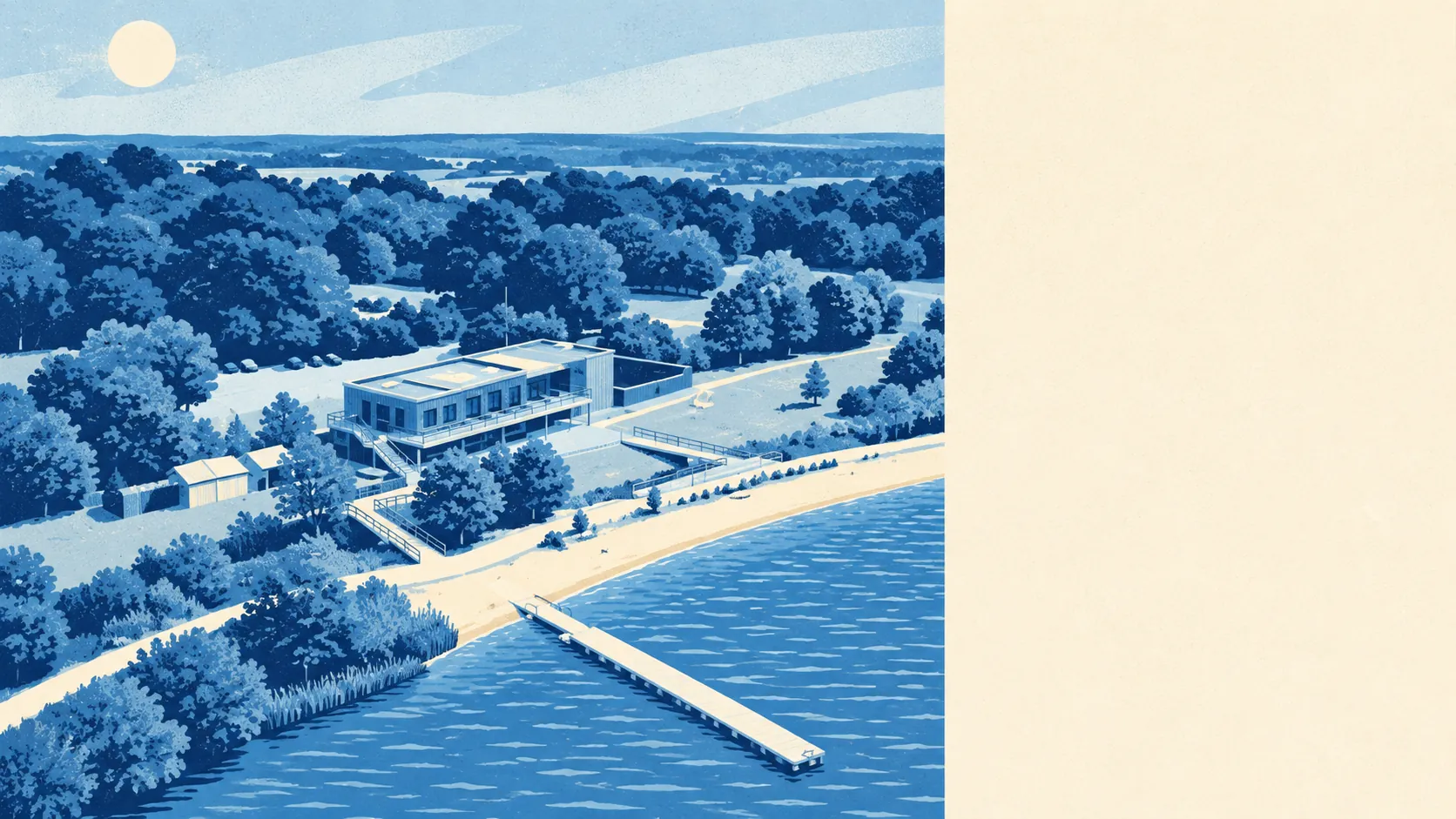
It's greener than you'd expect for a place squeezed between two motorways. There's a park or green space within a short walk of almost every door. The River Loddon runs along the western edge. The gardens are generous. Winnersh backs onto green space on most sides, even if the traffic noise follows you there.
The average home in Winnersh is roughly 170 metres from the nearest public green space, with about 18 green spaces within a kilometre. That's not one park doing all the work. It's a spread of pockets, playing fields and river meadows, close enough that nobody here needs to drive to get outdoors, even if they're going to anyway.
Water is closer than most buyers realise. The nearest blue space, meaning a river, stream or lake, averages about 330 metres from home, and there are about 30 within a kilometre. The Loddon on the western boundary does most of that work. That comes with a flood-risk caveat buyers should look up separately. For walking, it's an asset. For the house, it's a question.
Getting further out takes more effort. The nearest stretch of the National Cycle Network is on average about 4.2 kilometres away, and no Winnersh postcode sits close to it. There's no ancient woodland in the area either. The green space here is local and well used, not wild.
The rated-premises data counts 48 shops and 8 pubs in the area, and nothing listed as a restaurant. Eight pubs and no restaurants tells you where evenings out end up. Across the area's 39 food outlets with a hygiene rating, about 77% hold the top score and none sits at the bottom. The kitchens are clean, even if there aren't many tables to eat at.
For fine particles in the air, the Wokingham council area averaged about 7.1 micrograms per cubic metre in 2024. That's a figure for the whole borough, not Winnersh specifically, and a place bordered by motorways will be at the busier end of it.
The surrounding villages set the tone. Sindlesham lies to the south and Hurst to the north-east, with Arborfield further south and Earley and Woodley towards Reading. The grounds of the former Bearwood College are on the parish's southern side. Winnersh itself is the busier suburb among a group of older villages that have kept more of their fields. It gets the stations and the supermarket, and the villages around it keep the countryside.
Private gardens are where Winnersh wins. Across the area there are about 116,000 square metres of private garden for every 1,000 residents. That's proper outdoor space, not a courtyard with a bistro set in it. The post-war and later housing was laid out on plots big enough for a lawn, a shed and a trampoline, and most of the houses still have room for all three.
The business rating list shows a different Winnersh from the residential one. Of the 407 rateable premises in the area, 209 are offices, with warehouses, workshops and car parks making up much of the rest. Those are premises on the valuation list, not necessarily businesses trading today. Winnersh Triangle, the business park the second station was named after, gives the place a working day nobody sees from the cul-de-sacs.
No protected landscape designation overlaps Winnersh. There's no area of outstanding natural beauty, no site of special scientific interest and no ancient woodland. It's a lived-in landscape, not a protected one, and nothing here is being preserved as a view to look at.
The area around Winnersh is one of its real strengths: plenty of green space and water within a short walk, generous gardens, and a river on the doorstep. It's nature to use every day, not to visit on a weekend.