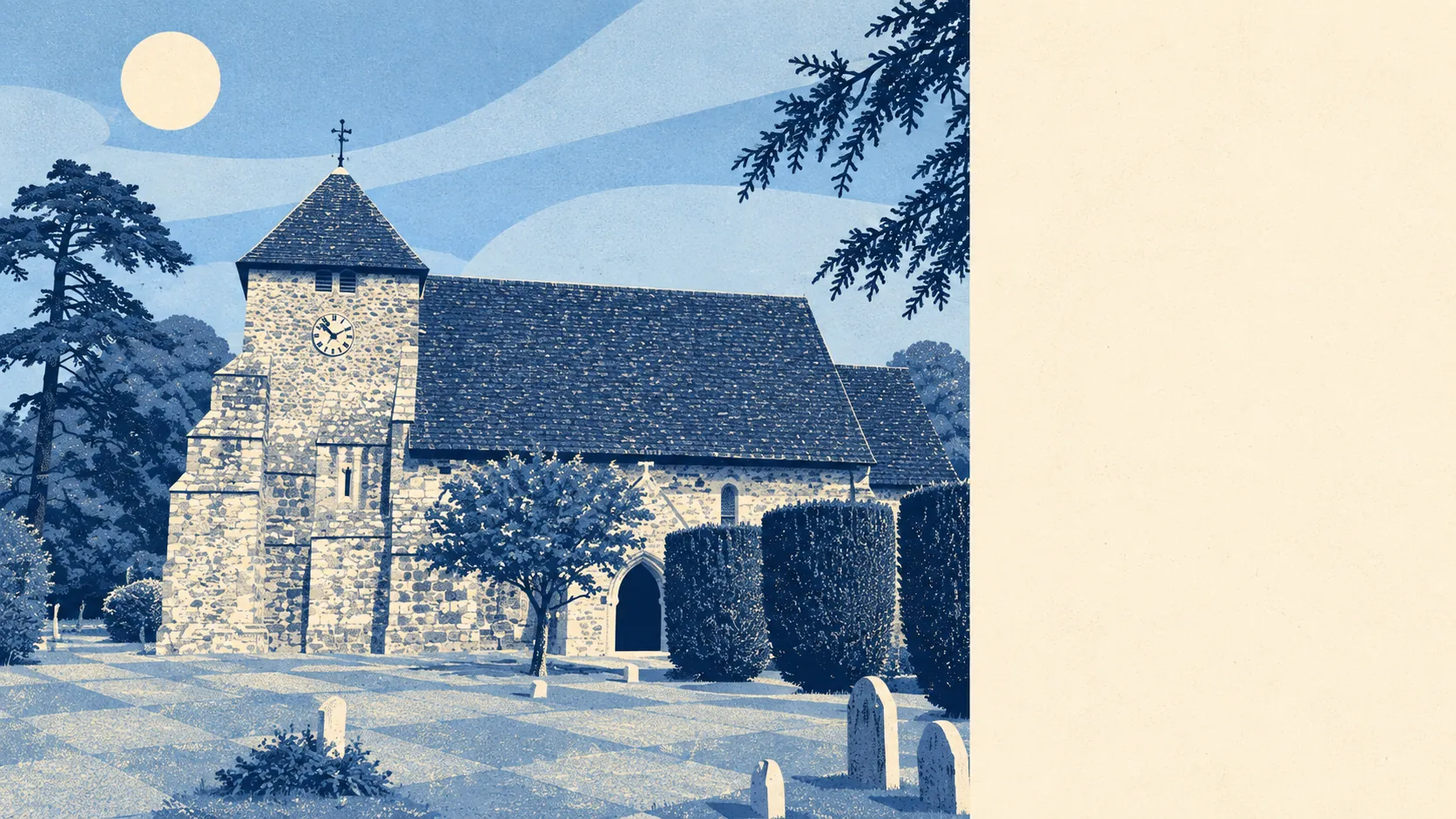
Westfield is Hastings with the volume turned right down. Seven in ten own their homes. Half the households run two cars. The typical resident is past fifty. It's quiet on purpose, and it isn't cheap about it.
The bungalow is the local aristocracy. The council-tax valuation list puts about 34% of dwellings as detached and about 22% as bungalows, with semis at 18%, terraces at 15% and flats at 7%. Anyone hoping for a starter flat will be looking for a while. About 29% of homes were built before 1930, so there's some older fabric, but the character is mostly post-war and single-storey, the kind of housing designed around the assumption that stairs are a young person's hobby. Energy certificates put about 54% of rated homes in bands A to C, 35% in band D and 11% in E or worse. About 69% are on mains gas and only 3% heat by electricity alone. Ask what's heating the other houses before the viewing, not after the first winter.
Prices are where the village asks for real money. The Land Registry's median over the twelve months to April 2026 was about £420,000, and that comes from only 11 sales, so one decent farmhouse can move the average on its own. Split by type, the 4 terraced sales went for a median of £287,500 and the 6 detached sales for £535,000. Council tax clusters in band D, and only about 13% of homes sit in bands A or B. The valuation officer has noticed the bungalows are big.
Renting is a thinner market. The typical private rent across the Rother area was about £1,160 a month as of April 2026. That's a district figure, not Westfield's own, and with only about 10% of households renting privately there aren't many listings to test it against. Anyone planning to rent here first and buy later should expect a short list and quick decisions.
On safety, Westfield is calmer than its surroundings. Police figures for the year to May 2026 put the rate at about 59 crimes per 1,000 residents, roughly 20% below the Rother average of 73. The places people worry about are rarely villages where the busiest thing on a weekday is the A28. Sussex Police as a force charged about 10% of cases over the same period against a national 12%, which is worth knowing whatever the local rate is.
Getting around means driving, and the census shows people have accepted that. About 54% of workers drove to work, about 32% worked from home, and 2% took the train. Rail means Hastings, or the small stations at Doleham and Three Oaks, and those figures show how few people bother. The village has 12 bus stops, each averaging about 17 weekday departures and roughly one bus an hour at peak, and all of them run at weekends. The Department for Transport's 2019 modelling put Hastings town centre about 16 minutes away by car and 31 by public transport, and the bus figure has probably aged worse than the road. Broadband is the pleasant surprise: gigabit-capable connections reach about 96% of premises, so working from home isn't the gamble it is in half the villages nearby.
The surroundings are the whole point. Every postcode sits inside the High Weald Area of Outstanding Natural Beauty, and Maplehurst Wood, a Site of Special Scientific Interest, is inside the parish. The average home is about 223 metres from public green space, with around 7 green spaces within a kilometre. On flooding, none of the village sits in the Environment Agency's river-and-sea flood zones. Taking every indicator including surface water, about 6% of postcodes carry a high-risk flag and about 23% a low one, so check the specific address rather than the village. Radon sits in the lowest band. The ground is less of a worry here than the house prices.
Heritage rules are light. There are 17 listed buildings, 1 at Grade I and 16 at Grade II, and no conservation areas. Unless you buy one of those 17, an extension goes through ordinary planning, with the High Weald designation making sure someone cares what it looks like. For a village this pretty, that's more freedom than you'd expect.
The people are settled and comfortable. About 73% own their home, the median age is 51, and modelled household income averaged about £54,300 before tax in the financial year to March 2023. About 16% of households rent socially, so it isn't a gated retirement community, whatever the bungalow count suggests. This is a village where people arrive and then stay long enough to have opinions about the verges.
It suits people who work from home, own a car or two, and want woodland rather than a seafront. Couples moving out of Hastings or Bexhill who want the same bills with more hedge will settle in quickly. Downsizers looking for a bungalow with a garden will find more choice here than almost anywhere nearby.
It doesn't suit anyone without a car, anyone who needs a daily train, or first-time buyers hoping to find a cheap flat. Young renters will find few homes to rent and not much happening once they get one. If the evenings need to include somewhere to go, pick a town.
Westfield is a good place to live, with conditions attached. Its real strength is the surroundings: protected countryside on every side, green space a short walk away, and low risk from the ground underneath. The weak spot is value, because at these prices you're paying town money for village quiet and a bus that comes when it feels like it. Buy it for the High Weald and it holds up. Buy it expecting a bargain and the numbers will correct you.