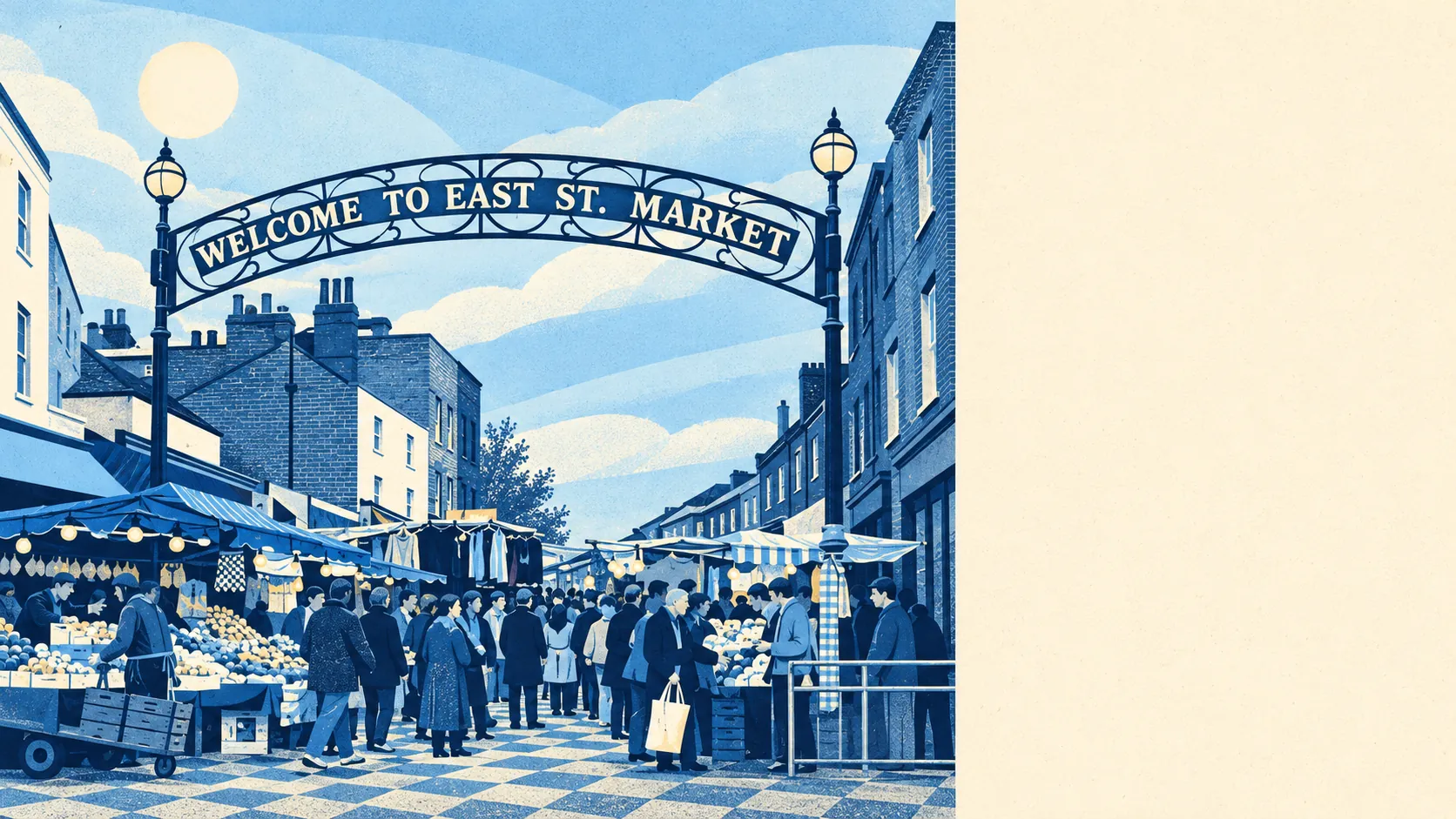
Walworth is crowded inner London with an unusual amount of green space. Patches of public green are everywhere, usually a minute or so from the door. The main road is mostly shops, with fewer pubs than you might expect. Private gardens are rare. If you want green space here, you share it with the neighbours.
The typical Walworth home is about 62 metres from the nearest public green space, and there are around 100 within a kilometre. Most are small: squares, estate lawns and corners left over from post-war rebuilding. Kennington Park and Southwark Park are among the larger parks within reach. For a district this crowded, it is a lot of grass.
The nearest open water is about 630 metres away on average, with seven bodies of water within a kilometre. Water isn't part of daily life here, but it is within a short walk.
The National Cycle Network is about 760 metres away on average, and about 22% of postcodes are close to it. There is no ancient woodland anywhere in the area.
The rated-premises records count 348 shops, 32 restaurants and 14 pubs in and around Walworth. Shopping is what the district is for. The valuation office's rating list holds about 900 business premises in all. Shops are the largest group at 345, followed by 129 warehouses and stores, 108 offices and 89 workshops, with restaurants and the rest after that. These are premises on the rating list, which is not the same as businesses currently open, but they give a fair picture of a district where people work as well as live. The warehouses and workshops tucked behind the terraces are a reminder that Walworth was making things long before anyone started calling the area Elephant and Castle.
Across the London Borough of Southwark, fine-particle pollution averaged about 9.5 micrograms per cubic metre in 2024.
Walworth Road runs through the middle of the district as its high street, and it is a conservation area in its own right. To the north is Elephant and Castle, to the south Camberwell. In between are flats from almost every decade since the war, with older squares and terraces surviving between them. It is a mixed and lively place to live, and noise comes with that.
Private gardens are scarce. The garden area across Walworth's neighbourhoods works out at about 8,300 square metres for every 1,000 residents, which is very little outdoor space per home. Unless you are buying one of the terraced houses, assume the flat has no garden and check what is on the plan. Most of the gardening in Walworth is done by the council's mowers.
Of the 240 food premises rated for hygiene in the area, about 57% hold the top score and about 4% sit at the bottom end of the scale.
Walworth has no area of outstanding natural beauty, no site of special scientific interest and no ancient woodland. Its green space is the kind made for cities, made up of parks, squares and estate lawns, and that is the only kind it was ever going to have.
What surrounds Walworth is one of the best things about it. Grass is a minute's walk from almost every front door and the shops are just round the corner. A garden of your own is the one thing it mostly can't give you.