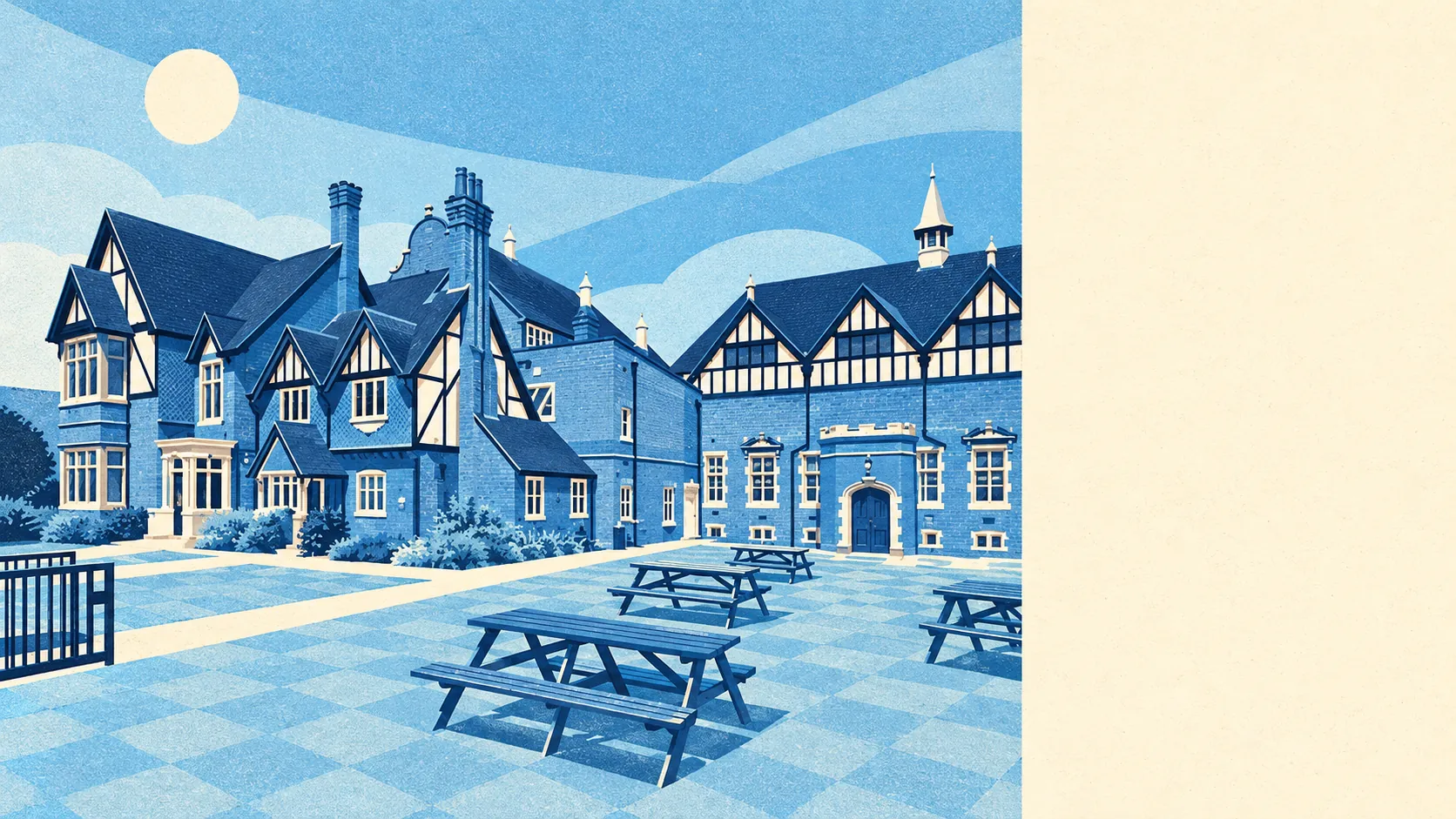
Tring earns a place on a sensible shortlist, and the people already living in it are most of the reason. Seven in ten own their home. Close to nine in ten say their health is good. Four in ten have a degree, so every planning notice gets read by someone who could footnote it. For a buyer, that means neighbours who stay, look after the place and turn up to the meeting.
The typical resident is 44, about 73% of households own their home, and the Office for National Statistics models gross household income across the area at around £77,000 before tax for the financial year to March 2023. That is serious money for a town with a weekly Friday market and a fortnightly farmers' market in the old livestock yard, where some of the pens were kept for old times' sake. The town has its finances in order and keeps its history in a pen.
Hertfordshire Constabulary's published crime rate for Tring is about 61 per 1,000 residents for the year from June 2025 to May 2026, about 33% below the Dacorum average. The mix is more telling than the total. Anti-social behaviour makes up about 29% of recorded crime here, against about 16% across England and Wales, while violence and sexual offences take a smaller share than nationally. Tring's crime problem is mostly a manners problem.
Flooding depends on which measure you read. The Environment Agency's river-and-sea flood zones take in about 1% of postcodes in Tring. Count every flood indicator, surface water included, and about 8% of postcodes carry a high risk on at least one, 11% medium and 30% low. Tring is at the summit of the Grand Union Canal, fed by four reservoirs dug to keep the water topped up, and the trouble it does get comes off its roads.
Getting about is the hard part. Tring Rail Station is on the West Coast Main Line to London Euston, with Cheddington and Wendover stations also in reach, though the town's own station is out east and few walk to it. At the 2021 census only 2% of working residents took the train to work, 39% drove, about 1% caught the bus and 45% worked from home, a count taken while much of the country was still at the kitchen table. Tring's 54 bus stops average about 26 departures each on a weekday and about 1.5 an hour at peak. The Department for Transport's 2019 modelling put the nearest hospital about 56 minutes away by public transport and 23 by car. Broadband is better, with gigabit-capable connections available to about 72% of premises and superfast to 96%. In Tring the car does most of the work, and most households have one parked outside.
There are 68 listed buildings: one at grade I, two at grade II* and 65 at grade II. The town has a single conservation area, named Tring, and Tring Park is on the register of historic parks and gardens. Owning a listed building means applying for consent before you change much of it, inside or out, and the conservation area restricts what can be done to the street-facing side of ordinary houses as well. Owners of the old buildings on the High Street soon learn that their sash windows are partly public property.
The Land Registry recorded 157 sales in the twelve months to late May 2026 at a median of £490,000. Detached houses went for about £810,000, semis about £555,000, terraces about £413,000 and flats about £235,000. The house price index for Tring stood at about £455,000 in May 2026, unchanged on a year earlier. Band C is the most common council tax band, and only 9% of homes are in bands A or B. Terraces are the commonest type of house in town and the cheapest way into a house of any kind.
Renting means paying Dacorum prices, and across the borough the typical private rent was about £1,580 a month in April 2026, up about 2% on the year before.
The valuation list puts terraces at about 33% of homes, semis at 25%, detached houses at 21%, flats at 14% and bungalows at 7%. Only about 19% were built before 1930, so for all the medieval church tower and the Rothschild money, most of the town is post-war. Among homes with an energy certificate, about 53% are rated A to C, 37% D and 10% E or worse, and mains gas heats about 84% of households. The history is on the High Street, and most of the mortgages are on the estates behind it.
The countryside is close. The average home is about 140 metres from green space and about 410 metres from water. The Chilterns Area of Outstanding Natural Beauty almost surrounds the town, the National Trust's Ashridge Estate is next to Aldbury, and Wigginton and Cholesbury are up in the hills to the south. To the north, Wilstone, Marsworth, Long Marston and Puttenham are around the Tring Reservoirs, which have been a national nature reserve since 1955. The reservoirs were built to keep the canal barges moving and have kept birdwatchers in waterproofs ever since.
Tring has an odd list of former residents. Sir Francis Verney was an adventurer turned pirate. Sir William Gore became Lord Mayor of London and has an impressive monument in the parish church. John Brown brewed beer and built his own pubs to sell it in, and Tring Brewery has kept that going since 1992. Gerald Massey, poet, Egyptologist and Spiritualist, was born at Gamnel Wharf in New Mill. John Washington grew up here, sailed for Virginia in 1656, was shipwrecked on the Potomac and stayed, and his great-grandson became the first President of the United States. It is the most famous family to leave Tring, and the one that never came back.
Tring is right for buyers who drive or work from home, want the hills on the doorstep and intend to put down roots. If you need a station you can walk to and a bus that runs as often as the ones in Hemel Hempstead, look elsewhere, because the commute here starts with a drive.
The community is what makes Tring work. Living here means neighbours who own, stay and look after the place, and the town is in good shape because of it. Getting out of Tring is the hard part, with a station on the edge of town, a thin bus timetable and a hospital a long way off without a car. Taken together, it is a better-than-average place to live, and the people who move here usually stay.