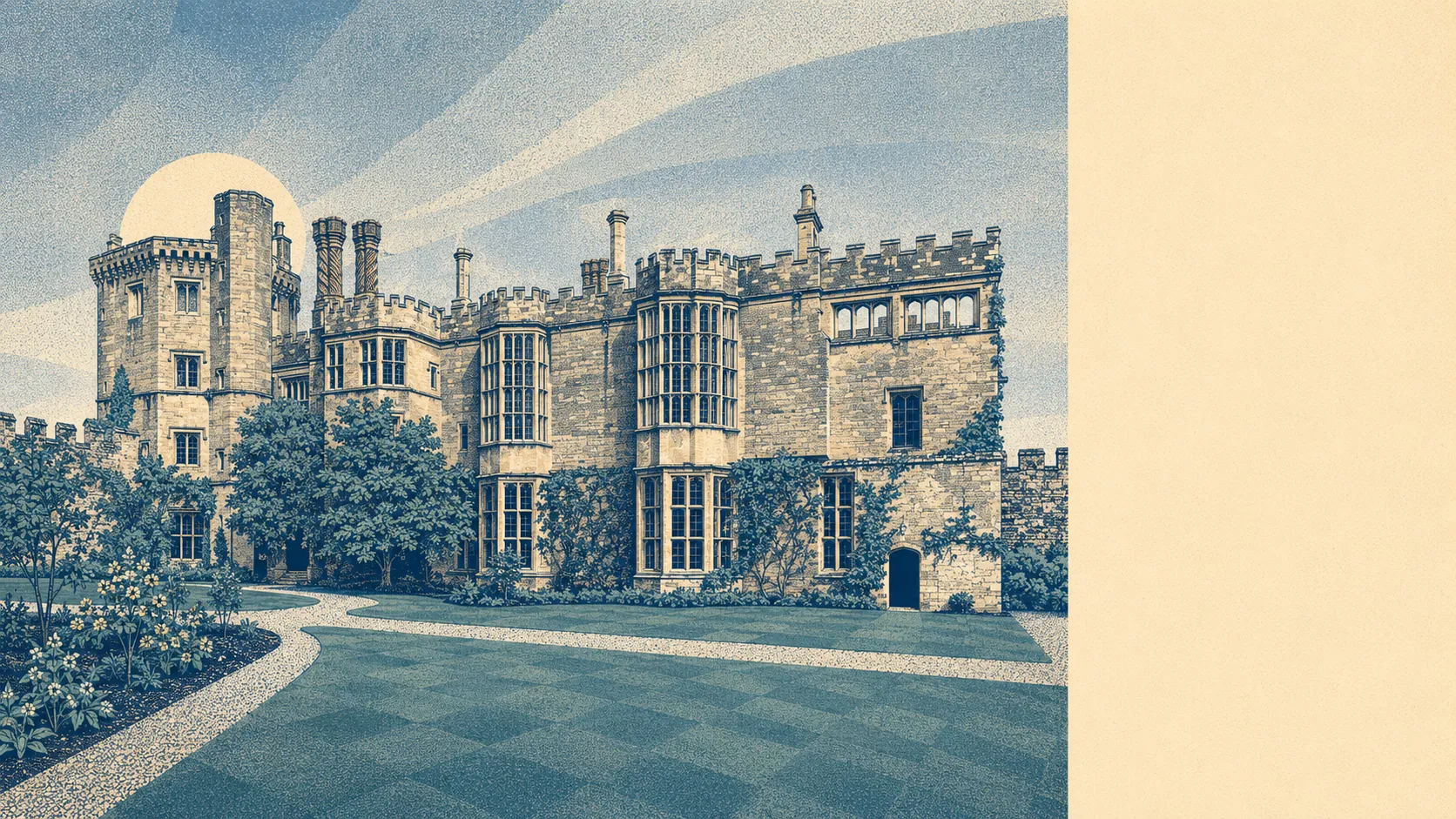
Thornbury is a town that hung its identity on hanging baskets. It wins Britain in Bloom, runs its own competition called Thornbury in Bloom in case the national one ran short, and treats a well-planted flowerbed as a civic event. The median resident is 44. Three-quarters own their home. The most dramatic thing that ever happened here got a man beheaded five centuries ago, and the town has been quietly pleased with itself ever since. This is not the genteel Cotswold town it dresses as. It is a comfortable Bristol commuter town with older bricks and better borders.
The houses run the place. Nearly eight in ten homes are houses, only about one in seven are flats, and most of the stock went up between the war and the early 1980s, which is the least romantic building era England has ever produced. The energy ratings match that history. Nearly six in ten sit in the top bands from A to C, about three in ten land at band D, and one in ten come in at E or worse, which is the part of the postcard the agent photographs from a flattering angle.
A typical home changes hands for about £330,000, off nearly two hundred sales in the past year, so the market is real rather than a handful of trophies skewing the number. The spread does the honest work. A detached house runs to about £470,000, a semi to around £325,000, a terrace to roughly £260,000, and a flat to under £195,000. Most homes sit in council tax band C, and nearly three in ten fall in the lower A and B bands, which for a town that fancies itself grand is a useful reality check.
Renting is the minority sport here. A quarter of households rent, and the typical private rent across the South Gloucestershire area runs to about £1,450 a month. That is an area figure rather than a Thornbury one, so treat it as the weather rather than the forecast, but it tells you the direction. This is not a cheap place to rent your way into while you decide whether you like it.
Crime runs at about 78 recorded offences per thousand people, which sits roughly four percent below the wider South Gloucestershire average. That is the published rate, not a back-of-envelope sum, and it puts Thornbury in the unexciting middle where most comfortable market towns live. Nothing here is going to frighten a mortgage lender.
The catch is getting out. Thornbury lost its passenger trains in 1944 and never got them back, so there is no station of your own, and the town knows it. Nearly four in ten people work from home, almost half drive to work, and the rest lean on the buses, of which there are enough stops to matter and not enough frequency to love. The broadband makes up for some of it. Nearly nine in ten homes can get gigabit speeds and almost every address can get superfast, so the working-from-home half are not doing it on a dial tone.
Flooding is a small but real footnote. Around seven in a hundred postcodes carry a high surface-water risk and about one in five sit in the medium band, which is worth a search before you fall for a particular house rather than a reason to avoid the town. What Thornbury does properly is green. Green space is never more than a couple of minutes' walk, with around twenty separate spaces within a kilometre of the average front door, and the lower Severn Valley farmland starts where the streets stop.
The heritage comes with strings. The town holds over a hundred listed buildings and one conservation area covering the old core, plus a couple of scheduled monuments out in the fields. Buy inside the protected streets and the windows and the render are no longer entirely your decision, and the man from the council gets a say in the colour of your future. Buy on the post-war edges and none of that applies, which is most of the town.
The character follows from the numbers. Roughly three-quarters own their homes, the median age is 44, and the typical household income sits around £66,000. That is a settled, middle-aged, mortgage-paying town where people arrive to stop moving rather than to be seen. Coming here in your twenties for the nightlife would be a category error.
It suits the family that wants a house with a garden and neighbours who will still be there in a decade, with countryside where the streets stop. If you commute to Bristol by car, work from home, or have finished chasing a scene, Thornbury delivers what it promises.
It does not suit anyone who needs a railway station of their own or a pulse after nine at night, and the artsy farmers-market energy that Stroud sells by the acre is not on the menu. Reach for heritage prestige you can point at and you will spend the difference chasing Tetbury, then end up with something closer to Yate with a castle, or Bradley Stoke with nicer flowerbeds.
The town has form for punching above its size and then getting quietly overlooked. John Fewster worked out here that cowpox prevented smallpox, wrote it up in 1765, and then let his friend Edward Jenner run off with the credit and the statue. Thornbury Castle, begun in 1511, was confiscated by Henry VIII after he had its owner beheaded for treason, and the king then stayed there for ten days in 1535 with Anne Boleyn, which is the sixteenth-century version of moving into a flat you took off a bloke you had sacked. The rugby-playing Vunipola brothers came out of here, as did the actor Tony Britton, so the export record is better than the train timetable.
Overall Thornbury earns an above-average verdict, and the reasons are exactly where you would expect. The surroundings and the green space are as good as anywhere, the clear high point. The schools are the soft spot, landing squarely average, which for a town that markets itself to families is the number to check before you fall for the flowers. It is Yate with a castle and better manners. If you wanted Stroud's pulse, keep driving.