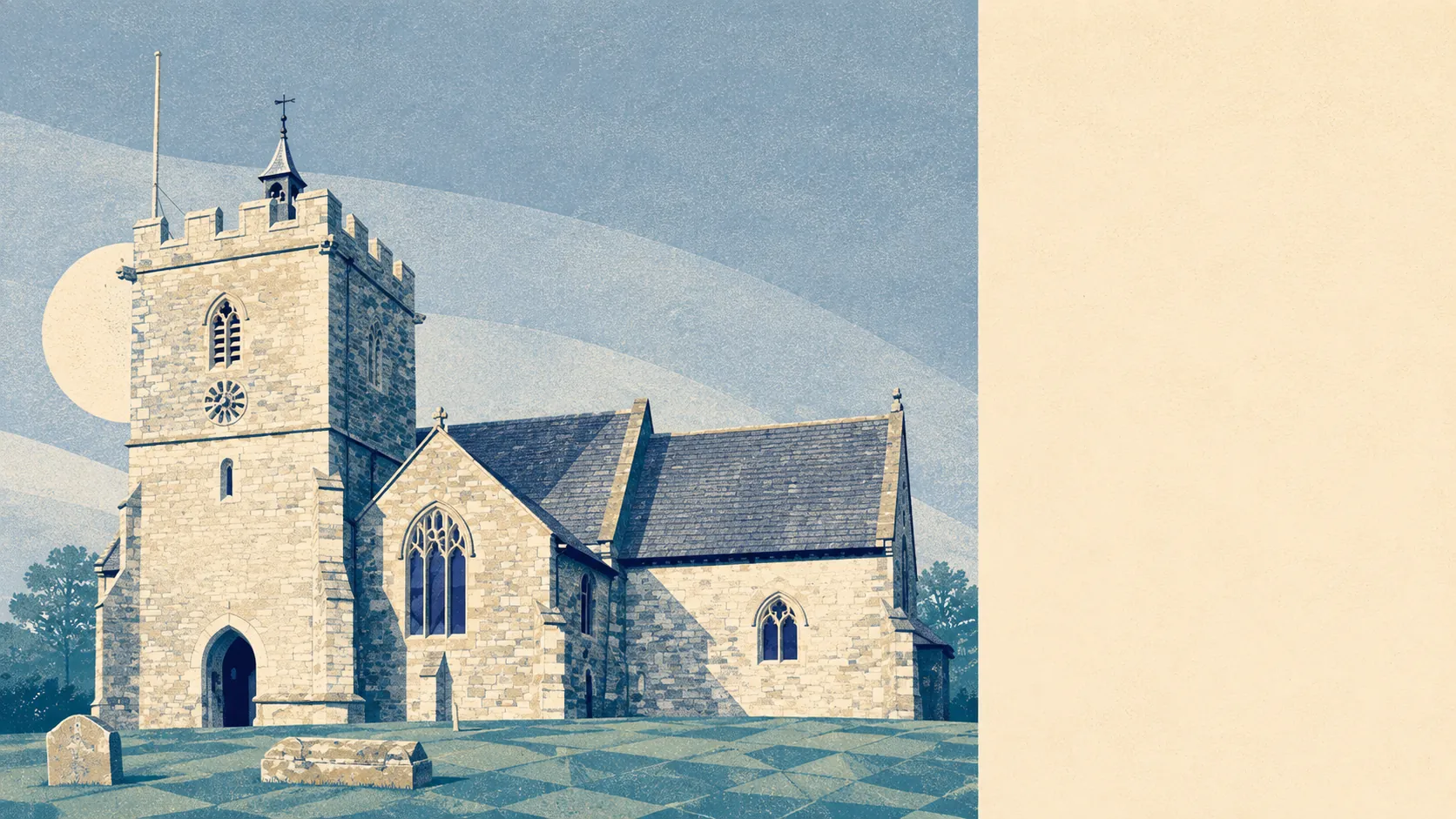
Templecombe is a good place to live if you have made peace with driving. The A357 does most of the work. Roughly three in ten people work from home. Barely anyone commutes by train, which is a strange thing to say about a village that fought to get its station back. Say yes to the car and the rest of it falls into place surprisingly well.
The housing is houses. Around 27% of dwellings on the council-tax list are detached and another 27% semi-detached, with about 18% terraced, 14% bungalows and only 11% flats. Roughly 31% of the stock was built before 1930, so the older end of the market is a genuine slice rather than a rarity. What that stock does to your bills is worth knowing before the second viewing rather than after: only about 15% of homes run on mains gas, and around 26% are heated by electricity alone. The energy certificates tell the same story from the other side. About 34% of certificated homes sit at band D and roughly 32% at band E or worse, against around 33% managing band C or better. An old stone cottage on electric heating is a different proposition in February to the same cottage on gas, and Templecombe has plenty of the former.
The Land Registry's last twelve months put the typical sale at £275,000 across 55 transactions. The spread by type is wide enough to matter. Terraced homes came in at a median of £200,000, semi-detached at around £273,000, and detached at £460,000, which is the gap between a starter position and a proper move in one small village. Council tax leans toward the cheaper end of the scale. Band B is the most common band across the area, and roughly 36% of dwellings sit in bands A or B combined.
For renting, the typical private rent across the Somerset area runs at about £990 a month. That is a local-authority figure rather than a Templecombe one, and it covers everything from Minehead to the Dorset border, so treat it as the shape of the market and not a quote.
Recorded crime across the area runs at about 74 offences per 1,000 residents over the twelve months to May 2026, which sits roughly 20% below the Somerset average. That is a published rate rather than something worked out on the back of an envelope, and it puts the area comfortably on the quiet side of a county that is not exactly notorious to begin with.
Ofsted has graded 140 settings across Somerset, of which 101 are good or better and five are outstanding, though 32 sit at requires improvement and seven at inadequate, so the county average conceals a real spread. Closer to home, key stage two maths across the three schools in the postal district averages a score of 102.7, which is a shade above the expected standard. Abbas and Templecombe Church School sits on School Lane by the parish church. Horsington Church School and Saint Nicholas Church of England Primary School at Henstridge cover the villages either side. Secondary is a different arrangement entirely: the modelled drive is around 17 minutes, and the walk is not a walk, it is an hour and a half.
Templecombe Rail Station puts London Waterloo and Exeter Saint Davids on the same platform, which is a genuinely useful thing for a village this size to own, and the fact that under 1% of residents commute by train says more about where the jobs are than about the trains. Buses average around 22 scheduled weekday departures per stop, with about two and a half at peak hour and weekend service at roughly 58% of stops, so the bus is a plan rather than a habit. Around 57% of people drive to work. The modelled car journey to a town centre is about 20 minutes, against roughly 43 minutes on public transport. Broadband is the pleasant surprise: gigabit-capable service reaches about 84% of premises and superfast about 95%, with no premises below the universal service obligation. Mobile is near-universal, with at least one operator giving fourth or fifth generation coverage at all but a fraction of premises.
On flooding, roughly 9% of postcodes carry a high rating on at least one flood indicator including surface water, and about 8% a medium one. The Environment Agency's river-and-sea flood zones are narrower: about 1% of the area sits in zone three and under 1% in zone two. Those two figures measure different things and both are true. Green space is the easy win. The average postcode sits around 356 metres from open green space, with roughly four or five accessible spaces within a kilometre, and water is closer still at around 385 metres with about eleven within the same radius. Ground conditions carry one caveat worth a survey: shrink-swell clay reaches class three across about 65% of the area, and radon sits in the highest band, with roughly 42% of the area at band three or above.
Heritage is where the area starts telling you what you cannot do. There are 266 listed buildings within the wider area, one of them grade one and eleven grade two star, alongside eight conservation areas taking in Henstridge, Horsington, North Cheriton, South Cheriton, Milborne Port and their neighbours. If your plans involve replacing windows, extending sideways or doing anything visible from a road, the answer is a conversation with the planning department before it is a conversation with a builder.
About 68% of homes are owner-occupied. The typical resident is 50, and household income across the area runs at roughly £51,000 gross. That combination produces a settled place rather than a churning one, and settled places are wonderful to live in and slow to change. The page covers Henstridge and Horsington alongside Templecombe itself, and the three of them behave as one market more than as three.
Buy here if you want a detached house with a garden, an actual railway station within reach, and a village where the primary school is a walk rather than a school run. Buy here if working from home is the point rather than the compromise.
Do not buy here if you need a bus after seven, if you want to extend without a planning conversation, or if the phrase "electric heating in a pre-1930 cottage" does not immediately make you want a boiler quote.
The village takes its name from the Knights Templar, who established a preceptory here in 1185 and were suppressed in 1312, after which the Knights Hospitaller took it on until the dissolution. Richard Boyle, first Earl of Cork, bought the manor in 1637. General Sir Richard McCreery, chief of staff at the Second Battle of El Alamein and later commander of the British Eighth Army in northern Italy, died in Templecombe. Lady Theodora Guest funded the village cottage hospital, which opened in 1906 and ran as a maternity hospital until 1974.
Templecombe is above average and honest about how it gets there. Its real strength is the surrounding countryside and how close the green space and water sit to every front door, which is the thing you actually live in rather than the thing you look at on a listing. The weak spot is the freedom to alter a home: between the listed buildings and the eight conservation areas, this is a place that will have opinions about your windows. Take the garden and the Blackmore Vale, accept that the planning department is a permanent houseguest, and Templecombe pays you back every weekend.