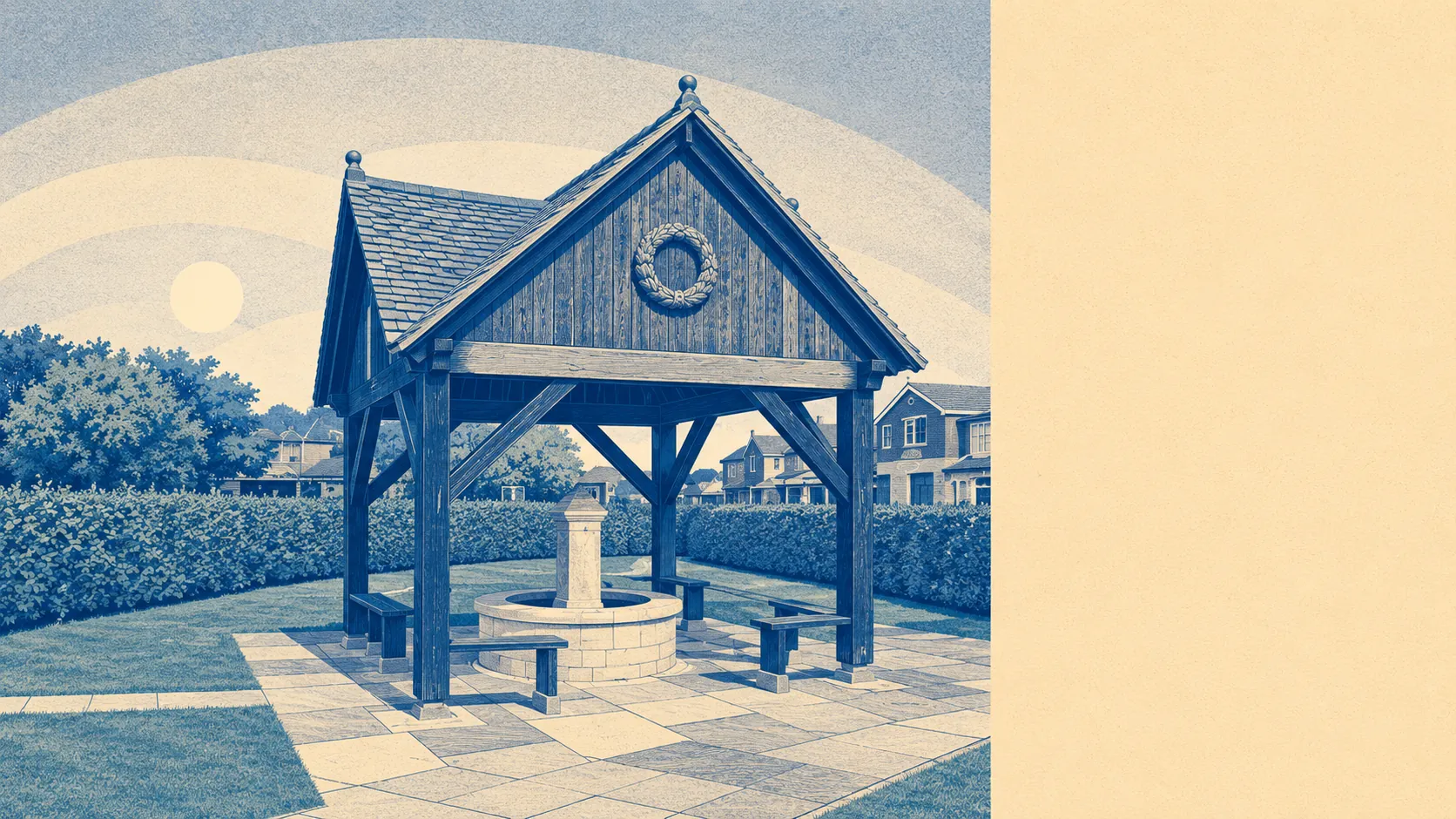
A village green, a war memorial, and rows of post-war semis owned outright by people who were already here when the bypass was a fresh idea. About four in ten houses are bungalows or 1950s-to-1980s semis, the median resident is fifty-one, and roughly eight in ten households own their home. That isn't a village in the cottagecore sense. That's the bungalow belt between Fareham and the Solent, doing exactly what it has done for sixty years.
The housing stock tells the whole story before you've finished a coffee. Houses dominate at nearly three in five, bungalows make up another three in ten, and flats barely scrape one in eight. Almost half the stock sits in EPC bands A to C, with band D as the single most common rating at around four in ten. About one in eight is band E or worse, which is what happens when post-war cavity walls meet 21st-century heating bills. The dominant building era is 1950 to 1982, and you can see it from the road. Coherent it isn't. Predictable it absolutely is.
Typical sale prices over the last year ran to about £367,000, off roughly 110 transactions. Detached houses sit around £510,000, semi-detacheds around £340,000, terraces around £315,000, and the handful of flats that traded came in around £188,000. The modal council-tax band is C, with under one in five homes in bands A or B. That's a buyer profile firmly anchored in middle-Hampshire ownership, with the detached end reaching for something Hamble-le-Rice still does better and the semi end being roughly what Park Gate offers for the same money.
For renters, the picture is borrowed from the wider Fareham area: typical private rent across the Fareham area runs at about £1,210 a month, up roughly four percent on the year. That's the published local-authority average rather than a Stubbington-specific figure, and the village itself sees so few rentals (roughly one in five homes is rented, much of it social) that the borough number is the honest answer to give.
On safety, the recorded crime rate runs at about sixty-three per thousand residents over the last twelve months. That sits roughly five percent above the Fareham average of about sixty per thousand, which puts Stubbington close to the local norm rather than a hotspot or a sanctuary. The rate is the published figure, calculated against a different population base than the resident headcount, which is why the maths in your head won't quite line it up.
Transport is where the rating sags. There is no station in the village, and the train share of commutes is well under one percent. Bus stops within the area cluster in the fifties, with services threading toward Fareham and Gosport. About half of working residents drive, around a third work from home, and roughly one in twelve walks. The town centre is about twelve minutes by car, twenty-one by public transport. The nearest railway stations are Fareham, Portchester and Swanwick, all of which require a drive or a bus connection. Broadband makes up some of the ground: gigabit availability is around ninety-three percent, and superfast hits ninety-eight, which means the remote-work share isn't an accident.
Flood risk is mostly an inland story. Across the village postcodes, around three percent show high flood risk, around eight percent medium, and around a quarter low. The Environment Agency flood-zone footprint inland is essentially zero, and the historic flood footprint is zero. The risk that does show up clusters toward the coastal end, which is the part of the postcode that shares its character with Hill Head rather than the village green. For green space, the average distance to a park or open area is around 150 metres, with roughly sixteen green spaces within a kilometre of any given postcode. Blue space, the Solent, sits within about half a kilometre on average. That is a lot of outdoors for a place that doesn't have to try.
Heritage constraints are real but contained. There are twenty-six listed buildings in the area, twenty-five of them Grade II and one Grade II starred. There are no conservation areas within the village boundary itself, and one scheduled monument. Translation: most homeowners can replace windows, extend kitchens and reroof in peace, unless they happen to live in one of the small number of listed properties, in which case they will be on first-name terms with the conservation officer.
For neighbourhood character, the numbers line up consistently. Roughly eight in ten homes are owned outright or with a mortgage. The median age is fifty-one. The typical household income is about £64,700. Around a third of working-age adults hold a degree, and a similar third work from home. Single-pensioner households account for about one in five. This is a place where the school-run window is short, the bin collections are quiet, and the village green still hosts the war memorial that has anchored it since the 1920s.
Who it's for: remote workers who have done the maths on the commute and decided the commute can go to hell, families looking for a Crofton or Alver Valley primary place without paying Hamble money, and downsizers from somewhere noisier who want a bungalow within walking distance of a coffee and a chemist. It suits people who don't need a station of their own, who already own a car, and who consider the village green at lunchtime a feature rather than evidence of nothing happening.
Who it's not for: anyone hoping for the Emsworth high-street experience, a proper independent food scene, or the buzz of a place where strangers move in regularly. If the idea of a Tuesday evening with nothing to do reads as failure rather than relief, this isn't the postcode. Stubbington is basically Park Gate with a sea breeze. People who buy here thinking it's the cheaper Hamble usually end up admitting it's the coastal Park Gate; people who buy here thinking it's the cheaper Emsworth move out within eighteen months.
The overall verdict lands at four out of five. The community score is the strongest dimension at five out of five: high ownership, low deprivation, healthy population, stable households. Transport is the weakest at two and a half: no station, modest bus network, and a structural dependence on the car that the village isn't going to fix. Cheaper than Hamble-le-Rice, quieter than Emsworth, and basically Park Gate with a sea breeze. If that reads as a verdict rather than a warning, Stubbington is a good place to live.