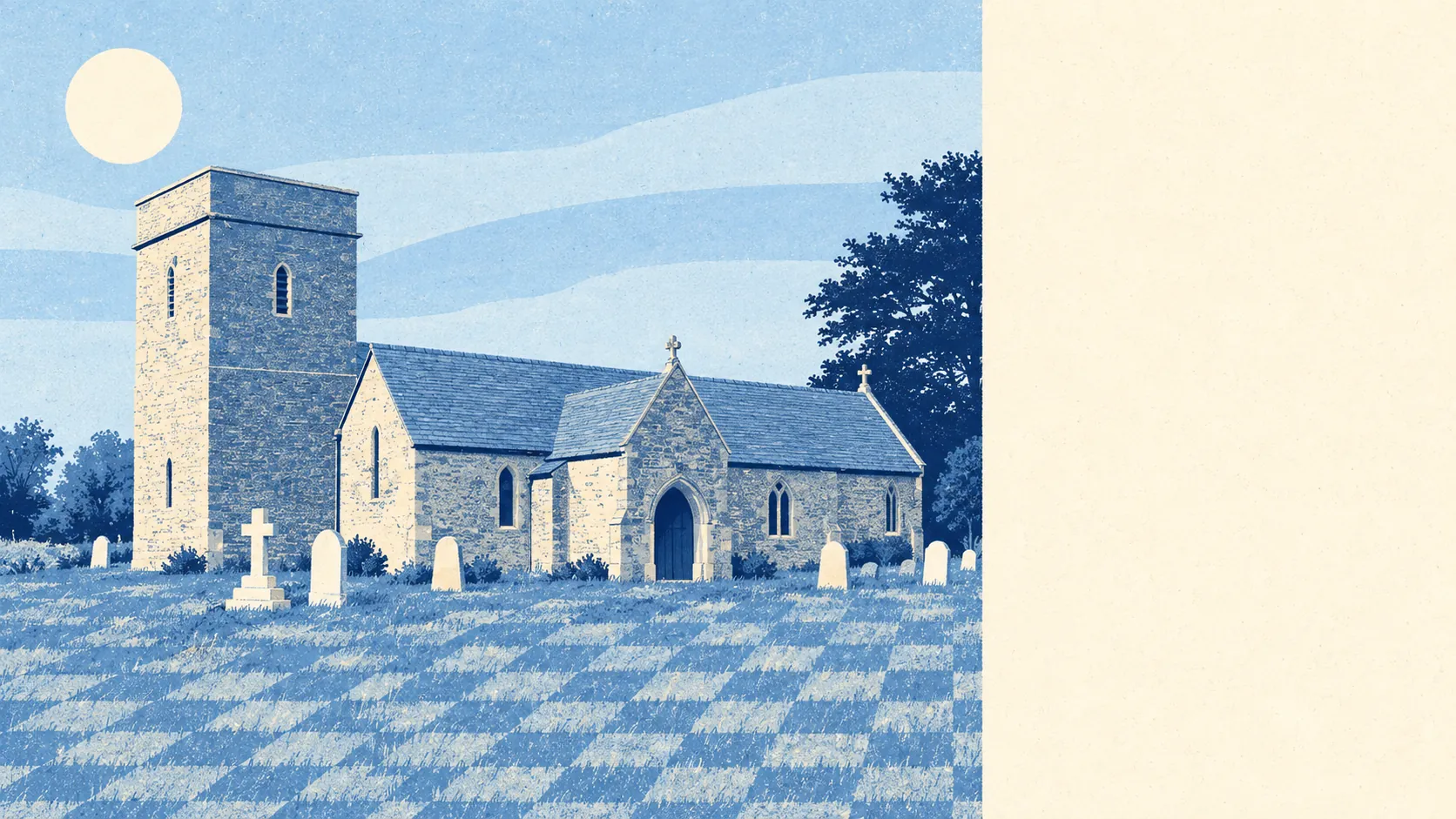
The area around Stratton St Margaret is greener than anyone driving through on the way to a warehouse would guess. A patch of green sits a couple of minutes from most doors. There is water within a short walk. The gardens are generous. The industrial estates get the headlines, and the parks quietly get the residents.
Green space is the thing Stratton does best. The average home is about 170 metres from the nearest green space, with around 18 green spaces within a kilometre. That is not one municipal park doing its best for a whole suburb. It is a scattering of grass on every side, which is why dog owners here never have to plan a walk.
Water is close too. The nearest blue space, a pond, stream or similar, sits about 390 metres from the average home, with around 17 within a kilometre. Nobody will confuse any of it with the seaside, but a child with a stick and a free Saturday is well served.
Longer rides take more effort. The nearest stretch of the National Cycle Network is about 2.7 kilometres away on average, and no postcodes sit close to it. Cyclists here start their route with a few kilometres of ordinary road first.
The rated-premises list gives the shape of the everyday offer: 979 shops, 80 pubs and 74 restaurants across the wider district data. It is a working suburb's mix, with more places to buy a tin of paint than to book a table, and nobody here pretends otherwise.
Air quality for the Swindon council area came in at about 6.7 micrograms per cubic metre of fine particles in 2024, a borough-wide figure rather than a reading from any Stratton street.
The feel is suburb stitched onto old hamlets. Kingsdown and Lower Stratton keep conservation areas around what survives of the village, while Upper Stratton, Penhill and Nythe fill in around them with post-war streets. The land around the edges tells a different story. A wartime shadow aircraft factory built Spitfires near the South Marston boundary, Honda made cars on the site from 1985 until closing in 2021, and a distribution centre opened by the main road in 2010. For the wider green day out, Swindon's registered parks, Queen's Park and the Town Gardens, are on the local list.
Private gardens are generous. Across the area there are about 101,000 square metres of garden for every 1,000 residents, the kind of figure that means most houses come with a real lawn rather than a patio and an apology. The semis were built with room to spare, and the owners have spent sixty years filling it with sheds.
The rating list counts 564 rateable business premises. Warehouses top it, followed by offices, with industrial units and shops behind them. Those are premises on the valuation list, not businesses guaranteed to be trading, but the order says plainly what the edges of Stratton are for. Nobody commutes here for the boutiques.
Eating out is safe, if not adventurous. Across 122 rated food premises, about 84% hold the top hygiene score and about 1% sit at the bottom. The kebab is more likely to be clean than exciting, which is the right way round.
No protected landscape overlaps the area: no area of outstanding natural beauty, no site of special scientific interest and no ancient woodland. That is not a failing. It means the green here is for using rather than admiring from behind a sign.
The surroundings are one of Stratton St Margaret's real strengths: green space on nearly every corner, water within a stroll and gardens big enough to lose a football in. The warehouses stay on the edge, and the grass stays on the doorstep.