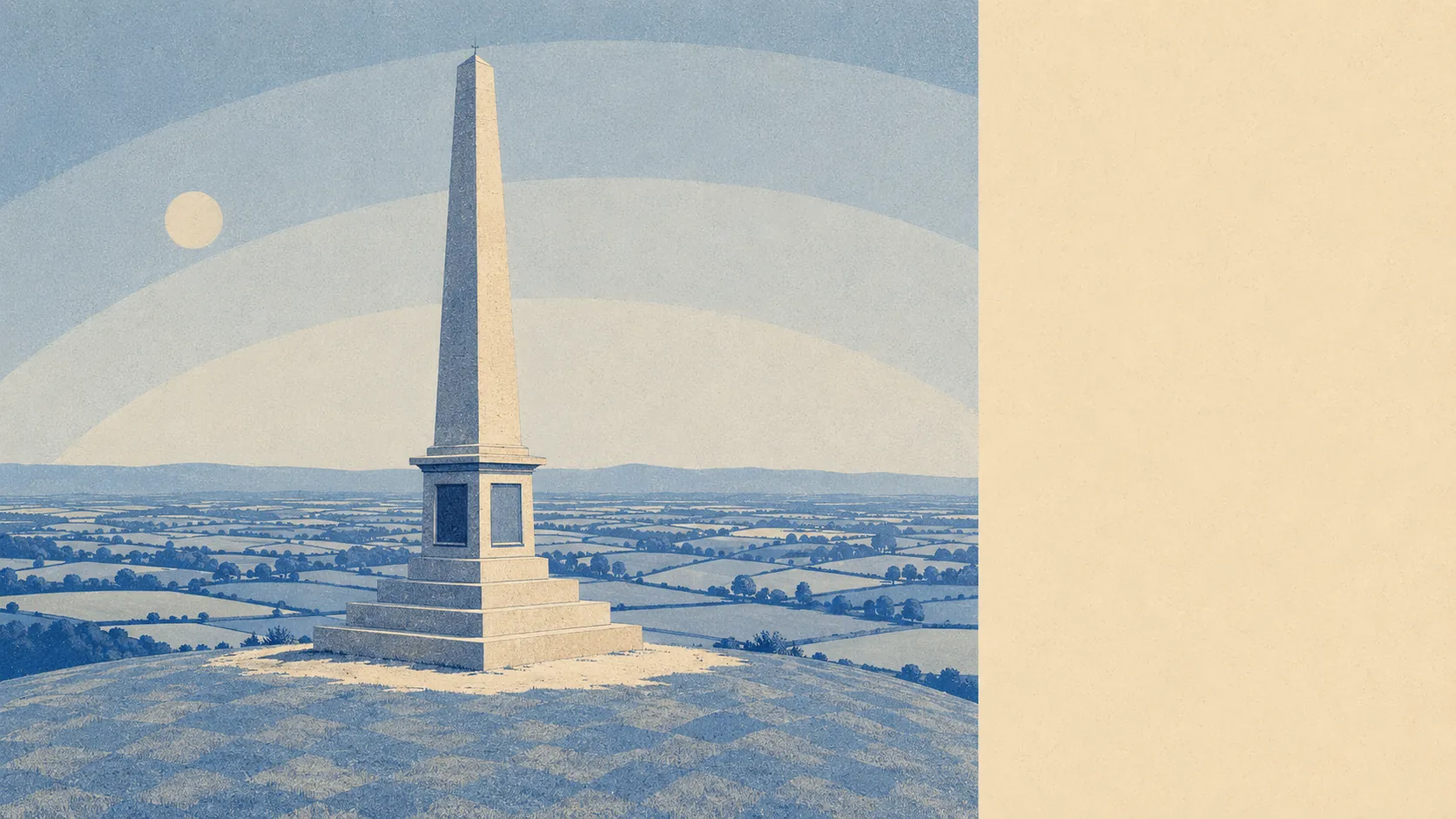
Stoke-sub-Hamdon is a terrace village in postcard country. Terraces outnumber every other kind of house here. Council tax sits mostly in the cheapest bands. Two-thirds own their homes, and the median resident is closer to fifty than forty. The scenery is borrowed from the hill above. The housing is honest about what it was built for.
Start with the stock, because it explains most of what follows. Across every dwelling on the council-tax valuation list, about 43% are terraced, roughly 21% semi-detached and 18% detached, with bungalows at about 11% and flats scraping 4%. Around 42% went up before 1930. Energy performance certificates put about 40% of certificated homes in band D, another 17% in band E or worse and 43% in band C or better, which is the signature of solid old walls with modern heating bolted on afterwards. About 73% run on mains gas. Roughly 11% heat on electricity alone, and in a pre-1930 terrace that is a fact worth having before the viewing rather than after the first winter bill.
The Land Registry recorded 28 sales in the twelve months to April 2026, at a median of about £317,500. Detached homes ran to about £460,000 across eight sales, terraces about £281,000 across twelve, and semi-detached houses about £260,000 across seven, which puts the terrace above the semi. Eight sales is not a market so much as a rumour with paperwork, so treat the type-level figures gently. Council tax leans cheap. Band B is the most common, and about 44% of dwellings sit in bands A or B.
Renting is measured wider than the village. Typical private rent across the Somerset area is about £990 a month as of April 2026, up about 4% over the year. That is a whole-county average and not a reading of these particular streets, which makes it the number to sanity-check an asking price against rather than the number to budget from.
Police-recorded crime here runs at about 57 offences per 1,000 people in the twelve months to May 2026, well below the Somerset average of about 93. That is the published rate for these neighbourhoods, not a sum done on the back of an envelope. Avon and Somerset Constabulary charges someone in about 11% of cases across the whole force, a shade under the national rate, so what keeps things calm here is how little happens rather than how much gets solved.
About 60% drive to work and about 28% never leave the house to do it, which makes the spare room the busiest commuting destination in the village. Buses take about 1%, and rail barely registers at all. Ten bus stops carry about seven scheduled weekday departures each, and all ten see something at the weekend. Department for Transport modelling from 2019 puts a town centre about 18 minutes away by car, 30 by public transport and 105 minutes on foot, with a doctor's surgery about 8 minutes by car, a food shop about 9, and a hospital about 20. A primary school is roughly 9 minutes' walk, a secondary about 10 minutes by car or 28 on foot. Gigabit broadband reaches about 87% of premises, superfast covers all of them, nothing falls below the universal service obligation, and every mobile operator covers about 97% of the area. The internet arrived faster than the bus service ever will.
Flooding needs reading twice, because two different measures apply. On the postcode indicators, which include surface water, about 15% of postcodes flag high risk on at least one measure, about 11% medium and about 39% low. In the Environment Agency's river-and-sea flood zones the figure is zero, and no historic flooding is recorded. The threat is not a river arriving. It is rain coming off a hillside faster than the drains were designed to take it, which is a survey-and-insurance problem rather than a sandbags-in-the-hall one. Against that, green space averages about 155 metres from the doorstep with roughly 10 open spaces inside a kilometre, and water sits about 950 metres away.
There are 74 listed buildings here, two Grade I, three Grade II star and 69 Grade II, along with two conservation areas covering East Stoke and West Stoke, one scheduled monument and one entry on the Heritage at Risk register. Buying into that stock means the windows, the roof, the front door and the extension sketched on the back of the brochure all become somebody else's decision. Owners of old stone learn the phrase like for like early.
About 65% own their homes, the median age is 49, and household income across the area ran at about £52,000 before tax in the financial year to March 2023, modelled by the Office for National Statistics at middle-layer super output area level. Nearly half of households keep two or more cars, which given the bus timetable is less a lifestyle statement than a logistics requirement. This page also covers Montacute, Norton-sub-Hamdon and Chiselborough, which share the same roads and much the same trade-offs.
It suits people who work from home or drive without resentment, who want an old house with a bit of ground and green fields at the end of the road, and who would rather have quiet streets than choice.
It does not suit anyone who needs a train, anyone relying on buses after teatime, or anyone who wants a warm modern box with predictable bills and permission to change the windows.
Two painters came out of this village and neither stayed: Owen Staples, born here in 1866, made his name in Canada, and F. H. S. Shepherd was born here in 1877. Walter Shuldham managed professional cricket and soldiering. Jordan Storey went into professional football. Older still, the hill above carried an Iron Age fort held by the Durotriges, and the estate passed to Glastonbury Abbey in the tenth century. A Roman milestone found at Venn Bridge in 1930 had begun life as part of a colonnade before being recut and re-inscribed for an emperor who ruled from 305 to 306. Take the good stone, cut it down, use it for something duller. That is the village in one object.
Stoke-sub-Hamdon is an average place to live and a better than average place to live around. Its real strength is everything outside the front door: green space within a couple of minutes' walk, and a crime rate comfortably under the county's. The weak spot is water, and the sort that comes off a hill rather than out of a river, which costs some buyers a specialist quote long before it costs them a wet carpet. Check the drains before you fall for the stone.