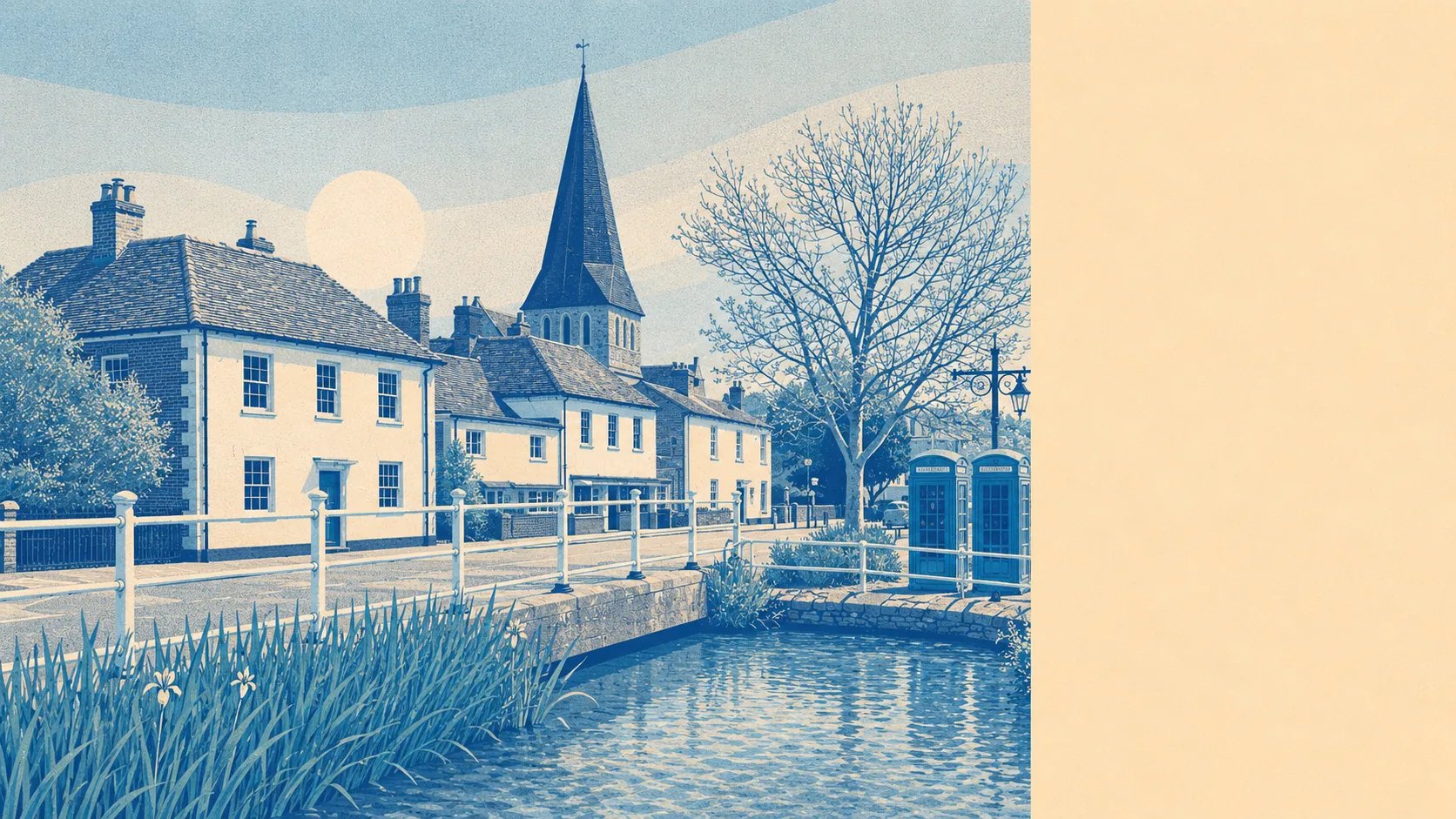
Yes, if your accountant already knows and hasn't talked you out of it. Stockbridge is a Test Valley town built along one wide chalk-stream high street, where the River Test carries more local prestige than any road ever will. The houses are old, listed, and expensive. The green is everywhere and the value is nowhere. It is a genuinely good place to live for anyone who can meet the asking price without their voice cracking, and a lesson in restraint for everyone else.
The stock is old and mostly proper houses. Roughly four in five homes here are houses rather than flats, with flats making up fewer than one in ten, which tells you this was never a place that did density. The energy ratings sort it into thirds that lean the wrong way: about three in ten homes reach band C or better, another three in ten sit at band D, and four in ten land at band E or worse. That is what happens when your housing stock is period charm with the heating bills to match. Old walls look wonderful and cost a fortune to keep warm, and the people buying here have made their peace with that.
The price of entry is the honest problem. A typical home across the area changed hands for about £625,000 over the past year, which is the sort of figure that ends conversations. Split it by type and the gap is stark: detached houses run to about £830,000, semi-detached homes to about £420,000, terraces to about £416,000, and the handful of flats to about £300,000. Council tax mostly settles around band C, though the spread reaches high, and only about a fifth of homes fall into the two cheapest bands. This is not a town where anything comes cheap, and it has never pretended otherwise.
Renting softens the entry cost without solving it. Typical private rent across the Test Valley area runs to about £1,200 a month, which is the figure for the wider district rather than this postcode alone, and it buys you the address more than a bargain. You pay for the setting, and the setting knows it.
On safety, the numbers are quietly reassuring. The published crime rate is about 55 recorded crimes per 1,000 people a year, which sits roughly 11 percent below the local-authority average. That is a market town doing what market towns tend to do, which is not very much of note, and being pleasant about it.
Getting out is the catch. Stockbridge has no railway station of its own, so the train question means a drive to Winchester, Andover, Dean, Micheldever, Grateley, Shawford, or Mottisfont and Dunbridge first. Almost nobody here commutes by train as a result, fewer than one in a hundred, and instead more than four in ten work from home, which suits a place this far from a platform. Broadband takes the edge off the isolation: gigabit-capable connections reach about half of properties and superfast reaches around eight in ten, so the home office actually functions.
The surroundings are the reason to put up with the prices. The River Test runs through the middle of it and green space sits about 450 metres from the average front door, with several patches within a short walk. Flood risk is the price of living beside a famous chalk stream: about one in ten postcodes carry some higher surface-water or river risk, and a small share of the area, around three percent, falls inside the highest flood zone. Buy near the water and read the flood map before you fall in love with the view, because the water that makes the place also occasionally visits it.
Heritage here is a genuine constraint, not a decorative footnote. The area covered by this page holds well over 1,200 listed buildings, more than twenty conservation areas, and around seventy scheduled monuments, which is a lot of history to trip over. The practical translation is simple: if you want to change a window, extend a kitchen, or so much as think about solar panels, expect a conversation with the planners first. You do not own these houses so much as look after them for the register.
The character of the place is settled and comfortable. About two-thirds of households own their homes, the typical resident is around 49, and household income runs to roughly £64,000, which is a portrait of people who arrived, stayed, and stopped moving. This page also covers the surrounding villages, including King's Somborne down toward the Test valley and Middle Wallop out to the north-west, which share the town's rural setting and its general refusal to be in a hurry.
It suits a particular buyer. If you are a family or a downsizer with the budget for a period house and no daily need for a train, who wants a river, walks, and a quiet high street more than nightlife, Stockbridge will feel like an argument you have already won.
It suits others badly. If you are a first-time buyer counting every pound, someone who needs a fast commute by rail, or anyone who wants to gut a house without a planning officer's blessing, this is a fight you will lose slowly and expensively. The town is not for people watching the budget, and it will not lower itself to meet you.
The place has form for attracting people of means. Lillie Langtry, the actress and socialite, once lived at the property that is now NJ Stokes Garage, and Varyl Begg, Admiral of the Fleet and First Sea Lord, made his home here, which is roughly the social register the town has always run to. Sitting astride the River Test and at the foot of Stockbridge Down, it has spent a long time being exactly the kind of place admirals and actresses retire to.
So the verdict lands at fair, which is the honest middle. Score it around three out of five overall: the surrounding countryside and green-space access are the standout at roughly four and a half, genuinely excellent and the real reason to come. The weak spot is value, close to the bottom of the scale, because you pay handsomely for all of it. Stockbridge is a lovely place to live and an eye-watering place to buy, and both of those things are true at once.