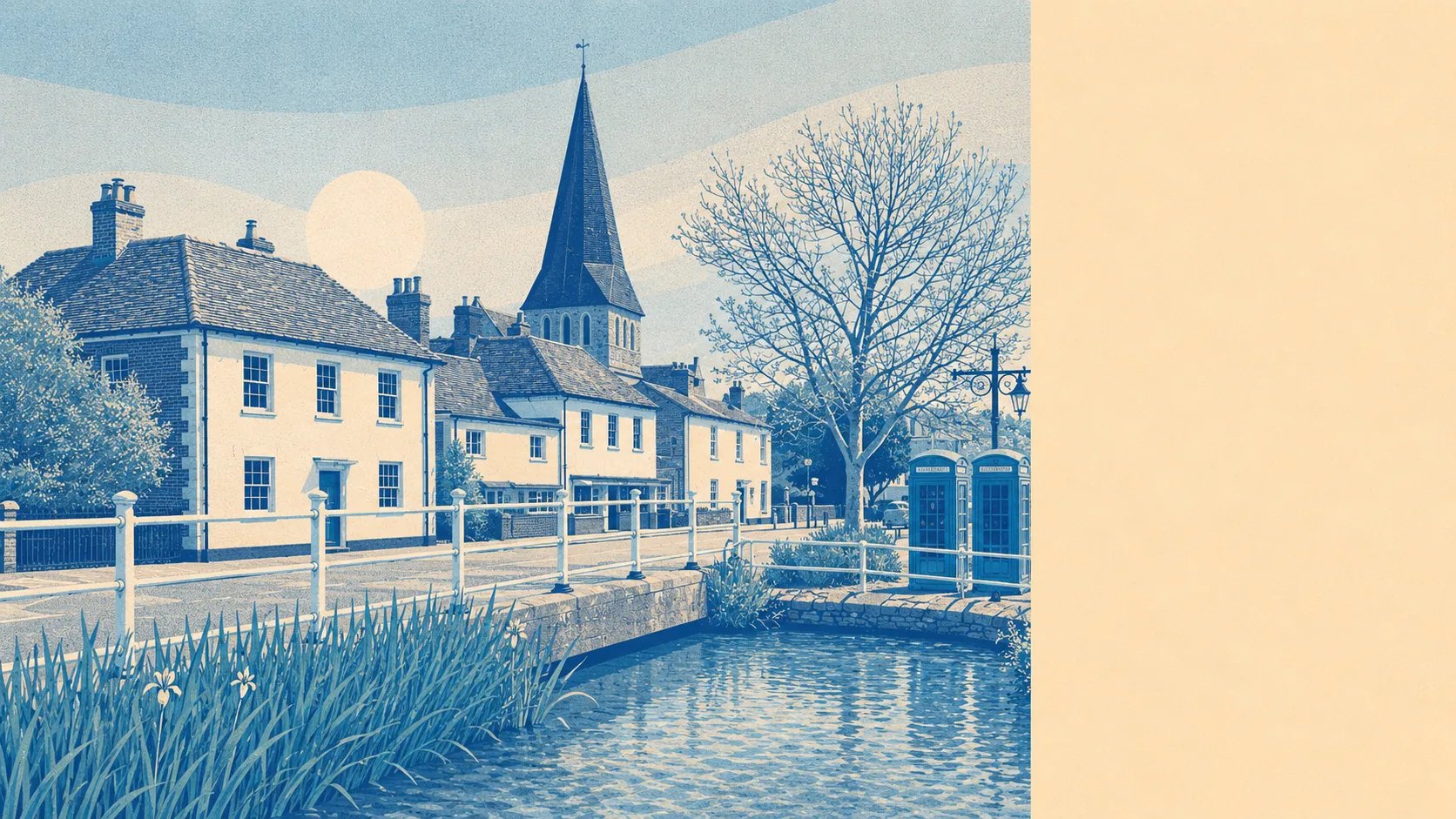
You can, but plan on asking permission for almost everything and being told no more often than yes. Stockbridge and the wider area around it are thick with protected buildings and conservation areas, which is exactly what makes the place look the way it does and exactly what makes changing it a slog. This is a corner of Hampshire that treats its old walls as a public trust rather than your private business. Extending here is less a building project and more a negotiation with the past. Go in expecting a fight and you will not be disappointed.
The listed-building count is the headline. The area covered here holds well over 1,200 listed buildings, of which around fifty carry the highest grade one status, roughly eighty sit at grade two star, and the remaining bulk are grade two. If your house is one of them, the protection reaches beyond the pretty front elevation to the inside, the outbuildings, and often the garden walls, which means a new window, a knocked-through wall, or a rooflight can all need formal listed-building consent before a single tool comes out. Doing the work without it is not a technicality to shrug off, since it is an offence, and undoing an unapproved change can cost more than the change itself. Owners of these houses tend to learn the planning portal by heart, whether they wanted to or not.
Conservation areas widen the net beyond the listed houses. There are more than twenty conservation areas spread across the area, along with around seventy scheduled monuments, and living inside one of those boundaries trims back the permitted-development freedoms that homeowners elsewhere take for granted. The exact restrictions vary from area to area, so the boundary line your house sits on either side of genuinely changes what you can do, and two near-identical homes can face very different rules. The sensible first move is to find out precisely which designations apply to your address before you sketch a single extension.
In practice that means the assumption most buyers arrive with, that a modest extension or a loft conversion is a private matter, does not hold here. Permitted development is narrower than usual, consent is needed more often, and the safe working assumption is that anything visible, structural, or period-altering will require an application and a wait. That is not a reason to give up, since sympathetic extensions do get approved, but it is a reason to budget for the consultants, the drawings, and the patience before you budget for the builders. Apply first, dig later, or the answer from the planning office tends to be a firm no.
The verdict is blunt: your freedom to alter a home here sits close to the bottom of the scale. Stockbridge protects its character fiercely, and the price of that character is that the character is not yours to change on a whim.