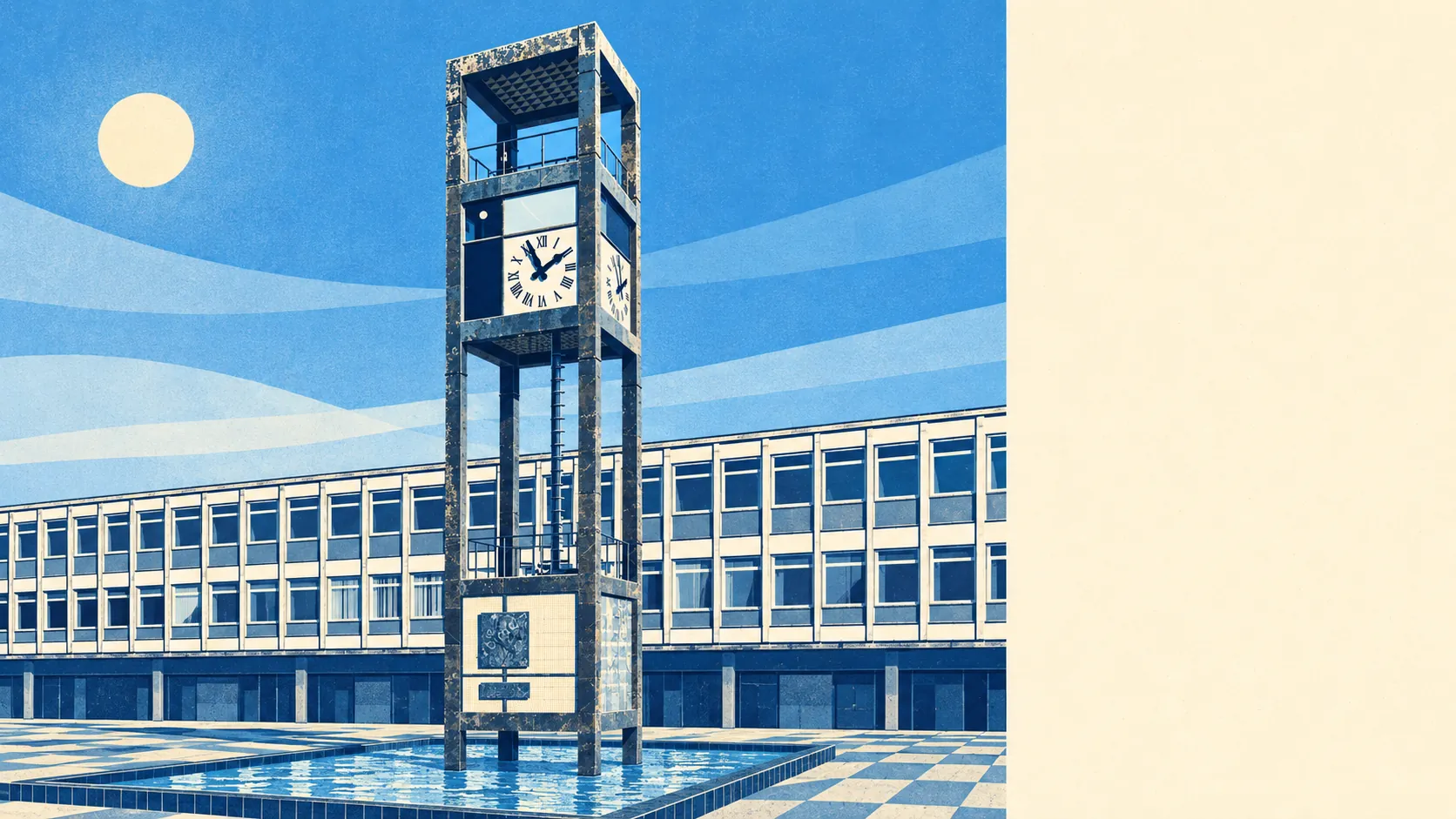
Stevenage was planned around getting people where they need to go, and that part of the plan still works. Nearly nine in ten homes can get gigabit broadband. Most bus stops get buses seven days a week. The East Coast Main Line stops in the middle of town. For a buyer, that means the job can be almost anywhere and the house can still be here.
Stevenage railway station has commuter services to London King's Cross and Cambridge, long-distance trains north, and Thameslink trains through London to the south coast. Knebworth station is just down the line. Philip Vincent built the Black Shadow motorcycle here until 1955, and his successors in the car park have kept the faith. At the last census, 49% of workers drove to work, 3% took the train and 29% worked from home. Broadband makes that last group easy to look after: super-fast speeds reach 99% of premises, nobody falls below the legal minimum, and every mobile operator covers the whole place. There are 314 bus stops, averaging 87 scheduled departures each on a weekday and about six an hour at peak, and 95% of them have a weekend service. On the Department for Transport's modelled times from 2019, the town centre is about 19 minutes away by public transport, 11 by car and 32 on foot. Bus routes get cut more easily than roads, so read the public transport times with that in mind.
The Land Registry recorded 760 sales in the year to May 2026, at a median of £350,000. Flats went for about £208,000, terraces about £337,000, semis about £400,000 and detached houses about £570,000. Most of those terraces went up after the war for Londoners who needed somewhere they could afford, and that is still the job they do, at a different price. The house price index put the average at about £318,000 in May 2026, up 4% on a year earlier. Band C is the most common council tax band, with 21% of homes in A or B, and a Band D bill runs to about £2,390 a year.
Renting across Stevenage borough costs about £1,420 a month, the mean private rent in the Office for National Statistics index for April 2026, up 4% in a year. Broken down by size, the borough averages are roughly £1,010 for one bedroom, £1,300 for two and £1,530 for three.
On the council tax valuation list, half of all homes are terraced. Flats make up 23%, semis 13%, detached houses 12% and bungalows 3%. Only about 3% were built before 1930, and the energy certificates point to the 1950s to early 1980s as the main building period. That age of stock does well on energy: 61% of certificated homes are rated A to C, and only 6% are E or worse. About 80% of homes are on mains gas and 8% heat with electricity alone. Anyone set on original cornicing will find most of it on one High Street.
That High Street is where the constraints start. Across the wider area mapped for this page there are 178 listed buildings (3 at Grade I, 15 at Grade II* and 160 at Grade II), plus 11 conservation areas, among them Old Town High Street, Shephall Green, Orchard Road and Broadwater (Marymead), with Graveley, Aston and Old Knebworth further out. A listed home needs consent for most changes, inside and out. A conservation area tightens the rules on demolition and on what you can do to the front. Henry Trigg, the churchwarden who lived at 37 High Street, had his coffin put in the rafters of his barn in 1724 so the body snatchers couldn't move him. The listing system takes a similar line with his street.
Two flood measures apply here. In the Environment Agency's river-and-sea flood zones, about 5% of postcodes are in Zone 2 and under 1% in Zone 3. Count every indicator, surface water included, and 10% of postcodes have a high reading on at least one, 14% medium and 42% low. Six flood events are on record, the latest in July 2015 when a main river overflowed its channel. Most of the high readings come from rain collecting on low ground, far more than from any river.
In 1861 Dickens found the village street "drowsy in the dullest degree". Then the government made it Britain's first New Town in 1946, and the drowsiness lost the argument. About 58% of households now own their home, a quarter rent from a social landlord and 15% rent privately. The median age is 38. The Office for National Statistics models median household income at about £58,000 before tax for the year to March 2023.
Hertfordshire Constabulary recorded a published rate of about 112 crimes per 1,000 residents in the twelve months to May 2026, about 5% below the borough average. Violence and sexual offences made up 40% of the total against 35% nationally, though that category is broad enough to include assault without injury. The force charged 11% of cases over the same year against a national 12%, ranking 23rd of 42 forces. That charge rate covers the whole county.
The 37 primary schools in Stevenage's postcode districts average about 105 on the Key Stage 2 maths measure, and the 8 secondaries average about 50 on Attainment 8. Ofsted's grades across Hertfordshire put 203 of 227 graded settings at good or better, 40 of them outstanding, but that is a county figure and says little about any one catchment. The Thomas Alleyne Academy goes back to a grammar school founded in 1558 and still stands at the north end of the High Street. A planned move to Great Ashby was scrapped in the budget cuts, so the oldest school in town also has the shortest commute from the Old Town.
Green space is close for almost everyone, the nearest about 130 metres from the average home, with 28 green spaces within a kilometre and water about 440 metres away. Whomerley Wood keeps a medieval moated site. Highwaymen used the Six Hills burial mounds as cover, which is more than most roadside verges have ever done for anyone. Beyond the estates, this page also covers Walkern and Ardeley, with Great Ashby on the north-eastern edge.
Stevenage is right for anyone whose income depends on trains or fibre: London and Cambridge commuters, remote workers, and families who want a three-bedroom terrace with a garden at a price the commuter belt rarely offers. Anyone who wants a period house to extend should look elsewhere, or be ready to spend a lot of time with the planning office.
The connections are what make Stevenage work. Good trains, buses at weekends and fibre to the door mean a home here keeps its options open whatever you do for a living. The rules bite only in the Old Town and the villages, where a listed front or a conservation area turns an extension into a lengthy application. For most buyers, outside those few streets, that makes Stevenage a better bet than its reputation lets on.