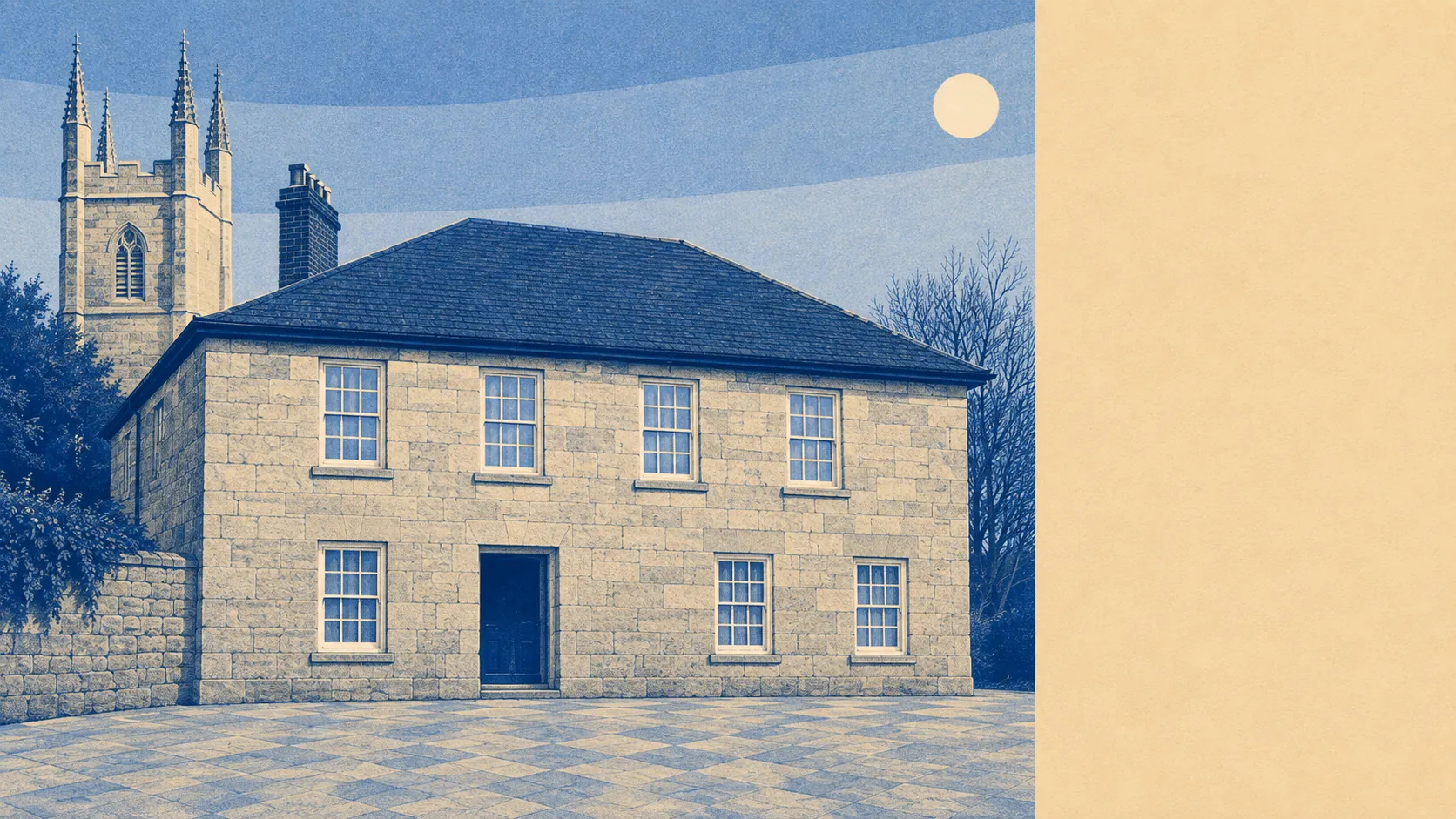
St Stephen is the Cornwall that goes to work. About two thirds of people own their homes. Most of the village heats itself with electricity, because the gas main never bothered coming out this far. Crime sits below the county norm, and open green space starts a couple of minutes from the front door. Not the holiday Cornwall. The working one.
The housing is low and wide. On the council tax valuation list, which covers every dwelling rather than only the ones certificated or sold recently, about 30% of homes are detached, 22% terraced, 21% semi detached and 21% bungalows. Flats account for about 4%, which means the flat market here is a rounding error. About 31% of the stock was built before 1930, so granite and slate sit next to a great deal of late twentieth century estate building, and nobody has tried to pretend the two match. Then the bills. Only about 6% of households are on mains gas and about 41% heat with electricity alone, which is the most useful thing to know before a February viewing. Energy certificates agree: about 34% of certificated homes reach band C or better, about 31% sit at band D, and about 35% land at band E or worse.
The Land Registry recorded 26 sales in the year to April 2026, at a median of £265,000. Type decides most of the price. Detached homes came in around £340,000, semis around £225,000 and terraces around £210,000. Council tax tells the same story from the other end, with band B the most common band and about 55% of dwellings sitting in bands A or B. A village where most of the housing is taxed near the bottom of the scale while the detached stock still sells for well over three hundred thousand is a village doing two things at once, and buyers who only look at the median will misread it.
Rent is measured across the whole of Cornwall rather than village by village, so treat it as an area typical rather than the lane outside. The typical private rent across the Cornwall area is about £1,000 a month as of April 2026, taken from the Office for National Statistics price index, and it is a mean rather than a median of advertised listings. Two bedrooms average about £880 across the area and three bedrooms about £1,080. Those numbers are honest about Cornwall. They are not a promise about any particular cottage.
Recorded crime runs at about 63 offences per thousand people in the twelve months to May 2026, against about 74 per thousand for Cornwall as a whole, so roughly 16% below the local authority average. That is a published rate per head of population, not the crime count divided by the number of residents, which is a different sum with a different answer. Devon and Cornwall Police covers the area. Rural quiet does what rural quiet always does, which is make one broken wing mirror feel like a crime wave, because everyone knows whose car it was.
The car runs everything. About 67% of working residents drive to work and about 18% work from home, while buses carry about 1% and the train a tenth of one percent. There are 15 bus stops with an average of about 19 scheduled weekday departures each, and all 15 get some weekend service, which is better than the rural stereotype allows for. St Columb Road is the nearest station. The Department for Transport's modelled journey times put the nearest town centre at about 16 minutes by car and about 34 by public transport, a doctor at about 7 minutes by car, and the nearest hospital at about 36 minutes by car or about 70 by public transport. Broadband is the genuine surprise: superfast reaches every premises, gigabit reaches about 96%, and nothing sits below the universal service obligation. Mobile coverage from all operators reaches about 95% of the area. The fibre got here long before the timetable did.
Flooding is a small story. On the postcode indicators, which include surface water, about 5% of postcodes carry a high rating on at least one measure, about 4% medium and about 23% low. On the Environment Agency's river and sea flood zones, none of the village falls inside zone 2 or zone 3, and no historic flood extent is recorded. Green space runs the other way entirely. The average postcode sits about 140 metres from open green space with about 10 green sites within a kilometre, and about 370 metres from water with about 14 within a kilometre. Living this close to a field is either the entire point of moving here or a slow education in mud.
There are 28 listed buildings, one at grade one, two at grade two star and 25 at grade two. The Church of St Stephen heads the list, and the industrial past is protected too, with the Parkandillick engine house and the Goonvean china clay works engine house both listed. Three scheduled monuments sit within the area, including the hillfort at St Stephen's Beacon, and one entry appears on Historic England's Heritage at Risk register. For a buyer the useful point is what is absent: there is no conservation area over the village, so ordinary homes fall under normal planning rules rather than the extra layer of consent a conservation area brings. The constraints land on named buildings, and the listing will tell you plainly whether yours is one of them.
About 64% own their homes, the median age is 44, and household income runs at about £46,000 gross before tax for the financial year to March 2023, modelled for the area by the Office for National Statistics, or about £36,000 after tax. That is a settled, middle aged, working village rather than a commuter dormitory or a retirement coast. This page also covers Nanpean, next door and cut from the same clay.
It suits people who already own a car and have stopped arguing about it. Families who want space rather than polish, buyers who would take a bungalow with a garden over a flat with a view, remote workers who need the gigabit line more than the timetable, and anyone who wants the land more than the postcard.
It does not suit anyone who needs a station, a hospital within a short drive, or an evening out that does not start with booking a taxi. Nor anyone buying an older place on electric heating without pricing a winter first, because that is where the surprises live. If a busy high street is the reason for moving somewhere, this is the wrong village and roughly the wrong century.
So yes, with the strengths and weaknesses in unusual places. Its real strength is the surrounding area: green space at the end of the road, water close by, and none of the village inside the river and sea flood zones. The weak spot is the local community measures, where the national deprivation ranking places both neighbourhoods around the third decile and has not moved since 2019, and where income sits lower than the price of the detached stock would lead you to expect. Buy for the space and the quiet. Do not buy expecting the place to entertain you, because it has never once tried.