Yes, if you accept that the landscape is the amenity. Most people own their homes outright. The typical resident is in their early fifties. Nearly a third work from the kitchen table. This is not a village waiting to be discovered. It is a village that has decided, with some firmness, that it has enough.
The stock is houses and bungalows, and very little else. On the council-tax valuation list, which covers every dwelling rather than just the ones with a recent energy certificate, around 35% are detached and roughly 26% are bungalows, with semis and terraces at about 15% each and only 6% flats. Half the dwellings were built before 1930. Mains gas reaches around 5% of households, which is the fact most buyers miss until the first winter bill lands: roughly 19% run on electricity alone for heating and about 9% have no central heating at all. Energy certificates put about 46% of the certificated stock in bands A to C, roughly 21% in band D, and around 33% in band E or worse. Granite walls hold their character and lose their heat.
Prices are the sting. The Land Registry recorded six sales here in its last twelve months to April 2026, at a median of £500,000, with detached houses accounting for four of them at the same £500,000 median. Six sales is a thin market, and a thin market means the house you want may simply not come up for two years. Council tax is a gentler story: band D is the most common band, and about a third of dwellings sit in bands A or B, which is the tell that the valuation list includes a great deal of older, smaller property the sales figures never touch.
For renting, the typical private rent across the Cornwall area runs at about £1,000 a month on the Office for National Statistics measure, up around 5% over the year. That is an area figure covering the whole of Cornwall, not St Buryan's own, and in a village this size the rental market is whatever two or three landlords decide it is.
Crime is genuinely low. The published rate for the area is about 44 recorded crimes per thousand people over the twelve months to May 2026, against about 74 per thousand across Cornwall as a whole. Devon and Cornwall Police charge in around 8% of cases against about 12% nationally, which is the force's own performance rather than this village's, and worth knowing before anyone assumes low crime and good outcomes are the same thing.
Connectivity splits cleanly in two. Broadband is excellent: gigabit-capable service reaches about 99% of premises, and no postcode sits below the universal service obligation. Mobile coverage from at least one operator reaches about 100% of the area. Getting your body anywhere is the harder half. About 58% of working residents drive, roughly 29% work from home, and under 1% use the train or the bus. There are four bus stops with service data, averaging about 20 scheduled weekday departures each and roughly half a bus in the peak hour, though all four see weekend service. Department for Transport modelling from 2019 puts the town centre at about 22 minutes by car and roughly 45 by public transport, a doctor's surgery at about 18 minutes by car, and a hospital at around 22. Those public transport times are the ones to distrust; rural services have not expanded since 2019.
The surroundings are the reason to come. Green space averages around 120 metres from the doorstep with about five separate spaces within a kilometre, and water is roughly 540 metres away. Every postcode sits close to the National Cycle Network. On flood risk, none of the area falls within the river-and-sea flood zones, and no postcode carries a high risk on any indicator; about 4% of postcodes show medium risk and around 30% show low risk on at least one indicator including surface water. Ground stability is unremarkable across shrink-swell, landslide and soluble rock. Radon is the exception and it is not a small one: every postcode here sits in the highest radon band, which means a measurement test and possibly a sump, and any solicitor who does not raise it is not doing the job.
Heritage is the other constraint with teeth. There are 30 listed buildings, one of them Grade I, the rest almost all Grade II, along with the St Buryan conservation area and three scheduled monuments in the immediate area. The Church of Saint Buryan, Boskenna, Trevider Farmhouse and Penrose Farmhouse are all on the list. If you buy one of them, or anything inside the conservation area, the windows, the roof and the render stop being your decision. Plastic windows are a conversation with a planning officer, not a weekend job.
The character follows from the ownership pattern. Around 69% own their homes, the median age is 53, and household income runs at roughly £44,000 a year gross before tax. That is a settled village with a working farming economy underneath it, not a commuter dormitory pretending to be rural.
It suits anyone whose life happens within walking distance of their own front door, or inside a car. Remote workers get proper broadband and the quiet to use it. Retirees get bungalows, low crime and short walks to green space. Families get St Buryan Primary School on Rectory Road feeding through to Cape Cornwall School, and Ofsted has graded 95 of 120 inspected Cornwall settings good or better, with three outstanding.
It does not suit anyone who needs a train, a bus after the evening, or a hospital in fifteen minutes. It does not suit anyone on a budget that a half-million-pound median houses uncomfortably. And it will not suit anyone who wants to buy a granite cottage and then decide what it looks like.
The place has form for producing people who left and then mattered. William Noy, born here in the sixteenth century, became a jurist of consequence. Graham Fitkin, born in 1963, writes minimalist music performed internationally. The comedian Jethro came from here too. A village of this size producing that spread of output suggests the quiet is doing something useful to the people in it.
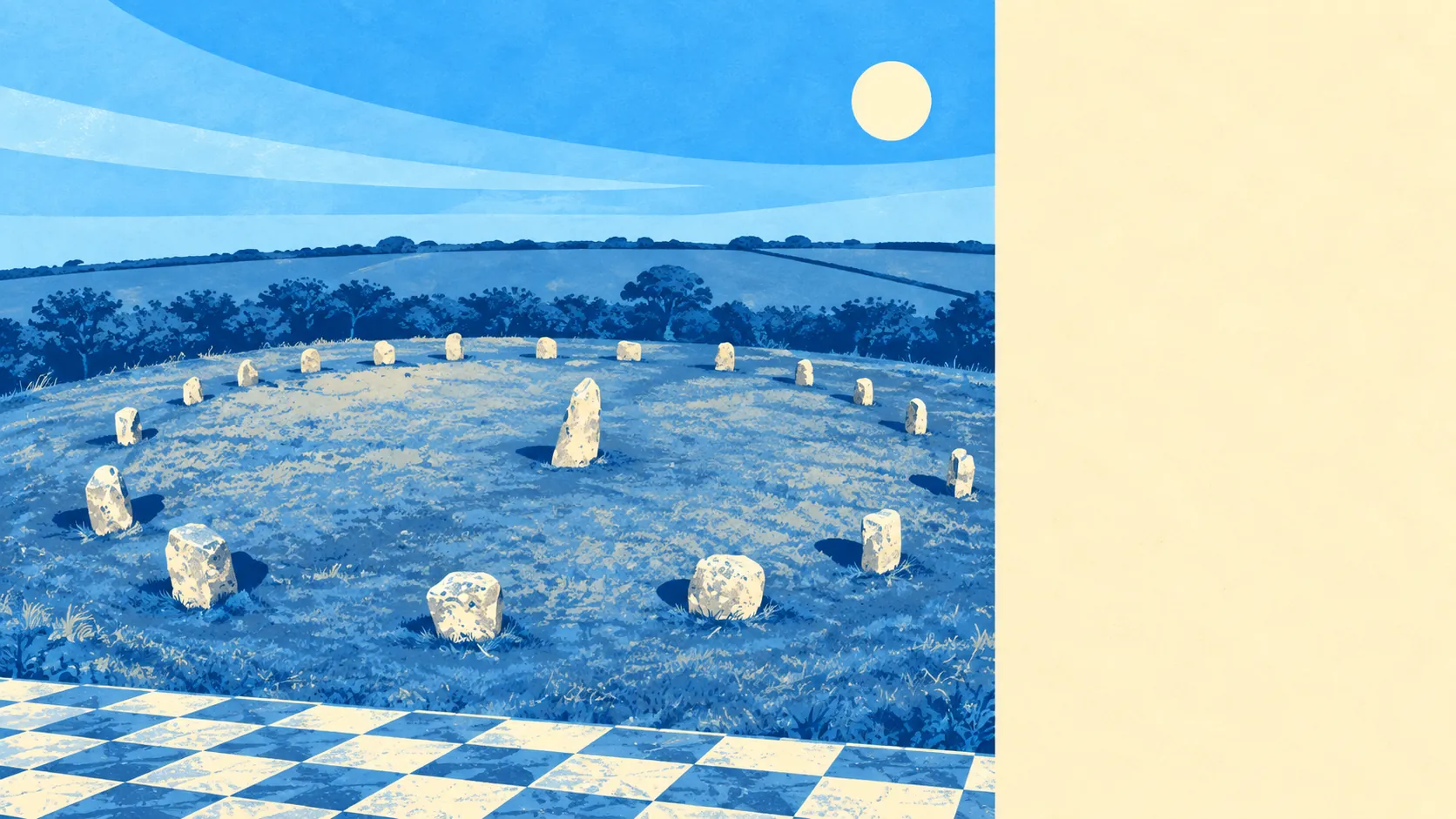
St Buryan is a good place to live, and its real strength is the land it sits in: the green space, the coast path, the standing stones at Boscawen-Un and the Merry Maidens that were here four thousand years before the church tower. The weak spot is the money. A half-million-pound median in a village with a handful of sales a year is not value, it is scarcity, and scarcity is what you pay for when the alternative is Penzance. Buy here for the ground you walk on, because that is the part nobody can put a price on twice.