The area around Shoreditch is dense, busy and better supplied with green space and water than its reputation suggests. A park is a couple of minutes from almost any front door. A canal runs along the top of the neighbourhood. Offices outnumber everything else. Private gardens hardly exist, and the public ones fill in for them.
The average Shoreditch home is about 138 metres from the nearest public green space, and around 69 green spaces lie within a kilometre of it. Most are small squares, churchyards and pocket gardens, with Shoreditch Park the largest on the northern edge and Arnold Circus at the heart of the Boundary Estate. Bunhill Fields Burial Ground is a short walk west. Plenty of the neighbourhood's green space is a burial ground, and the quietest neighbours in Shoreditch are buried there.
Water is about 530 metres from the average home, and around 16 bodies of water lie within a kilometre. The main one is the Regent's Canal, whose towpath runs along the northern edge of the area and goes all the way from Angel to Limehouse, passing Victoria Park on the way.
The National Cycle Network is about 1.9 kilometres from the average home, and no postcode here is close to it. That matters less than it sounds, because London's own cycle routes pass through. Cycle Superhighway 1 runs along the western edge, Quietway 13 crosses the area east to west, and the London Cycle Hire Scheme operates here. There's no ancient woodland.
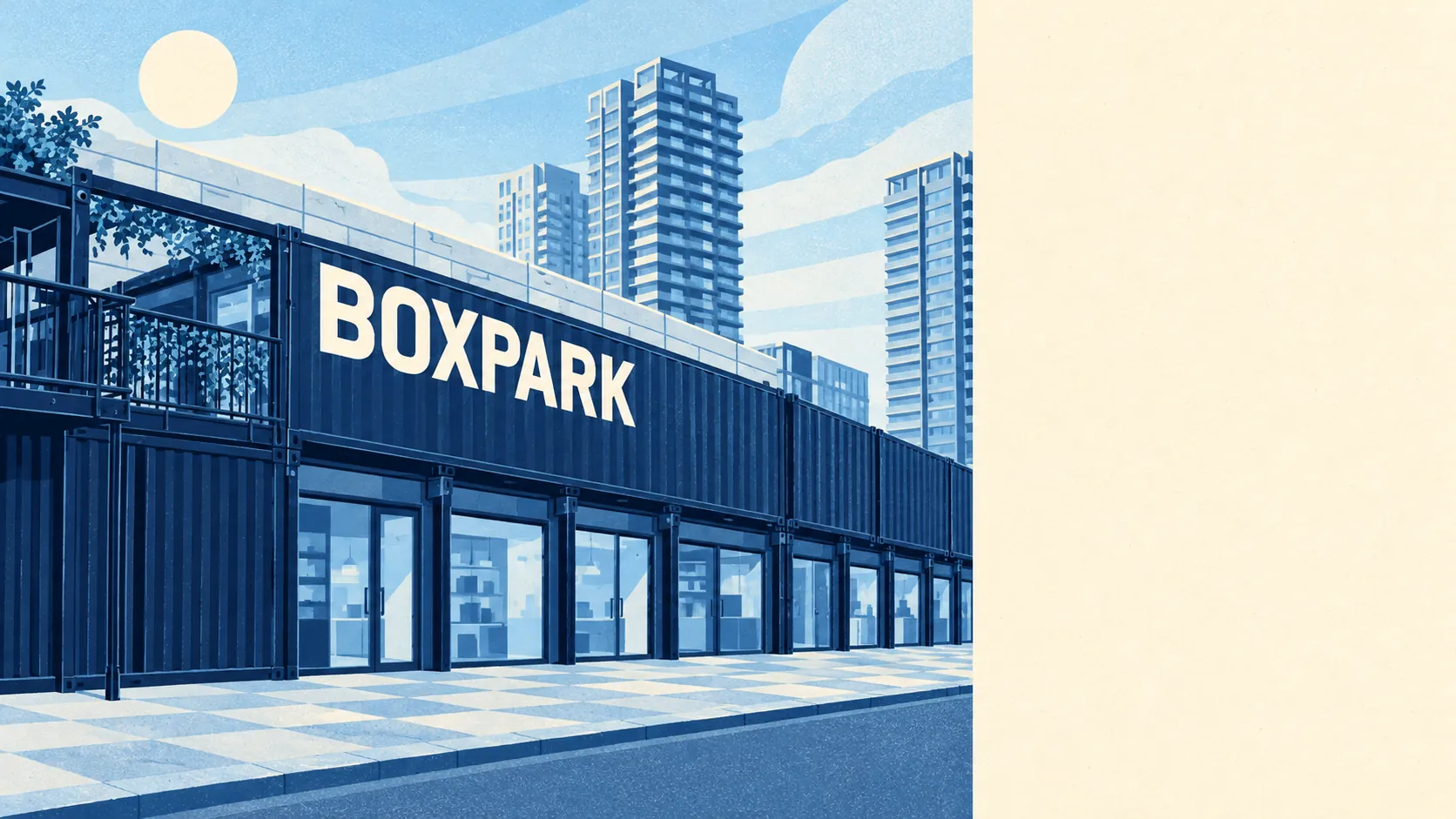
Rated premises in Shoreditch include 90 shops, 21 pubs and 57 restaurants, all on top of a far larger population of offices. Boxpark is beside Shoreditch High Street station, and Redchurch Street and Brick Lane and Fournier Street are among the conservation areas nearby. During the day the office workers fill the streets, and in the evening the pubs and restaurants take over.
Fine-particle air pollution in Hackney averaged about 10 micrograms per cubic metre in 2024, a borough-wide figure that includes plenty of streets quieter than Shoreditch's main roads.
Private gardens are scarce. Shoreditch has about 2,600 square metres of private garden for every 1,000 residents, roughly what a few suburban back gardens would add up to. Almost everyone here lives in a flat, so outdoor space usually means a balcony, a shared roof terrace or the nearest square. Ask whether a flat has a private balcony or terrace, because in Shoreditch it's one of the few features that's both rare and hard to add later.
The valuation list shows what the neighbourhood is mainly used for. Of 2,472 rateable premises in Shoreditch, 1,903 are classed as offices, far more than any other kind. These are premises on the council's rating list, so some may be empty or between tenants. Even so, most of the neighbourhood is a place people come to work.
Food hygiene is good. Of 173 rated food premises, about 83% hold the top hygiene score and about 2% sit at the bottom end, so very few of the kitchens behind those pubs and restaurants have problems that the inspectors could find.
No area of outstanding natural beauty, site of special scientific interest or ancient woodland touches Shoreditch. That's normal for a neighbourhood next to the City, and none of it affects how much green space residents can reach.
The surroundings are one of Shoreditch's real strengths. Few central neighbourhoods have parks, squares and a canal towpath this close to most homes, so the lack of private gardens matters far less than it would elsewhere.