Yes, if you want a modern suburb that still calls itself a village on the parish noticeboard. Three in four households own their home. The typical resident is 35. Half of working residents don't commute at all. Shinfield is a young, comfortable, well-schooled place that grew up fast and hasn't finished yet.
The homes are mostly houses, and mostly recent. The council-tax valuation list puts detached and semi-detached homes at about a third of the stock each, with terraces at 15% and flats at 14%. Bungalows make up 4%. Only 6% of homes were built before 1930, and 16% went up between 2000 and 2008 alone, which tells you when the diggers arrived. The energy certificates follow from that: 88% of certificated homes sit in bands A to C, a figure period-property owners in older Berkshire villages read with the expression of someone paying for a draught. Mains gas heats 87% of homes. If you want sash windows and a rattling chimney, you are in the wrong parish.
Buying isn't cheap. The Land Registry recorded 84 sales in the twelve months to May 2026, at a median of about £483,500. By type, detached homes went for a median of £610,000, semis for £452,500, terraces for £370,000 and flats for £251,000. The official house price index put the average down 3% over the same year, and up about 16% over five years. Council tax sits mostly in Band D, which runs to about £2,500 a year, and only 6% of homes are in the two cheapest bands. Nobody here got a bargain on the council tax either.
Renting follows the wider borough. The typical private rent across the Wokingham area was about £1,480 a month as of April 2026. That is a borough-wide figure, not Shinfield's own, and with only about a fifth of households renting, the local choice is thinner than the average suggests.
Safety is the uncomfortable number. The published crime rate was about 60 per 1,000 residents in the twelve months to May 2026, roughly 25% above the Wokingham average of about 48. Wokingham is a low-crime borough, so "above average" here still means a lower bar than most of England clears. The totals are small enough that a handful of incidents moves the mix, so the category breakdown isn't worth reading tea leaves into. What the figure doesn't do is match the estate-agent phrase "quiet village location", which has done more damage to buyer expectations than any police report.
Schools are where Shinfield earns its prices. Across Wokingham, Ofsted has graded 22 of 24 settings with a published grade as Good or Outstanding, 4 of them Outstanding and 2 requiring improvement. The primaries serving the district averaged a maths score of 105 at the end of primary school, across 3 schools, and the local secondary averaged an Attainment 8 score of about 54. Shinfield Infant and Nursery School and Shinfield St Mary's Church of England Junior School are the obvious names for younger children, and the nearest primary is about a 13-minute walk on the Department for Transport's modelling. Parents who moved here for the catchment will tell you they moved for the green space. They moved for the catchment.
Getting around depends on who is asking. Half of working residents work from home, 41% drive, and just 1% take the train. There are 14 bus stops, averaging 44 weekday departures each, about 3 an hour at peak, and every one of them has a weekend service. Reading town centre is about 29 minutes by public transport and 20 by car on the Department for Transport's 2019 modelling, and those bus times age faster than the roads do. Reading Rail Station and Reading Green Park are the rail options, neither of them yours. Broadband is excellent: gigabit connections reach 94% of premises and superfast 99%, which explains the working-from-home figure better than any lifestyle survey.
The environment is a split verdict. Shinfield sits outside the Environment Agency's river-and-sea flood zones entirely. But about 20% of postcodes sit on at least one high flood indicator once surface water is counted, which is the risk that fills a road after a heavy storm rather than the one that fills a river. The Anglo-Saxons named the place after floodwater shining on the meadows by the Loddon, so nobody can claim they weren't warned. Green space is the easy win: the nearest is about 120 metres away on average, with 24 green spaces within a kilometre. Radon sits in the lowest band.
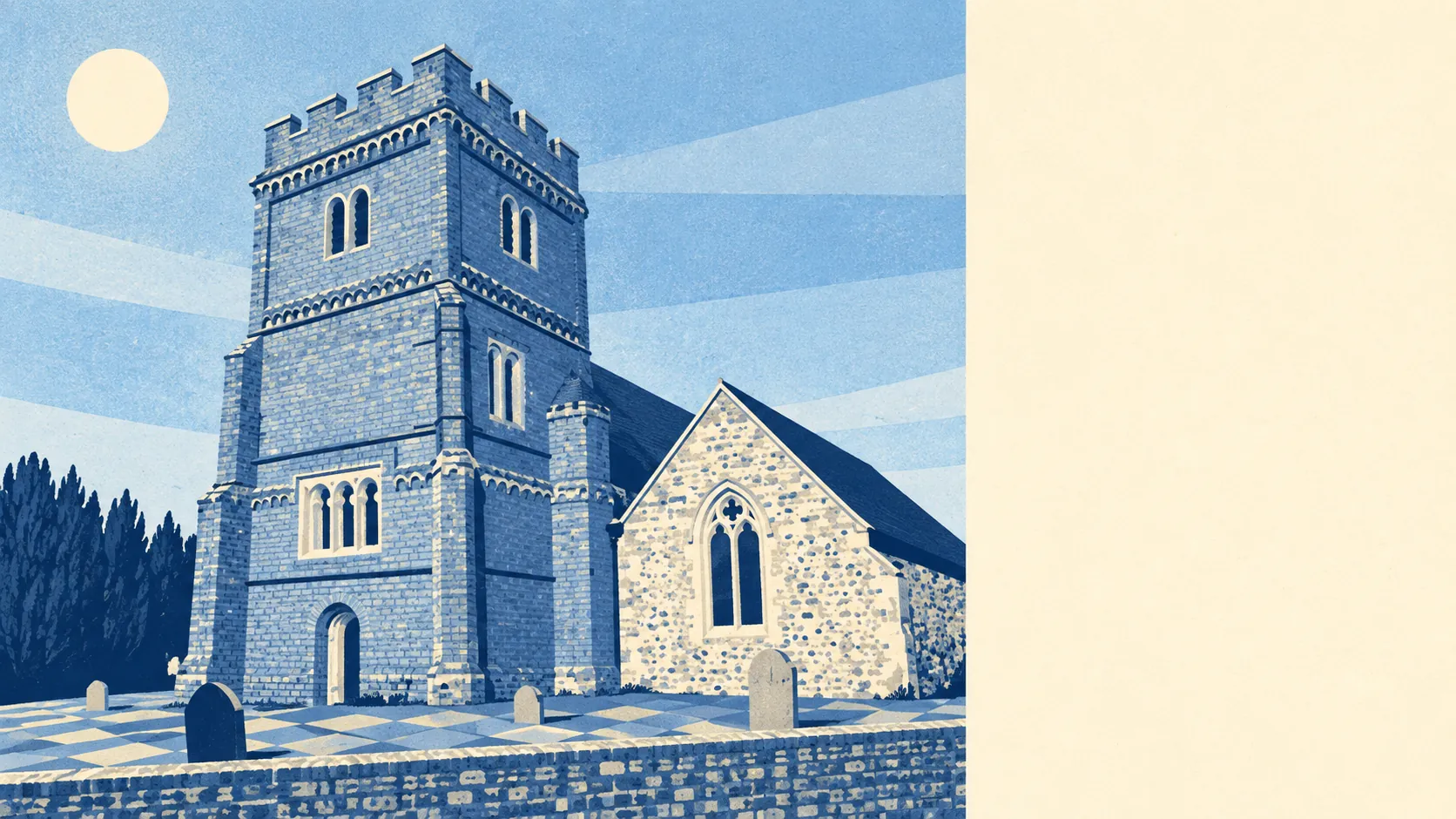
Heritage won't get in your way. There are 8 listed buildings, 1 of them Grade I and 7 Grade II, and no conservation areas. Unless your house is one of the eight, extending it is a conversation with the planning department, not a negotiation with history. The church tower that Parliamentary soldiers blew apart during the Civil War was rebuilt in brick and still stands, which remains the most dramatic planning dispute in the village's recorded past.
The people are young, settled and well paid. About 74% own their homes, the median age is 35, and the Office for National Statistics modelled gross household income at about £75,000 in the financial year to March 2023. Half of adults hold a degree. This is couples with young children and a mortgage they chose carefully, not a retirement village with a postbox.
Shinfield suits a family with primary-age children, one or both parents working from home, who want a newer house with a garden and a short walk to school. It suits anyone who needs gigabit broadband more than a train station, and anyone who counts an energy bill before a cornice.
It doesn't suit buyers who want old-village character, cheap housing, or a commute that doesn't involve the car. It doesn't suit anyone who hears "village" and pictures quiet lanes and one shop, because the parish has been growing faster than the lanes. Shinfield Studios opened in 2024 and the Thames Valley Science Park in 2018, and the place grew around them.
The famous names are a mixed bag. Catherine of Aragon owned the manor and is said to have stayed occasionally. Charles I is said to have stayed at Goodrest House, now part of Crosfields School. The parents of the author Mary Russell Mitford are buried at the church. More recently the parish has been home to footballers Glenn Little, Jem Karacan and Brynjar Gunnarsson, and Lenny Henry and Dawn French once had a home in Spencers Wood. A Tudor queen, a king in hiding and several Reading midfielders is a village history that rewards not asking too many follow-up questions.
Shinfield is a good place to live, and better than its village label suggests. Its real strength is the community: young, owner-occupied, well educated and comfortably off, with schools to match. The weak spot is flood risk, from surface water rather than the river, so check the exact street before you check the kitchen. Buy here for the school run and the broadband, not for the village.