Yes, if you want Guildford on tap without having to live in it. Seven in ten households own their home. Half the working residents work from home. A quarter of the area sits inside the Surrey Hills. It's a commuter village where half the commuters stopped going anywhere.
The housing is mostly houses, and big ones. On the council-tax valuation list, 31% of homes in the Shalford area are detached, 26% semi-detached, 18% terraced, 15% flats and 8% bungalows. About 36% were built before 1930, so a good share of the stock predates cavity walls and anyone's opinion on insulation. The energy certificates show it: 42% of certificated homes sit in bands A to C, 39% in band D and 19% in band E or worse. Around 75% of homes heat with mains gas and 7% with electricity alone, and electric-only heating in an old cottage is a fact worth having before the viewing, not after the first winter bill.
The typical sale price in the Land Registry's twelve months to April 2026 was about £550,000, across 67 sales. Type decides everything. Detached houses went for about £1,053,000, semi-detached for about £550,000 and terraced houses for about £420,000. Flats came in around £380,000, though only three sold, so that figure is a sample, not a market. The most common council-tax band is D, which in Guildford costs about £2,550 a year, and only 8% of homes sit in bands A or B. Cheap housing here is a rumour estate agents start and nobody finishes.
Renting is priced at Guildford rates. The typical private rent across the Guildford area was about £1,720 a month as of April 2026. That is a borough-wide figure from the Office for National Statistics, not a Shalford-only one, and a period cottage by the river won't be letting at the borough average.
Crime is the kind of problem other places would pay to have. Police.uk records put the Shalford area at about 68 crimes per 1,000 residents in the year to May 2026, roughly 22% below the Guildford average of about 87. The totals are small enough that a handful of incidents moves the category mix around, so the honest reading is simpler: this is a quiet area inside a borough that is already not rough.
Schools are strong on the numbers. Across the five primary schools in the surrounding postcode districts, the average Key Stage 2 maths score is about 105, above the expected standard of 100. The two secondary schools average an Attainment 8 score of about 55. Shalford Infant School is in the village, and Tillingbourne Junior School is nearby. Across Surrey as a whole, Ofsted has graded 147 of 159 settings good or better, with 30 outstanding. Parents who move here for the schools are rarely disappointed. Parents who move here assuming the catchment line bends for them occasionally are.
For getting around, Shalford (Surrey) Rail Station sits on the line between Guildford and Dorking, but only 2% of working residents take the train to work. About 37% drive and half work from home. The Department for Transport's modelling puts Guildford town centre about 14 minutes away by car and about 23 minutes by public transport. There are 236 bus stops in the wider area, and those with timetable data average about 33 weekday departures, around two an hour at peak, with weekend buses at about 95% of them. Broadband is patchier than the house prices imply: 87% of premises get superfast speeds but only 37% get gigabit, which in a place where half the workforce is on video calls is an odd gap to leave. Mobile coverage from every operator reaches about 99% of the area.
The rivers make the village and occasionally threaten it. The Tillingbourne joins the River Wey at Shalford, next to the parish church. On the Environment Agency's river-and-sea flood zones, about 5% of the area is in zone 2 and about 1% in zone 3. Counting postcodes on at least one flood indicator, including surface water, about 5% carry high risk, 6% medium and 23% low. The Environment Agency has 22 recorded flood events here, the latest in December 2000, when an ordinary watercourse overtopped its channel. Buyers near the water should check the exact address, not the village average. Away from the rivers, green space is the whole point: the nearest green space is typically about 200 metres from the door, with around ten within a kilometre, and about 26% of the area falls inside the Surrey Hills Area of Outstanding Natural Beauty.
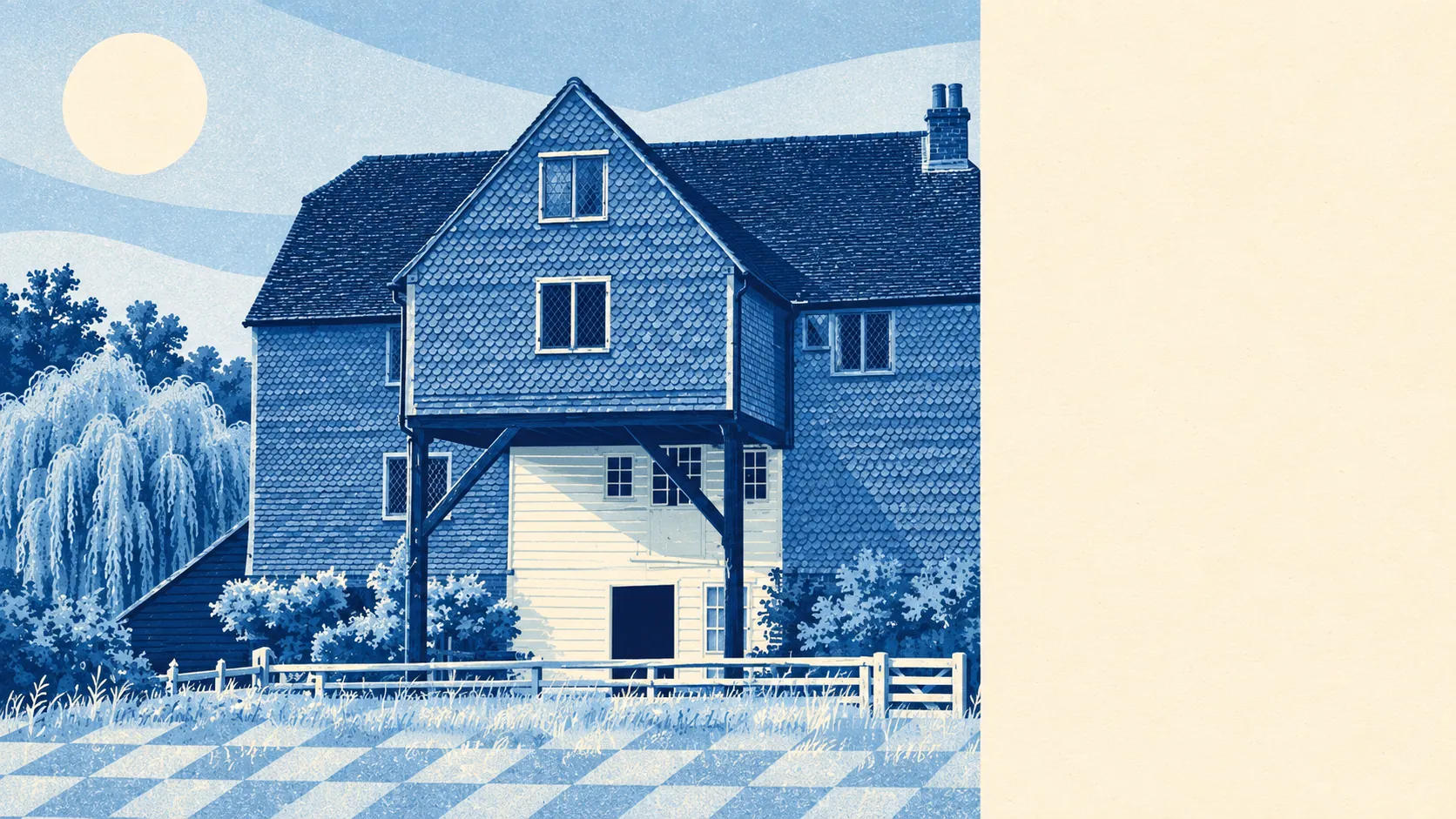
Heritage is where the freedom runs out. The wider area around Shalford holds 449 listed buildings, 17 of them grade I, 23 grade II* and 409 grade II, plus 15 conservation areas and 9 scheduled monuments. Shalford has a conservation area of its own, and Shalford Mill, owned by the National Trust, is listed grade II*. Anyone planning a glass box on the back of a Victorian cottage should expect a planning officer with strong views about glass boxes. The conservation officer does not care that the extension looked lovely on a design website.
The people are settled and comfortable. About 73% of households own their home, the median resident is 46, and the average household income modelled by the Office for National Statistics for the financial year to March 2023 was about £76,000 before tax. Roughly half of adults hold a degree. Nobody moves to Shalford to be discovered. They move here to stop being bothered.
It suits people who work from home or drive to work, want a riverside walk before breakfast, and can pay Surrey prices for a house rather than a flat. Families aiming at well-regarded schools and a quiet life will find both, as long as the budget stretches to a semi-detached.
It doesn't suit anyone who needs a fast train every morning, a cheap first home, or the freedom to rebuild a period property however they like. If your plan relies on a direct commute and a big extension, Guildford itself gives you more trains and more flats to choose from. The trade is fewer fields and a busier doorstep, which is the whole difference between the two places.
The history is better than the village lets on. King John granted a charter for the Great Fair of Shalford, and one story puts John Bunyan hiding in a cottage called Horn Hatch on Shalford Common, drawing on the fair and the nearby Pilgrims' Way for The Pilgrim's Progress. In April 1944 two goods trains collided at Shalford, one of them carrying aviation fuel, and the fire buckled the steel road bridge over the railway. The Queen Victoria pub came through unharmed, which says something about how seriously the village takes its pubs.
Shalford is a good place to live, and better than average. Its real strength is its surroundings: river, hills and green space closer than the nearest shop. The weak spot is what you're allowed to do to your own house, because a village this pretty comes with a lot of people guarding it. Buy the house you want as it stands, not the house you'd like to turn it into.