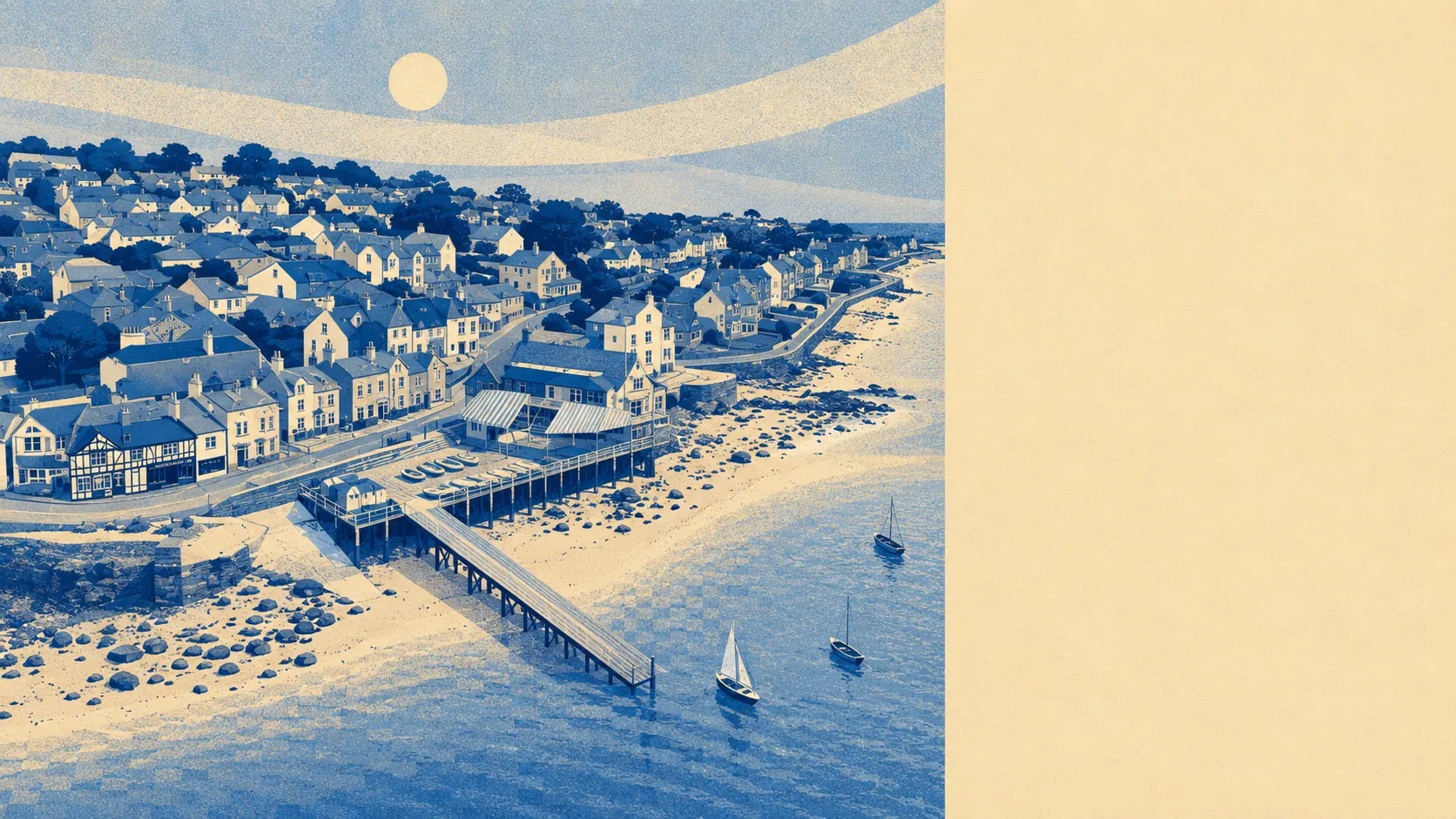
Seaview is Frinton-on-Sea with a Solent view. The median age is sixty. Four in five homes are owned. A third of the housing stock is bungalows. Not Sandbanks money, not Whitstable youth, just an Edwardian resort that quietly forgot to leave.
The housing stock is honest about what it is. Half the homes are houses, a third are bungalows, and only one in seven is a flat, which is a ratio you do not see on the mainland coast unless you are paying considerably more for the privilege. Roughly one home in four was built before 1930; most of the rest went up between the war and the mid-eighties, which is why the energy ratings come out the way they do. About four in ten properties sit in band D, and a third are band E or worse. Only a quarter reach band C or better. The bungalows are warm enough in October. They are honest about being cold in February.
The typical sale price over the past year was around £410,000 across 47 transactions, which for a village this size is a thin market that turns over slowly. Detached houses cleared around £450,000, semi-detached around £400,000, and the seven flats that sold went for a median of £150,000, which tells you where the entry point lives. The modal council tax band is D, and fewer than one in ten homes sit in bands A or B. Nobody is buying their way in cheap.
Typical private rent across the Isle of Wight area is about £940 a month, which is the figure across the whole authority rather than this specific village. Annual change in island rents has run at about 8% over the past twelve months. The retirees are not the ones being squeezed.
The published crime rate runs at about 83 per thousand per year, which lands within a percentage point of the Isle of Wight average. The two figures use different population bases, so the like-for-like reading is best treated as level. For a coastal village that empties to half its population once the summer ends, level with the island reads as quiet by mainland standards and noisy by retirement-village standards. The middle ground a place like this usually occupies.
The transport picture is what the geography forces. Roughly half the working population drives, more than a third works from home, and about one commuter in two hundred and fifty takes the train. The nearest stations are Ryde Esplanade, Ryde Pier Head and Ryde St Johns Road, with Brading and Smallbrook Junction further down the line. There are about forty bus stops within the village area. Broadband is the surprise: gigabit availability covers roughly nine in ten premises and superfast coverage is near-universal. The fibre arrived before the buses got more frequent.
Flood risk is the file you read before the offer. About one postcode in six carries a high-risk rating from surface water or sea, with another small share at medium risk; the high-risk flood zone covers around 8% of the area on current sea levels and 13% on the climate-adjusted projection. The coastal management plan is "Hold the Line" for the next century, which is the official commitment, not a forecast. On the upside, green space is everywhere: the average postcode sits 176 metres from the nearest park or open space, with eight separate green spaces within a kilometre. The sea is closer still.
There are 24 listed buildings in the surrounding area, all Grade II, and one scheduled monument. There are no conservation areas inside the village boundary. What that means in practice: outside the specific listed properties, the planning rules are normal rather than special, and most owners can replace windows, paint exteriors and extend at the back without entering the heritage-consent system. The houses are old. The system that polices them mostly is not.
Around 84% of homes are owner-occupied, the median age is sixty, and the typical household income is just under £50,000 a year. The deprivation index places the area in the eighth decile, which puts it among the more comfortable fifth of England. The age profile and the ownership rate do most of the work explaining the place. People who arrived in their fifties did not leave, people who inherited the house do not sell it, and people who move in next year will be older than the people who moved out.
It suits the person who has stopped commuting, or never started. The retiree downsizing from a mainland detached house gets the same square footage on one floor with the sea visible from at least one window. The remote professional who can work three days a week from the kitchen table gets gigabit broadband, a hovercraft to the mainland, and no need to stand on a station platform in February. Both groups find the village does precisely what its name does.
It does not suit the household with two earners commuting in opposite directions, the family that needs a state secondary on the doorstep, or anyone looking at the £410,000 median and waiting for it to look reasonable. If the budget starts with a two rather than a four, the choice is somewhere else on the island, or somewhere else entirely. The buyers who wanted Sandbanks and got priced out by two zeros end up here pretending it was always the plan. The buyers who wanted Frinton-on-Sea with a Solent view instead of a North Sea one knew exactly what they were doing.
The overall verdict comes out at three out of five, which is the honest average of a village that does its environment exceptionally well and its house prices unhelpfully badly. The surrounding area and the green space score the maximum, because there is sea on one side, parks within minutes on the other, and a heritage tone the council does not bureaucratise too aggressively. Value for money scores a two, because £410,000 buys a lot of place elsewhere and not as much as people expect here. Everything in between sits within a band of the average. Frinton-on-Sea with a Solent view and a flood map, priced at what you would expect once you accept the comparison.