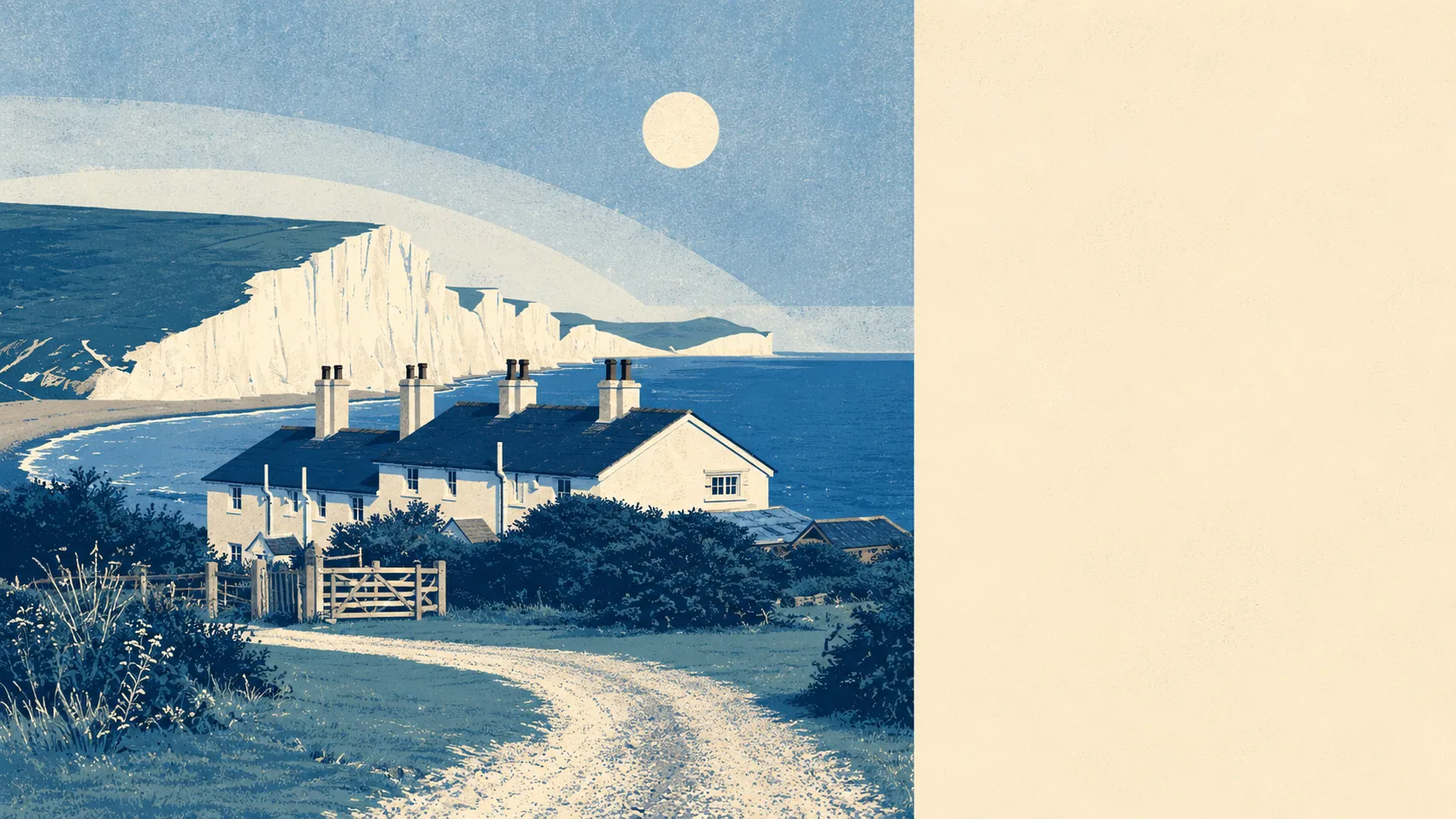
The surroundings do most of the work here. To the east, the Seven Sisters chalk cliffs run out to Beachy Head. To the north, the South Downs open up. To the west, the Ouse valley flattens into reclaimed marshland. For most residents, the walk from your front door to something worth walking to is short. This is the part of Seaford's pitch that does not have to try.
Green-space access from an average Seaford postcode is generous by any standard. The nearest open green space sits about 200 metres from the average address, with around seventeen distinct green spaces within a kilometre. Blue space, meaning coast, river or lagoon, sits about 600 metres from the average address, with roughly thirteen bodies of water within a kilometre. That is what a coastal town wedged between two river valleys and a chalk-cliff coastline looks like on a data sheet. The built boundary of the town does not itself overlap an Area of Outstanding Natural Beauty or a Site of Special Scientific Interest, which is the technical answer. The functional answer is that the Seaford to Beachy Head Site of Special Scientific Interest picks up where the urban edge ends, running east along the coast toward Beachy Head, and that most residents can walk into it from their front door in under half an hour. The town has been quietly benefiting from that geometry for a century.
To the east, the coastal footpath climbs Seaford Head and continues along the top of the Seven Sisters chalk cliffs before dropping toward Beachy Head. Below those cliffs, at a spot called Hope Gap, sits the beach used as a location in the film Hope Gap. To the west, the Ouse valley flattens into former tidal marsh reclaimed with dykes, running behind the shingle bar and out into Newhaven. To the north, the chalk downland climbs into the South Downs proper. Villages sit at the entry points to that countryside: Bishopstone on the western edge of the parish, Alfriston about four miles north-east in the River Cuckmere valley, with Charleston Manor and the Old Clergy House among the listed buildings that reward the drive out. Just over half of the town's postcodes sit close to a National Cycle Network route, which for a coastal town with the room to spread its cycling out is not a small thing. This is walking country, cycling country, and the kind of coastal country where the beach can be a mile long and still not feel full on a Wednesday in August.
Near-perfect surroundings, which is the most honest part of Seaford's overall pitch. If you moved here for the walks, the cliffs, the downs, and the sea, nothing about the surroundings will let you down, and you will be spoiled for choice on any weekend the weather holds. That surrounding country is a big part of why residents put up with everything else.