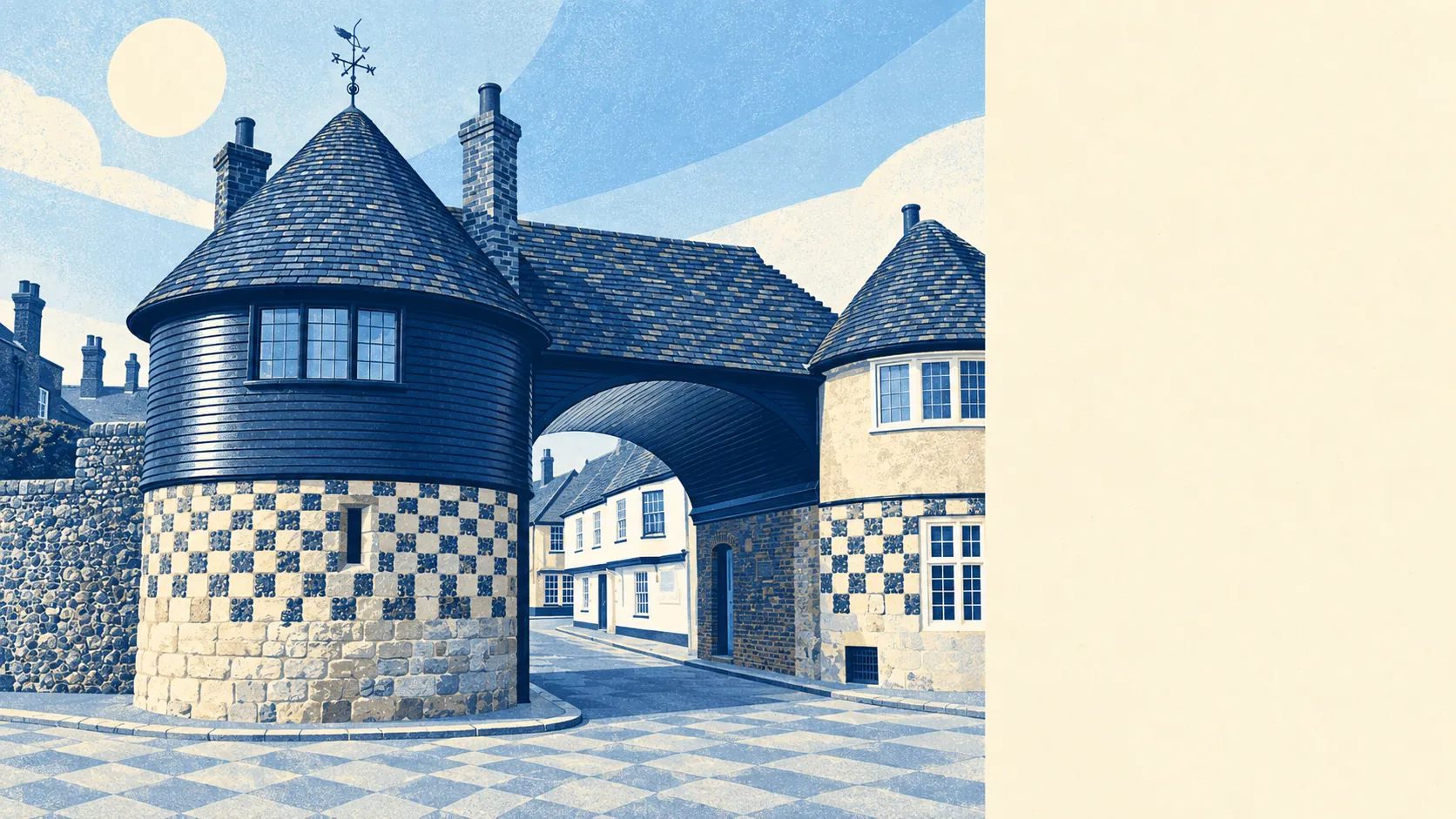
Flat, wet and green, and that's the attraction. A park or field is a short walk from almost every door. Water is closer still. Nature reserves and championship golf links sit on the edge of town. Sandwich's back garden is a bay, and the birds were there first.
Green space is close and plentiful. The average home is about 160 metres from its nearest green space, with 17 green spaces within a kilometre. That's closer than most towns manage, and it's why the dog walk here doesn't need the car.
Water is even closer. The average home sits about 150 metres from open water, with 126 bodies of water within a kilometre on average. On land reclaimed from the river and the sea, that means ditches, drains, the Stour and the marsh edges, not a lake with a café. It's lovely to look at, and the reason this ground needs watching.
For longer outings, the National Cycle Network is about 290 metres from the average home, and 78% of homes are close to it. Flat country is good for cycling, and the wind off Pegwell Bay makes sure you still get a workout.
The town centre is small and mostly independent. The ratings list shows 88 shop premises, nine pubs and 15 restaurants. That's enough for a proper Saturday wander and not enough to pretend Sandwich is a shopping destination. Most of the pubs are older than most people's houses, and a few are older than most people's towns.
Air quality is good. Fine-particle pollution across the Dover council area averaged 6.6 micrograms per cubic metre in 2024. That's a council-wide figure, not a reading for any street in Sandwich.
The character comes from the edges. Sandwich Bay has a bird observatory and the Monk's Wall reserve, opened by Bill Oddie in 2000, which is about as rock and roll as the town's nature calendar gets. The local nature reserve at Gazen Salts sits closer to town. Pegwell Bay's mudflats and salt marsh start at the northern edge, and the Roman fort at Richborough is out on the marsh. Royal St George's and Prince's take up much of the coast, which means the best-kept grass in the area belongs to golfers. Gertrude Jekyll laid out the gardens at The Salutation, so even the formal planting has a pedigree.
Private gardens are generous. There are about 195,000 square metres of private garden for every 1,000 residents, which is a lot of lawn for a medieval town. Behind the tight frontages, many houses have long plots running back, and the census shows most of the town lives in houses, not flats.
The business rating list covers 668 rateable premises, and offices lead with 360 of them, far ahead of the 77 shop premises that come next. That reflects the Discovery Park business park on the old research site more than anything on the high street. These are premises on a valuation list, not a directory of businesses trading today.
Eating out is a safe bet on hygiene. Of the 62 rated food outlets, about 86% hold the top food hygiene score, and none sit in the lowest bands. That's a clean record for a town with this many centuries-old pub kitchens.
No protected-landscape designation overlaps the area: no area of outstanding natural beauty, no site of special scientific interest, no ancient woodland. That doesn't mean it lacks countryside. It's marsh, bay and reclaimed farmland, which the reserves protect in their own way, and the ground here has been drained and farmed for too long to have kept any ancient trees.
The surroundings are one of Sandwich's real strengths. Green space and water start almost at the garden gate, and the bay does the rest.