Yes, if you want your quiet with a medieval wall around it. Seven in ten own their homes. The typical resident is in their mid-fifties. Crime runs well below the rest of the district. This isn't a town waiting to be discovered. It's a town that settled down a long time ago and sees no reason to get up.
The housing is less medieval than the postcards suggest. The council-tax valuation list puts terraces at 28% of homes, semis at 27%, detached houses at 21%, bungalows at 10% and flats at only 11%. About 37% of homes were built before 1930, so the timber frames on Strand Street exist, but most people live in something more sensible behind them. Energy certificates split nearly down the middle: 47% of certificated homes are rated A to C, 40% sit in band D and 13% are E or worse. Around 82% of homes run on mains gas. The older houses around the Guildhall are the ones buyers photograph, and the ones where the heating bill makes its own argument after the first winter.
On price, the Land Registry's last twelve months to May 2026 put the typical sale at about £345,000. Type matters more than the average does. Terraces went for around £312,000 across 36 sales, semis for about £359,000 across 19, detached houses for about £520,000 across 16, and flats for around £228,000 across 12. The most common council-tax band is C, with 24% of homes in bands A and B. The small flat count is the tell: this is a town of houses, and it prices like one.
Renting is a thinner market, which is what happens when most people own. The typical private rent across the Dover area was about £980 a month as of April 2026. That is a district-wide figure, not a Sandwich one, and a period cottage inside the walls will not be the house that figure describes.
On safety, police.uk records put Sandwich at about 73 crimes per 1,000 residents in the year to May 2026, roughly 19% below the Dover district average. Violence and sexual offences make up the biggest share, as they do almost everywhere, because that category sweeps up common assault without injury. Kent Police charged 16% of crimes over the same year against a national 12%. The honest version: Sandwich is a quiet town with the ordinary share of Friday-night nonsense around the pubs on the quay, and the Admiral Owen has seen worse in five centuries than anything the current figures describe.
Getting around depends on having a car, and the census says people know it. About half of workers drive to work, 30% work from home, and only 2% take the train, despite Sandwich Rail Station sitting on the edge of town, with Ramsgate, Minster, Thanet Parkway and Deal all within reach. The area has 34 bus stops, averaging about 43 weekday departures each, and 96% of stops with service data run at weekends. Broadband is better than the age of the buildings implies: gigabit-capable connections reach about 84% of premises, and all four mobile operators cover 99% of the area. Anyone commuting daily needs to check the timetable before the estate agent's brochure, because the station is real but the habit of using it isn't.
The surroundings are where Sandwich earns its keep, and also where it asks the hardest question. Green space sits about 160 metres from the average home, there are 17 green spaces within a kilometre on average, and water is closer still at about 150 metres. Sandwich Bay, the Gazen Salts reserve and the golf links at Royal St George's and Prince's are all on the doorstep. The same flat, reclaimed land that makes the walking so easy is why flood matters here. In the Environment Agency's river-and-sea flood zones, about 25% of postcodes fall in Zone 3 and 14% in Zone 2. On the wider postcode indicators, which include surface water, 17% of postcodes carry a high risk on at least one measure and 30% a medium one. The Environment Agency lists five recorded flood events, the latest in 1983 from the main river. The 1953 floods covered the whole area around the town. Anyone buying near the Stour or out towards the bay should check the exact address, get an insurance quote before instructing a solicitor, and not take "it hasn't flooded lately" as a survey.
Then there's the heritage, which is both the selling point and the planning officer's favourite subject. The area holds 441 listed buildings: seven at Grade I, 26 at Grade II* and 408 at Grade II. Nine scheduled monuments sit in the wider area, including the Fisher Gate and long sections of the town walls. Thomas Paine had a shop on New Street, and the Flemish settlers who arrived in 1561 grew England's first celery here, so Sandwich has been hosting awkward new ideas for a while. What it doesn't host is a relaxed attitude to your replacement windows. Buy a listed house and every change to it needs listed building consent, which turns a weekend job into a correspondence.
The neighbourhood character follows from all this. About 70% of households own their home, the median age is 54, and modelled gross household income was about £54,500 in the financial year to March 2023. That's a settled, comfortably-off town with a lot of people who have finished climbing and started gardening. The page also covers the villages around it, Eastry, Woodnesborough and Worth, which share the same postcode logic and the same dependence on the car, with fewer pubs and more fields. There is a fingerpost out at West Street pointing to Ham and Sandwich, and the villages treat it with the weariness of people who have watched every visitor photograph it.
Sandwich suits buyers who want old streets, a walkable centre, the bay and the golf within a short drive, and a place where the neighbours have been there long enough to know which bin day moved. Retirees and downsizers will find the town built around them. Families will find Sandwich Infant School, Sandwich Junior School, Sir Roger Manwood's School and Sandwich Technology School all within the immediate area, which is more choice than a town this size usually manages.
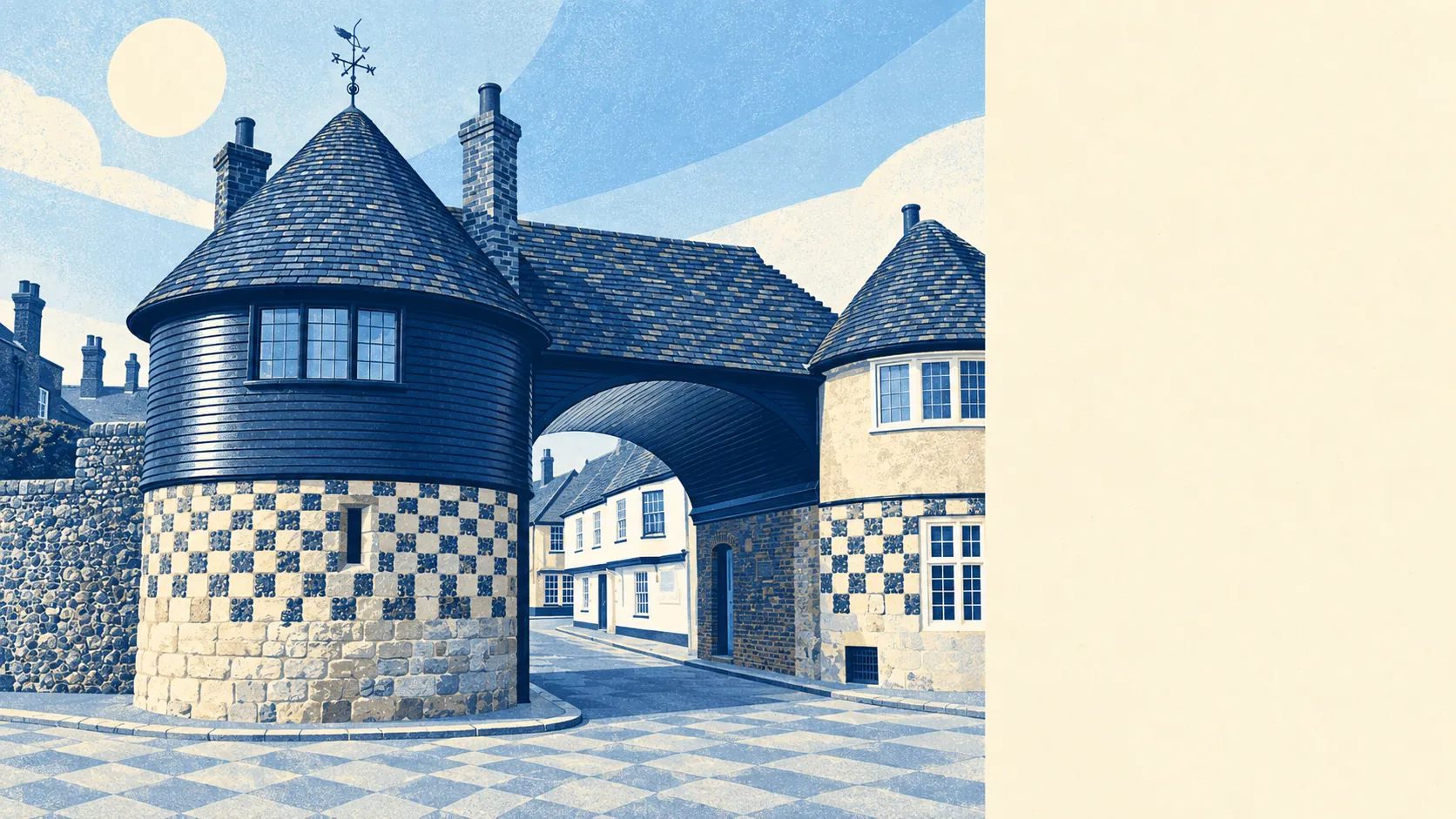
It suits less well the buyer who needs a daily train commute, a lively rental market or a house they can alter at will. Anyone who wants noise after nine will find the Barbican lit and the streets empty. And any buyer who looks at a cottage by the river and waves away the flood maps is making the one mistake this town punishes.
Sandwich is a good place to live, above average rather than exceptional. Its real strength is the surrounding area and green space: the bay, the reserves and the open land start almost at the front door. The weak spot is flood risk, because the same low ground that gives you the view is the ground the river and sea have claimed before. Buy with the flood map open and the town will serve you well. Buy on the view alone and you'll be finding out the rest in person.