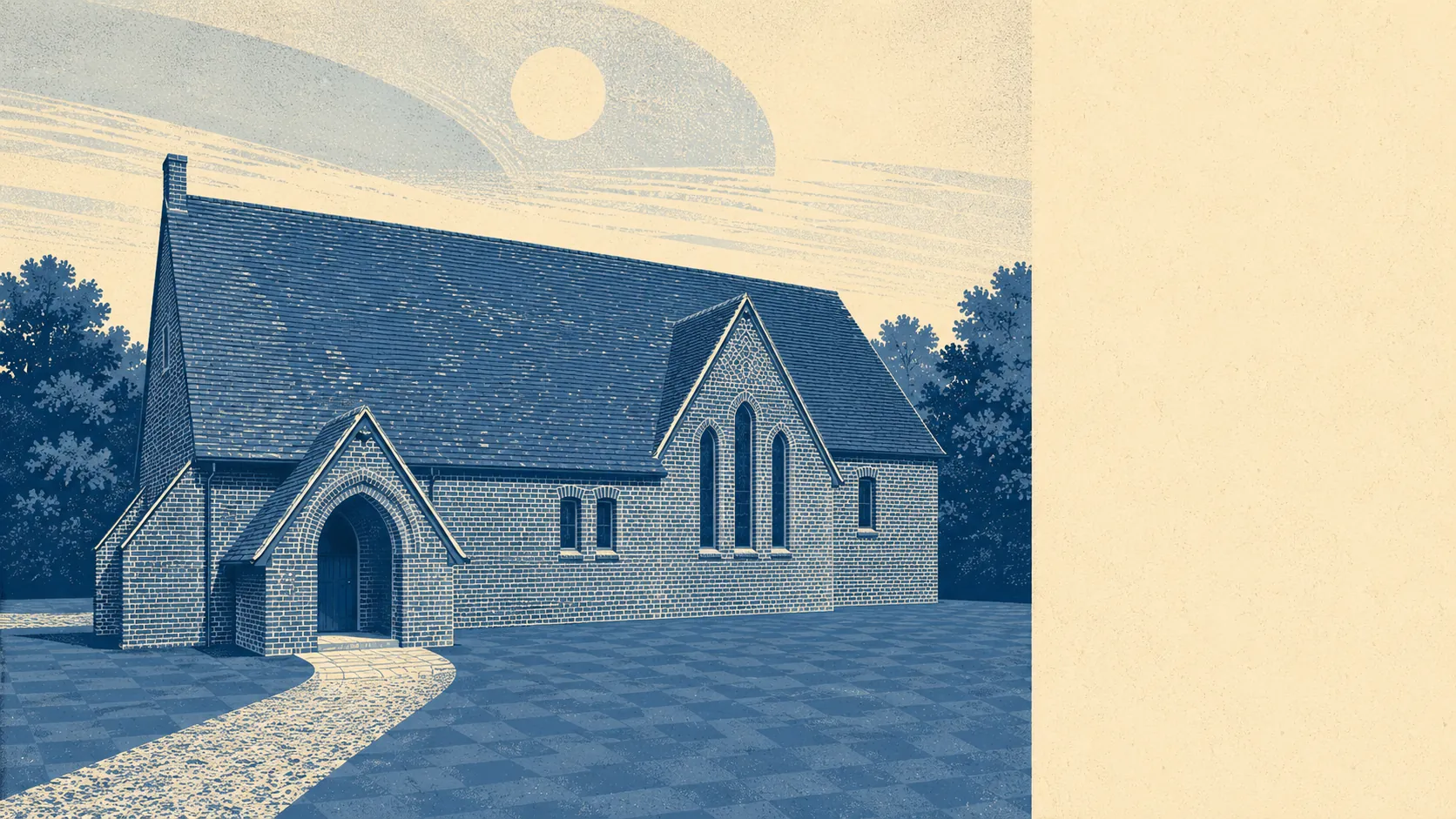
Sandleheath is a good place to live if your commute is a walk to the spare room. More than a third of working residents never leave the house to earn. Over half drive. Almost nobody catches a bus or a train, mainly because there is nothing much to catch. This is not a village that connects you to the world. It is a village that quietly removes the need.
The council tax valuation list, which covers all 2,380 dwellings rather than only the ones certificated in the last two decades, gives the honest shape of the housing. Detached homes make up about 28%, bungalows about 18%, semi-detached about 20%, terraces about 17% and flats about 16%. Roughly 37% of the stock predates 1930, and another 12% went up in the eight years to 2008, which means the village has two distinct building eras and not a great deal in between. Of the 396 homes carrying an energy certificate, about 46% sit in bands A to C, about 43% land in band D, and about 12% come in at E or worse. About 68% run on mains gas. In a village this far out that is better luck than it sounds, and the homes without it are the ones where the winter bills do the arguing.
The Land Registry recorded 20 sales in the twelve months to late April 2026, at a median of about £397,500. Detached houses went at around £494,000, semi-detached at around £397,500 and terraces at around £330,000. Twenty sales across a whole year is a market where you wait for the right house rather than choose between three. The most common council tax band is C, with about 24% of dwellings in bands A or B, so the bills are not the sort that make people move.
Rent has to be read at the wider scale. The typical private rent across the New Forest area is about £1,240 a month as of April 2026, up about 2% over the year, with a two-bedroom at about £1,130 across that same area. Those are New Forest figures, not Sandleheath's own, and the difference matters in a village where letting stock is thin enough that the market is whatever happens to be empty that month.
Police.uk publishes about 66 recorded crimes per 1,000 people for the twelve months to May 2026, against about 57 across the New Forest, which puts the village roughly 15% above its own local authority average. That sounds worse than it lives. The total behind the rate is 321 crimes across a year, low enough that a handful of incidents shifts any category by several points, so the breakdown by crime type is noise rather than character. Hampshire Constabulary charges a suspect in about 9% of cases against about 12% nationally, which is a force statistic and not a village one, but it is the force you would be phoning.
Ofsted has graded 211 settings across Hampshire, of which 185 are good or better and 27 outstanding. Within these postcode districts, the one primary reporting results posted a Key Stage 2 maths average score of 104, and the one secondary posted an Attainment 8 score of 46.6. The Burgate School and Sixth Form serves the secondary age group from Fordingbridge, with Fordingbridge Infant School and Fordingbridge Junior School doing the earlier years. Department for Transport modelling from 2019 puts a primary about 10 minutes away by car and a secondary about 13, or about 34 and 49 minutes on foot respectively. Read those walking figures twice before you picture a child doing it in February.
Connectivity is where the village pays for everything else. About 55% of premises can get gigabit broadband, about 95% can get superfast, and none sit below the universal service obligation, so the internet that makes the working-from-home habit possible is genuinely there. Mobile coverage reaches every postcode from at least one operator and about 99% from all of them. Public transport is a different story. Six bus stops exist, with no scheduled weekday services recorded against them. About 0.3% of residents commute by train and the same share by bus, while about 53% drive and about 57% of households run two or more cars. Only about 8% have no car at all, and that 8% is not living the same life as everyone else. The modelled car journey to a town centre is about 10 minutes, to an employment centre about 8, to a doctor's surgery about 10, and to a hospital about 28. The public transport equivalents come from the same 2019 modelling and age badly, because services get withdrawn and models do not.
On the postcode flood indicators, which take in surface water as well as rivers, about 6% of Sandleheath's postcodes carry a high rating, about 8% medium and about 12% low. On the Environment Agency's river and sea flood zones, the figure is zero: no postcode here falls inside zone 2 or zone 3. The national radon mapping puts about 84% of postcodes in band 3, classified moderate, which is a testing kit rather than a crisis. Green space averages about 350 metres from a postcode with about four sites inside a kilometre, water averages about 275 metres, and about 2% of the area sits inside the Cranborne Chase and West Wiltshire Downs area of outstanding natural beauty. Every postcode also sits near modelled road noise of at least 65 decibels, peaking at 75, which is the sound of a quiet village with a road running through it.
Heritage barely registers as a constraint. Four listed buildings, all of them Grade II, and no conservation area or scheduled monument inside the village footprint. Change your windows, extend at the back, put solar panels where the sun is. Nobody from the planning department will arrive with a photograph of how the street used to look.
About 77% of homes are owner-occupied, the median resident is 53, and the Office for National Statistics models gross household income here at about £61,000 before tax. That combination produces the particular calm of a place where most people have finished moving and are now simply maintaining.
Sandleheath suits the household that already works from home or drives without resentment, wants a bungalow or a detached house with actual garden, and treats a twenty-minute round trip for milk as scenery rather than an inconvenience. It suits anyone who has stopped needing the evening to contain options.
It does not suit anyone who needs a train, a bus, or a teenager who can leave the house without a lift. A fifteen-year-old here is a standing taxi booking with a homework excuse attached.
Sandleheath comes out above average overall, and it earns that in one place above all others: the surroundings, the green space on the doorstep, the water close by, the protected countryside at the edge. The weak spot is transport and connectivity, and it is not a marginal weakness, it is the defining condition of living here. Get that trade right and the village is close to ideal. Get it wrong and you will spend the next two years discovering exactly how far away everything is.