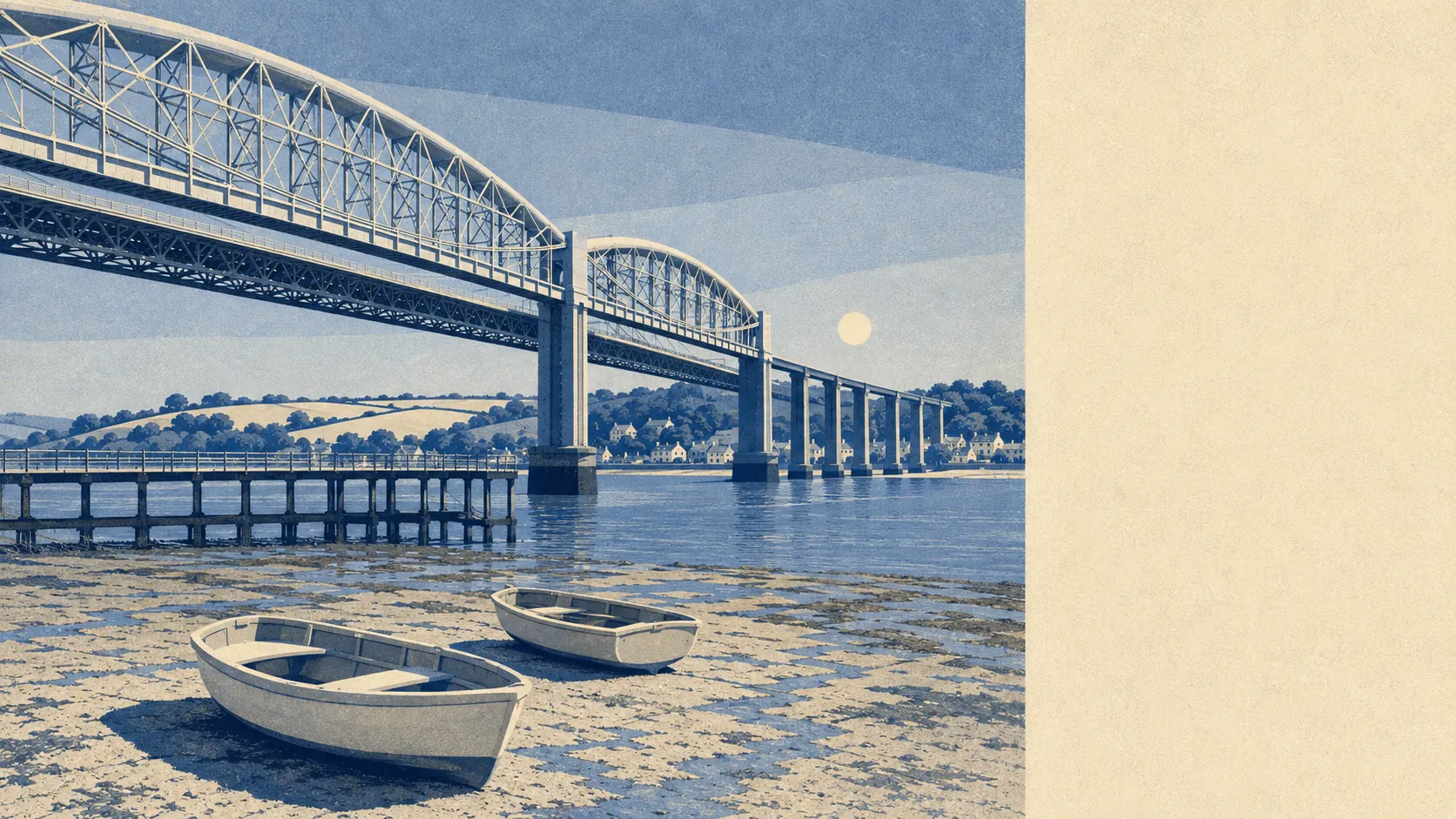
Green, and unusually close to water for a town that is not on the open coast. The typical front door sits about a hundred metres from green space. There is more of it within a walk than most residents could name if you asked them. Farmland starts where the estates stop, the estuary is at the bottom of the hill, and the two things meet in a set of creeks that look like somebody designed them for a postcard. This is the part of Saltash that nobody argues about.
The green space access is the headline. The average postcode here has about 27 separate areas of green space within a kilometre, and the nearest one is about 115 metres away. That is not a park at the end of town that you drive to on a Sunday, it is green space as a normal feature of the street you live on.
Water is close to the same story. The average postcode sits about 470 metres from blue space, with about 31 separate stretches of it within a kilometre. Living within sight or smell of water is the default condition here rather than a premium someone charges you for.
The cycling picture is less generous. The National Cycle Network runs about 4.5 kilometres away on average, and no postcode in the town counts as close to it, so anyone planning to ride out of the front door and onto a traffic-free route is planning something the network does not currently support.
Commercially, the area holds 126 shop premises, 85 offices, 18 pubs and 9 restaurants on the rating list. Eighteen pubs against nine restaurants tells you exactly what kind of town this is and what people here do with an evening.
On air quality, fine particle pollution across the Cornwall council area averaged about 5.1 micrograms per cubic metre in 2024. That is a council-wide figure covering a large rural county rather than a reading taken at the end of any particular road in Saltash.
The Tamar Valley Area of Outstanding Natural Beauty clips the edge of the area, covering under 1% of it. The designation sits at the boundary rather than over the town, which is a fair description of Saltash generally: the protected landscape starts just beyond where the houses finish.
The character comes from that meeting of estuary and farmland. Trematon Castle stands above the creeks, Antony House and its grounds sit out to the south, and the small settlements at Forder, Antony Passage, Wearde, Trehan and Burraton Coombe are the sort of places where a lane runs down to water and then stops. Carkeel and Hatt sit inland on higher ground where the working farmland takes over. Even the ancient monuments here are waterside, including a Civil War battery at Wearde Quay and a wartime landing craft maintenance site near Saltash Pier.
Private outdoor space is genuinely generous. The area holds roughly 113,000 square metres of private garden for every 1,000 residents, which in ordinary terms means most households here have a real garden rather than a yard with a bin in it. That is the single biggest practical difference between living here and living across the water.
The rating list records 451 rateable premises in total across the area, dominated by shops and offices with a run of workshops, warehousing and light industrial units behind them. These are premises on the valuation list rather than businesses currently trading, so the count describes the fabric of the town rather than what is open on any given Tuesday.
For eating out, 67 premises hold a published food hygiene rating, with about 66% at the top score and about 9% at the bottom end of the scale. Two-thirds at the top is a decent showing for a town this size, and the bottom end is small enough that checking a rating before booking remains a two-second job worth doing.
On formal protection, the brief records no site of special scientific interest and no ancient woodland within the area, with the designated landscape confined to that thin strip at the edge. That is not a criticism of the place. Saltash is surrounded by working countryside and tidal creeks rather than by nature reserve, which is a different and in many ways more useful thing to live beside.
The surroundings are the best thing about this town by a comfortable margin, and they are the reason people who move here from the city stop talking about what they left behind. Green space at the end of the road, water at the bottom of the hill, and a proper garden with the house. That combination is rare and it is not priced into the asking figures.